Monday, June 26th

Trying to use words, and every attempt
Is a wholly new start, and a different kind of failure
Because one has only learnt to get the better of words
For the thing one no longer has to say, or the way in which
One is no longer disposed to say it. And so each venture
Is a new beginning, a raid on the inarticulate
With shabby equipment always deteriorating
— T. S. Eliot, East Coker


{ONE} BILLIE’S HOUSE: EASY LIVING?

Billie Holiday’s townhouse came up for sale last year. It wasn’t her townhouse — she had an apartment (#1B) on one of its seven floors — but we’re dealing with estate agents here. That’s one posing by the staircase. “We are privileged to introduce 26 WEST 87, the esteemed home where Jazz legend Billie Holiday once lived. She was a resident until her death in 1959. While living in the apartment, she released one of her most famous albums, Lady in Satin. This historically significant home, adjacent to Central Park and the Reservoir, was built in early 1900 and has been meticulously restored and optimized with modern technology while preserving the classical detailing. The impressive Media Room boasts wallpaper designed by Lenny Kravitz”. They’re not kidding. Way to go, Len. Recently reduced to $12,250,000 from $13,995,000. A saving of nearly $2 million. What are you waiting for?


{TWO} TOM’S HOUSE: “As I went out one morning / To breathe the air around Tom Paine’s…”

To Lewes, for Michael Gray’s talk on Bob’s Greatest Rejected Album Tracks accompanied by Mick Gold. As we were driving down, I was recommending to Mick the music documentary Born In Chicago, co-written by Joel Selvin and directed by Bob Sarles and John Anderson, which tells the story of the young white musicians who became fascinated with the blues played on the South Side of Chicago — between the coffee shops and the bars, the young disciples (among them Paul Butterfield, Mike Bloomfield, Nick Gravenites, Charley Musslewhite and Steve Miller) started mixing with the bluesmen and kickstarted a whole genre of sixties music. Mick then told us about being at the University of Sussex in 1966 and going to a gig by the Butterfield Blues Band at the Town Hall in Lewes with his camera — that’s one of his shots, of Butter, Mike Bloomfield and Elvin Bishop, below. Mick then left university and started working as a photographer (he toured with Pink Floyd, Dr Feelgood, and photographed Joni Mitchell, Neil Young, The Band, Reed, Cale and Nico, Elton, The Grateful Dead, Patti Smith… the list goes on) before changing horses in midstream to become a documentary filmmaker. It was my second small road trip with Mick — the first was to Canterbury for dinner with the same Michael Gray. I look forward to the next one.

Michael Gray’s talk was great — full of striking linkages, subtle studies and playful theories, and to hear performances of songs like “Moonshiner”, “Mama You Bin on My Mind”, “Angelina” and “Too Late” played on a really big sound system was wonderful. And special thanks to Michael B for his amazing hospitality (and for Parkrun!)


{THREE} ELVIS’S PLANE In the desert at Roswell for 40 years, Elvis’s 1962 Lockheed 1329 JetStar. Sold for $260,000. No engines.


{FOUR} ELVIS’S TICKET, CIGAR, KEY & HAIR There was more Elvis memorabilia in the latest Julien’s auction. These are my favourites…


{FIVE} MY COUSIN’S SONS… I’m so thrilled that the family music line continues, and I’m even more thrilled that I really like the music both Brett and Taylor are involved in. My cousins Nickie and Julie emigrated to Canada in the early sixties with my aunt and uncle and grew up in Mississauga, Ontario. With their own families, they moved — Nickie to LA and Julie to Calgary. Nickie and Doug’s son Brett played in the indie scene around Silverlake, I think, and became Best Coast’s tour bass player before moving to Nashville to work there. He is currently playing bass with Caitlin Rose, who visited London after a long hiatus.

The gig we saw at Hackney’s Earth was terrific. Her voice was direct and emotional, her stage manner beguiling, and the band could switch from Harvest-era Neil Young through (almost) straight-ahead Country to ambient American music with ease. The audience reaction was appropriately fervent — they’d waited a long time. There was an unexpected cover: “If You Gotta Make a Fool of Somebody”, a beautiful song that I knew from Bonnie Raitt’s version. Highlights from Caitlin’s own pen were “Getting it Right”, “Blameless”, “Pink Champagne”, “Own Side”, and an acoustic encore of “Sinful Wishing Well”. Brett was also the tour manager and driver, and it’s always sobering to see the amount of hard work and commitment that goes into touring a continent and putting on shows. When we expressed amazement at the distances Brett was driving, all he’d say was that if you lived in Nashville and needed something from Ikea it was a round trip of 200 miles. And that it was no problem.
Julie and David’s son Taylor formed a band at school in Calgary, Braids, and moved to Montreal where Canada’s independent music scene was gestating. We’ve followed them since their first gigs here in 2011 (where we were their London hotel). They’ve also not played here for a while now, and their latest tour saw a string quartet added to their electronica palette. Their London date at Kings Hall was magnificent. The trio — Taylor on synths, bass and who knows what, Austin on drums and vocals, Raphaelle on vocals, keyboards and guitar — layered and tweaked and intensified their sonic textures, creating cathedrals of sound and enveloping their faithful audience, who gave them a riotous response. It’s always fun to reconnect the family after these gigs. I just wish we all lived closer…


{AND FINALLY} WAINWRIGHT’S WONDER I’ve always been a little immune to the ornate charms of Rufus Wainwright, but I really like his new album, Folkocracy, where he takes the elemental melodies of the folk canon and embellishes them with just enough left turns to remake them as songs that feel part of today’s landscape. I’ve also been resistant to the charms of John Legend, but the version of Peggy Seeger’s “Heading for Home” they duet on is rather marvellous. It starts like a Copeland Western or an Alfred Newman film score before an acoustic trio (Madison Cunningham on guitar, David Piltch on string bass and Patrick Sauber playing banjo) pulls it back into the folk tradition. It plays out beautifully; their voices pepper (Legend) and salt (Wainwright)…

The rest of the album takes in songs by John Phillips and Neil Young (Wainwright was part of Echo in the Canyon, a muddled and unsuccessful documentary about the Laurel Canyon singer-songwriters) as well as “traditionals” like “Arthur McBride”, “Wild Mountain Thyme” and “Shenandoah”. Guests include Chaka Khan (beautiful), Van Dyke Parks (Van Dykesy) and various siblings and relatives, and the whole thing is pulled together by Mitchell Froom. Oh, and there’s a fascinating arrangement of a Moondog song, “High on a Rocky Ledge”, where Blake Mills provides a guitar orchestra behind Wainwright’s duet with David Byrne.

Tuesday, April 27th

Extra: That Dylan Play…

hibbing

IT SEEMS THAT I HAVE TO GO TO THE THEATRE…
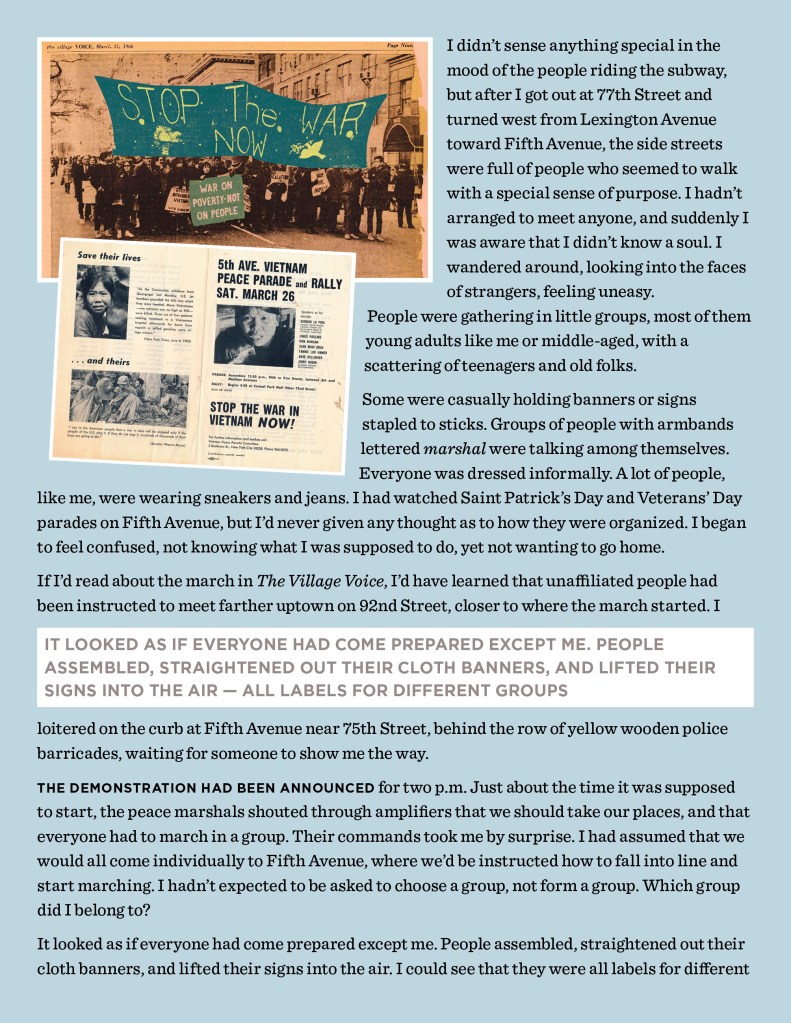
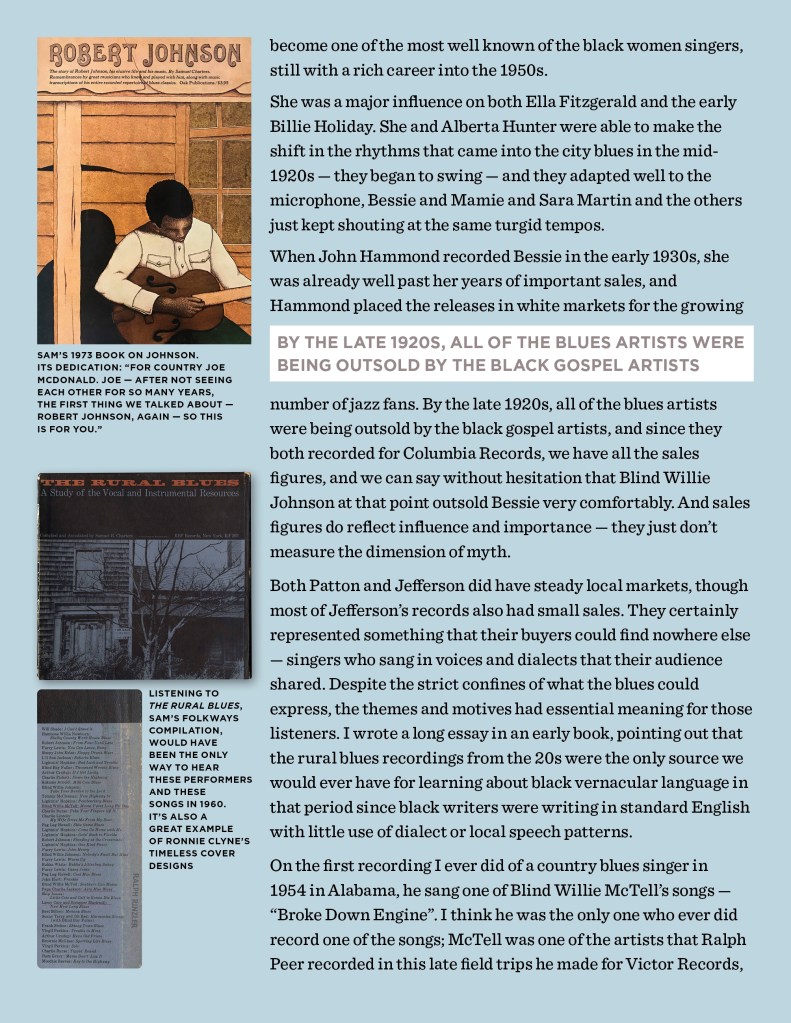
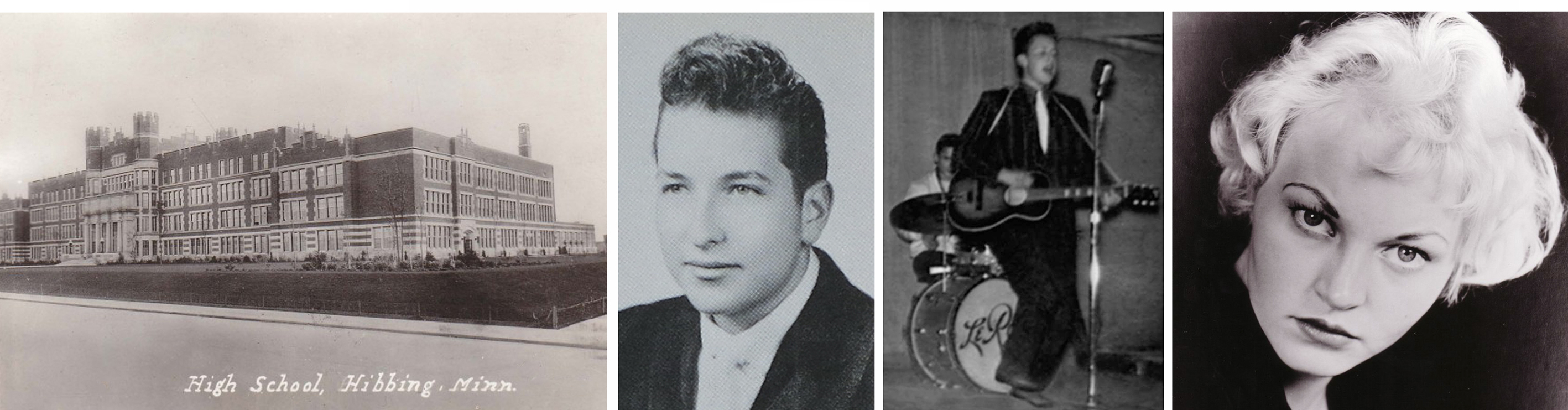
…which is not my favourite thing to do. But as two friends have opposite opinions on the play that uses Dylan songs throughout, it’s going to be necessary. [Image above shows Hibbing’s High School, Dylan’s Yearbook picture, Dylan onstage with his first band, The Golden Chords, and North Country Girl Echo Star Helstrom].

So here’s Bruce Millar on Conor McPherson’s Girl from the North Country:

“The first inkling that something was not quite right came early on, as it became clear that the young female actor (20s, early 30s at a pinch) in the lead role was actually playing an aging woman with dementia – well, at least 60, and we are talking about the 1930s, when that age did make you old. Her husband was, appropriately, my age and similarly gone to seed. I know, this is acting, you suspend your disbelief – but as Tom said, is it really not possible to find a female actor of 60-odd who can sing a bit? They’re always complaining of a lack of roles, but here one comes along on the West End stage and it’s snaffled by a youngster. Anyway, for me the production immediately smacked of the school play, with a teenage Lady Macbeth…

The play itself, set in Duluth (the possibly spurious BD connection – I couldn’t make out any dramatic justification for it), seemed to throw in every cliche of American southern gothic literature – the nutter in every family, the sinister and manipulative Bible salesman, the subterranean sexual passions, the wastrel would-be writer son, the washed-up pro boxer – in a not very stylish or original manner, and a couple of thousand miles north of its proper territory.

And then, in a manner rather too reminiscent of Abba – The Musical, the cast burst into song every now and then. Some of the singing was good, and there was nothing particularly wrong with the interpretations, but it slowly dawned on me that this was a Crime against Art. Recorded or live, these songs, mostly from the 60s and 70s, are all very precise, but at the same time extraordinarily open-ended; they play on the imagination, suggesting multiple meanings, feelings and depths, in a way that few songwriters have ever achieved so consistently (which is probably why the Nobel committee gave Dylan the literature prize).

Shoe-horned into this derivative drama, each song seemed to have been limited, confined, diminished, flattened and emptied-out; there was no charge, none of the reverberation that I value in the originals. It was strange to hear these great songs transformed into something so small.

Over an interval drink, Tom and I decided to cut our losses and head for Dunkirk instead. I’ve got pretty catholic tastes and am both patient and mean enough to want to get my money’s worth – the last time I walked out of a film or play was 40 years ago (strange how some things stick in the mind). I haven’t seen what the professional reviewers make of Girl from the North Country – I’ll be particularly interested in Ann Treneman’s review in the Times (if she reviews it), given that she is an admirer of Dylan. My prediction is that lazy subs will probably run headlines saying For fans of Dylan only; I would reverse that, but even then advise against going.”

And here’s Mick Gold:

“It’s a funny beast but I recommend it. Twenty songs in search of a play? Stuck in 1934 Duluth with the Eugene O’Neill Blues again? Set in a Depression era rooming house in the city where Bob will be born in seven years time, McPherson’s play floats in a fragmented way on a sea of songs. The good news is the cast and the music are wonderful. Worth the price of a ticket just to see Bronagh Gallagher (of Pulp Fiction fame) play the drums.

When a falsely accused black pugilist enters stage left, you can guess what is coming, but when the inevitable “Hurricane” blows the audience away, it’s done with massive energy. To my ears some outstanding young singers in the cast (Sheila Atim, Arinze Kene). Jim Norton, who did a brilliant job of reading the whole of Ulysses for Naxos discs, plays a seedy old man.

“Jokerman”, “Slow Train”, “Duquesne Whistle”, “Like a Rolling Stone” and many more are all done with great artistry and emotional impact. There was the occasional tear in my eye. If this were a boxing match I’d score it Play 3, Bob 5. But the reason the music is so good is McPherson does have some strange and poignant ideas about not making the songs too obvious. And the rhyming of 1934 Depression-era Main Street USA and 2017 zero-hours UK is convincing.”

Friday, August 12th


ONE IF YOU’VE NOT SEEN THIS…
If you’re resident outside Britain you may not have. But you should. Three minutes of wonderment made in an unfeasibly short space of time. “We wanted to illustrate that someone brushing their teeth can be as superhuman as someone who plays wheelchair rugby,” says We’re the Superhumans’ director Dougal Wilson. “When I was writing the treatment, I was looking for a link between sport and non-sport and started thinking that music could provide this connection. One of the first people I met while working on the ad was Mark Goffeney, AKA Big Toe, who plays the guitar with his feet. From there I started searching for a ‘band’ and we managed to find lots of other musicians who were overcoming their disability by playing music.”

paralympics.jpg

It required casting an array of musicians, athletes, dancers and extras. More than 140 people with disabilities star in the advert, so finding the right people meant eschewing traditional ways of casting. ays Alice. “Thank god for the internet and our team of researchers because we found some amazing people just by trawling through hundreds of YouTube clips and Facebook videos. I love that these talented people don’t have agents, we’re giving people a chance to shine on their own and giving them a platform they didn’t have before,” says Alice Tonge, creative director at 4Creative.

TWO THE BOWIE PROM
Jude Rogers gets to the point in The Guardian: “Six months and three weeks after David Bowie died, musicians still feel compelled to give their tributes, to sing those songs that shaped their lives. It was almost unsurprising when the Bowie prom was announced, promising Bowie with a twist – but who really wants Bowie with a twist? Bowie was the twist: the wayward Bromley boy who turned himself into a peculiar pop art project, perfectly.” Her view was that too few people took risks, and I think she was right. Of the performances that I saw, Anna Calvi and Laura Mvulu were the ones who did. Also, are instrumental versions of Bowie songs ever anything more than, well, slightly tame instrumental versions of Bowie songs? Update – I’ve watched it all now, and I think there are some fine rearrangements, especially those by Jherek Bischoff and Anna Meredith (who did the two Marc Almond numbers). Oh, and lovely to be reminded of the beautiful instrument that is Paul Buchanan’s voice.

THREE MICK GOLD IS WEIRDLY SYNCHRONOUS
“I’m still grooving on the revelation I came across that Milton Glaser based his ‘iconic’ poster of Dylan on Duchamp’s self portrait, dated variously from 1957 to 1959,” Mick emails just as I was reading a book that features Glaser for a review that I’m writing for Eye magazine. Mick continues… “I came under Duchamp’s spell when I made a film about Dada and Surrealism way back in the 1970s, Europe After the Rain. His sensibility seemed to inflect everything he touched. He created a relatively small body of work, and 99% of it ended up in Philadelphia! When Bowie released Darkstar at the moment of his death, I thought of Duchamp making his final work, Etant Donnes, in secret and then allowing news of it seep out after he had died. Even though I found it a rather dubious work when I finally saw it in Philadelphia, the ideas and preparatory works behind it are still haunting and beautiful.”

FOUR SUMMER BREEZE MAKES ME FEEL FINE
Quite excited to read about the arrival soon of “The Great Lost Isley Brothers Album”. In 1980 they wanted to record a live album, but instead of the usual mobile truck at a concert venue they cut Groove with You… Live! at Bearsville Sound in Woodstock (where The Band recorded Cahoots). Apparently it “had all of the incendiary thrills of a live show in pristine studio fidelity.” The band then overdubbed an audience’s frenzied reception and the energetic introduction of MC “Gorgeous” George Odell. Mad.With a ten-minute version of “Summer Breeze” I’m there… It reminded me of a great interview with Ernie Isley that I read a while back. Here’s some of it:

The HUB: Your soaring guitar work on “That Lady” put rock guitar sounds in the spotlight – and that was pretty revolutionary for soul-inflected music at at the time. How did you get that sustain-drenched sound?
Ernie Isley: We were working with the same engineers Stevie Wonder was using on what would become Innervisions. We were working on the record that became 3+3. There was a fuzz box and a phase shifter by Maestro, and that was pretty much it.
The HUB: That solo had a huge influence on ’70s guitar sounds in several genres.
Ernie Isley: We cut it before the lyrics had been finished, and there was a strong rhythmic guitar part that tied in with the congas – very funky, very rhythmic. But when I plugged in for the solo and hit that first note, the track went from black and white to 3D technicolor! Recording it, there were two takes; the second take is what’s on the record. On the first take I was playing all over the place. My eldest brother, Kelly, was looking at me through the glass; he did not blink for like 25 minutes. The engineers were going nuts, and I was going nuts. When I got done, they said play it again to fit in with the vocals. I was really ticked off that we had to do a take two.

FIVE BONNIE RAITT FOR PRESIDENT!
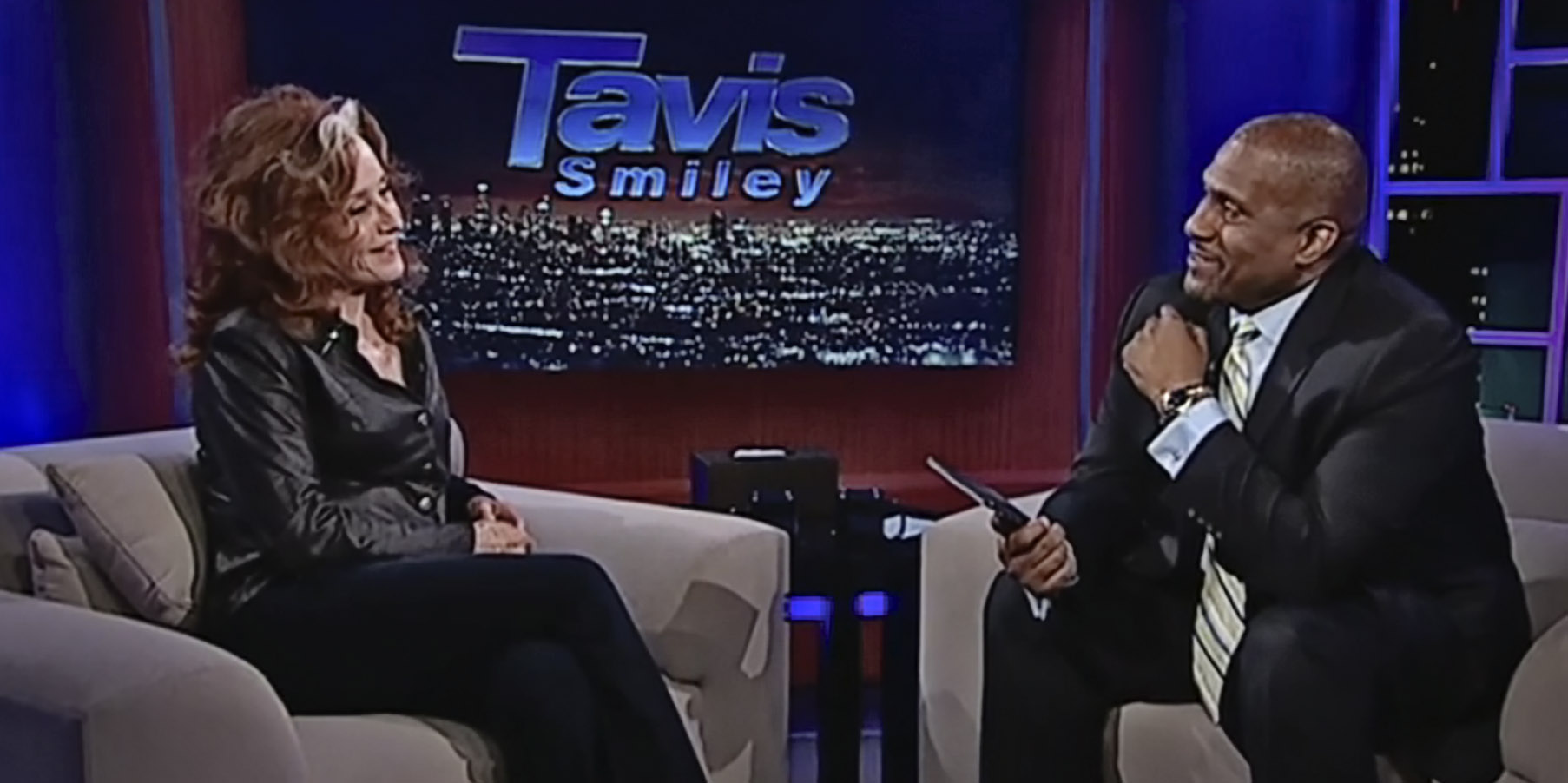
A very nice interview with Tavis Smiley on PBS covers a lot of ground in its 25 minutes, from the death of her brother to the current Election. An intelligent warm interviewer, an interesting and modest subject – what’s not to like?

bonnie.jpg

ON THE MUSIC PLAYER
Reading Malcolm Jack’s Guardian review of Tom Jones live show in Glasgow, I see that Tom finished his set with an apposite cover: Sister Rosetta’s jumping “Strange Things Happening Every Day.” Hear it in the Music Player to the right.

If you’re receiving the e-mailout, please click on the Date Headline of the page for the full 5 Things experience. It will bring you to the site (which allows you to see the Music Player) and all the links will open in another tab or window in your browser.


Friday, May 20th

lakestreetONE LAKE STREET DIVE: A DAUGHTER SPEAKS
In the half cinema-half club that is the Scala we see Lake Street Dive. Afterwards I asked J about it.

Dad What did you think?
Daughter They were constantly surprising – there were ballads, 60s style pop, country, jazz – it really felt like being at a roadside bar, and the only thing missing was the cigarette smoke! Vaping doesn’t feel the same! 

D I thought they really looked like they were having a good time.
D Yes! They had a great rapport with the audience, and with each other. You really felt they were four friends making great music together, who just happened to be giving a concert – to another bunch of friends! In sitcom terms, Bridget the bass player looked kooky and fun, Rachael the singer was the glamorous one, one boy a little serious and studious (the guitarist), the other a little showy (the Italian drummer). He did an excellent solo on a rented kit (coincidentally painted in the colours of the Italian flag!).

D Did you have a favourite song? Had you actually heard much before we went?
D I only knew a couple, but I think “Saving all my Sinning” was my favourite live – it had a great intro about growing older and saving up all your bad decisions for a party night. And I thought the cover they did of the Kinks “Lola” was a perfect fit for their sound. I really like their sound, it’s very rich, considering there are only three instruments. Oh, apart from when the guitarist plays trumpet, but that still makes three, as he puts down the guitar!

D I think the fullness is down to subtle percussion and really nicely worked-out guitar parts…
D Yes, but I think the bassist is the key to their sound. On one song it was just Bridget behind Rachael for the first half and there didn’t seem to be anything missing…

D I thought the first encore was terrific, all of them clustered round one mic doing “Nobody Knows What I’m Doin’ Here”. I tried to video it, but I held the phone the wrong way up…
D Typical! That was great, but the song that touched me the most was “So Long”, dedicated to Prince – the sound of longing really stayed with me…

TWO ON TOM HANKS’ FASCINATING DESERT ISLAND DISCS THERE WAS…
Hands up who’s never heard Dusty Springfield’s “Doodlin’”. I can’t be the only one, surely. How did I miss it? Whoa, my knowledge has such enormous holes in it. Whatever, what a track, with its lovely slinky drumming and psychedelic strings. Oh, yes, and a spectacular lyric! Starting with “Usin’ the phone booth/makin’ a few calls/Doodlin’ weird things/usin’ the booth walls – yeah!” It continues in a restaurant: “Later the waiter/had me arrested/took me to Bellvue/where I was tested…” and at the hospital with the doctor… “Showed him hidden thoughts that linger/find an outlet through your finger”. I head over to Wikipedia to find that “Doodlin’” is a composition by Horace Silver, with lyrics added by Jon Hendricks (of Lambert, Hendricks & Ross). It has become a jazz standard. Reviewer Bill Kirchner suggests, “Take a simple riff, rhythmically displace it several times over D-flat blues harmonies, resolve it with a staccato, quasi-humorous phrase, and you have “Doodlin’”. Thanks, Bill. Time to listen to it once more, while chuckling at Hanks’ calling David Byrne “Weird Dave” as he chooses Talking Heads “Once in a Lifetime”.

THREE ROBBIE FULKS HAS A NEW RECORD OUT
I hope it matches his description of his new, redesigned, website: “The new look – from the Russian Tea Room to the Trump Tower! What a snazzy makeover we’ve gotten here at the worldwide. The friendly navigational tools are sure to make blog-reading and record-shopping like falling off a log. The magnificent (except for the subject) photos taken by Andy Goodwin provide an environmental hue so warm and deep and cosy, you’ll be tempted to bring your business partners here to butter them up and shoot them. Many thanks to Mike Sosin of the fledgling Bloodshot record label of Chicago, Ill. for bringing this website to life and ignoring all helpful input. Be sure to let us know what you think! We can’t wait to ignore you.”

FOUR SUTTON HOUSE
As the oldest Tudor House in London, Sutton House is fascinating, but when you get to the room upstairs, time periods co-exist. Over time the house had fallen into disuse, and it was squatted in the 1980s by a local group who wanted to turn it into a community centre and neighbourhood hub, but they were moved on after several months. Their aim survived, though – the National Trust took it over and it’s now used for local events as well as being a window into the past. What’s nice is that the squatters are paid tribute to by an approximation of how the room looked when they were there.

sutton

And the caption tells us that “this eye was painted by an anonymous squatter in 1985. It is said to be the emblem of the rock group PSI”. That may be Psi Com, Perry Farrell’s first group but I can’t find that image anywhere. I can tell you that the record on the deck is by the Thompson Twins.

FIVE MICK VS MILES
My friend Mick Gold had kindly invited me to a screening of “Miles Ahead” and I having said yes excitedly, sadly had to cancel. The next day, Mick sends his thoughts. “Aaargh! You didn’t miss much. For a start, the script is awful, Ewan MacGregor is totally unbelievable as a Rolling Stone journalist with a Scottish accent who knows nothing about music, there is an evil record producer who is a cardboard villain, and the whole thing is orchestrated by blaxploitation guns & car chase clichés that don’t even work.
“But I think it’s weirder than that. I don’t think it’s cynical. I think it’s a labour of love gone wrong. Maybe it reveals that Don Cheadle is a fine actor but has no taste and no writing ability. I understand he spent nine years getting the movie made – he wrote it, produced it, starred in it, directed it, crowdfunded it, and poured his own money into it. This was not some cynical quickie movie.
“The sad thing is I think Cheadle is striking as Miles: he looks good, he does the voice well. Only problem is its farrago of bad Superfly and tortured genius cliches. Not everyone was as miserable as me. There was laughter and applause at BAFTA, and I sat next to two editor friends who said to me afterwards, That was great. When I said, That was awful, their faces fell.” 

In other news, it’s BobWeek on rocksbackpages, and full of wonderful writing on the Iron Range’s favourite son, so head on over and get a subscription now… [end of marketing plug].

Five Things I Saw & Heard This Week: Wednesday 31st October

Danny Baker, Shortlist Questionnaire
Who’s the most overrated band of your lifetime? “Queen. A dreadful group. They were neither Led Zeppelin nor Bowie and they played that middle ground in between. Punk rock didn’t come around because of prog rock or anything like that, it came around because of Queen. Abba, Queen and ELO—that was what people were trying to move away from. You can find everything Queen did better elsewhere.”

Bob Dylan & The Poetry Of The Blues
Michael Gray, my favourite writer on Bob Dylan, gives a talk in Canterbury, close enough to drive to. Mick Gold comes with me, supplying an excellent compilation CD and fascinating conversation for our tiny road trip. Michael’s presentation is terrific—funny and revelatory. Over a meal afterwards we talk about the fact that Freddy Koella is both Michael and my favourite Dylan guitarslinger. Mick reveals that the night before, Freddy had guested for two songs at Bob’s Santa Barbara gig—the first time since he was a member of the Never-Ending Tour Band in 2004.
Michael on Freddy: “Freddy was Dylan’s best-ever lead electric guitarist (and just might be the best electric guitarist altogether since the heyday of Hubert Sumlin). Robbie Robertson was near sublime—the next best, a very close second—but Freddy was better. And in The Band all the other musicians were crucial too, whereas in Dylan’s band Freddy had to carry the whole front line. Of course you could say Mike Bloomfield was right up there, but he was, though a virtuoso, essentially more limited (Dylan had to tell him, for Like A Rolling Stone, to play ‘none of that B.B. King shit’); and G.E. Smith was terrific, but safe. You never wondered excitedly what he might do next. Whereas Freddy played by living on the edge, like Bob, fusing Django Reinhardt and Carl Perkins and playing as if it were 1957 now. He was the electric lead guitarist Dylan himself would have been, had Dylan ever bothered to master the instrument.” That line is fantastic, and spot on—“Playing as if it were 1957 now…”

Papa Nez’s Blues
To the Queen Elizabeth Hall with my mum to see her old fave, Mike Nesmith (The First & Second National Band stuff, not The Monkees, just so’s you know). I seem to be making it a point lately to see only Senior Citizens Of Rock™ but it’s just coincidental. It’s instructive to compare and contrast the approaches, however.
Leonard “Ladies’ Man” Cohen, 78, 4 years into his latest group of tours, is in fantastic voice, playing three-and-a half-hour shows with some of the finest musicians on God’s earth and playing versions of his songs that make the original tracks seem pale shadows. It is, in all senses, not just another show. It’s a summation of a life’s work.
Ian “Mott To Trot” Hunter, 73, belts out his impressive and rockin’ back catalogue with ferocious intent, fronting a hell-for-leather combo, The Rant Band. On lead guitar, Mark Bosch is a passionate and note/feel-perfect Seventies/Eighties Noo Yawk (think Leslie West or Mike Rathke) player, matching Hunter every step of the way. His tribute to Mick Ronson, Michael Picasso, is really moving, and the sense of community between him and his fans something to feel.
Mike “Papa Nez” Nesmith, 70, hasn’t played London since 1975, and makes a rather terrible decision. Sold to the audience as cutting edge technology by Nesmith, the three musicians on stage play along with pre-recorded tracks (mostly triggered by the keyboardist), which a) makes the sound terrible, all clunky Casio drums and booming sound effects, and b) forces everyone into a rather tight and metronomic way of playing—an already fairly predictable bass player becomes almost immobile, and the music has no sway or grace. This seems a real shame, as Nesmith’s use of soundscapes on tracks like Nevada Fighter, Bonaparte’s Retreat or Beyond The Blue Horizon were really innovative, especially in a country rock context. There are some beautiful songs here, from Joanne to The Grand Ennui to Rio, and Nesmith has the fine idea of setting up each song with a short piece of fiction contextualising the events that have (supposedly) led up to the song. But the bad sound, the gloopy and excessive synth string playing, the hopeless beats and Nesmith’s out of practice and strained voice leaves us feeling underwhelmed.

www.bullettmedia.com/article/music-journalism-cliches-that-need-to-be-retired-today/
Well, this brilliant broadside by Luke O’Neil makes rock journalism just that bit more difficult (but—hey—upside… potentially better!)

Not So Lucky, Lucky, Lucky
“I love all the PWL stuff slowed down, it sounds great.” says Kylie talking about The Abbey Road Sessions, where she re-records her pop hits of the eighties. I remember when the band I was part of (who NME saw as the antithesis of Stock, Aitken and Waterman’s PWL stuff—Rick Astley, Kylie, Jason Donovan etc.) decided to record a slow version of Kylie’s I Should Be So Lucky for a radio session. Sounded great when Mark roughed it out on piano with Heather, but someone somewhere hit the Irony Alert! button and thought better of it…