Five Things: Wednesday 21st May

Happy Valley, BBC1
There’s little music used in Sally Wainwright’s Happy Valley that doesn’t come from a car radio, so most of Sarah Lancashire’s performance as police sergeant Catherine Cawood doesn’t have the aid of the emotional lift that is liberally doused over most drama on tv or film. There’s no telegraphing prompts, or swelling string pads but, hey, they’re not required. It’s an astonishing portrayal that holds the centre of this really superior policier. The range of thought that flickers across her face in conversations – talking about one thing, realising something else – make it one of the great performances of recent years and puts most showy big-name stuff to shame. The high level of acting, fantastic script and great direction from Euros Lyn (Welsh director of Sherlock) make this a must see.

And Jake Bugg’s “Trouble Town”…
…works pretty well as Happy Valley’s theme. There’s a run on Bugg at the moment: British Airways’ current ad uses one of his, as did the coverage of The Great Manchester Run last weekend. “Trouble Town” feels right for the Yorkshire-set series, although it has the problem of all Jake Bugg songs – it sounds entirely unoriginal (this one owes its biggest debt to “The Ballad Of Hollis Brown”).

I catch a half hour of Eurovision
…luckily the bit featuring a favourite actor, Pilou Asbaek, who is one of the hosts. Weird. Imagine Michael Fassbinder or Chiwetel Ejiofor agreeing to host – he’s that kind of actor. He’s terrific in the Danish film, A Hijacking, as the cook aboard a freighter that is boarded by Somalian pirates. It’s the non-Hollywood version of Captain Phillips. Anyway, I turn on in time for his guided tour of the Eurovision Hall Of Fame, a rather great spoof, all appalling costume displays and dry ice, and topped by Ireland’s Johnny Logan pretending to be his own waxwork in a totally Lynchian scene…

Canal Boat Barbeque, Middlesex Filter Beds, Hackney Cut
Walking past a group of boats on the Lea River, an unexpected piece of music wafts from a radio: Henry Mancini’s The Pink Panther Theme. Plas Johnson’s sax sashays through the warm summer air before Shelly Manne’s cymbal and the horn section open it out. Seemed an entirely perfect piece of music to go along with the mellow mood. “Originally played in the key of E minor, it is noted for its quirky, unusual use of chromaticism which is derived from the Hungarian minor scale (gypsy/romani scale) with raised 4th and 7th degrees.” – Wikipedia

Neil Young talks to his mother in heaven about his father, weather forecasting and his missing collaborator, Ben Keith
Recording his latest album, A Letter Home, in Jack White’s Phono-recording booth (see the Jimmy Fallon clips here), Neil prefaces the session with this message. The album is interesting, but I increasingly find a little Neil goes a long way.

Food Song List, Vappiano’s, Bankside

Vap

Five Things: Wednesday 14th May

In The Bluegrass State…
…although it has to be said that a huge glass conservatory on the side of a Kensington Hotel is not the most perfect venue for the Governor to extoll Kentucky’s virtues. When I think of Kentucky I think of wood: bourbon barrels and archtop mandolins, so a trick missed there. But it was nice to hear a convincing bluegrass band, although they hail from Penzance rather than Pine Ridge, in the shape of Flats & Sharps (get the Flatt & Scruggs reference there?). They played a committed set for the assembled throng of travel industry types, but the high point was when the Governor and his guest, the US Ambassador, got up to sing “Blue Moon Of Kentucky”. The band played it at a cracking lick, all keening voices and frailing hands, then realised that their distinguished guests didn’t quite, er, have the lyrics down. So they leapt into the breach and papered over the cracks, much to the amusement of all who knew the words backwards.

Flats & Sharps

Come Gather Round, People…
Dorian Lynskey wrote a nice piece in The Guardian about Merry Clayton and the re-release of Dylan’s Gospel that contained some really interesting asides: Every word of her version of “The Times They Are A-Changin’” is wrenching and magnificent. You can hear the same intensity in her volcanic 1971 version of Neil Young’s “Southern Man” and in her transformative, apocalyptic performance on “Gimme Shelter”. When the pregnant singer was summoned, at the last minute, to join the Stones one night in autumn 1969, she was in her pink silk pyjamas and simply threw on a mink coat for the session. “I really don’t want to go to this session because it’s 11.30 at night,” she says, warming to the anecdote. “I refuse to get dressed. At the studio I’m reading over the lyric and I’m saying, Rape? Murder? Honey what does this mean? They gave me the gist of it. I just interpreted it the way I felt it.…”

Clayton’s faith in the political messages her voice could convey to listeners was so immense that in 1974 she sang on Lynyrd Skynyrd’s controversial “Sweet Home Alabama”, a song she actively disagreed with. Approached by fellow backing singer Clydie King, she agreed on one condition. “I said we’re going to sing the crap out of this song. They have the nerve to sing Sweet Home Alabama! That’s the white interpretation of Alabama. It’s not sweet home to black people! It’s not sweet home at all. We’re going to sing it like a protest song. We were singing it through our teeth, like we were really angry: We’re going to sing your song, honey, but not because we want to – because it’s necessary.”

Kasabian Shock! They’re Better Now, But Not By Much…
Happy to learn that Caspar Llewellyn Smith had same opinion about Kasabian as me, but worried that he’s given them too much credit for their new album: “The first time I meet Sergio Pizzorno, the thin-as-a-rake, bearded-and-black-leathered guitarist from Kasabian, I tell him how terrible his band is. My memory of the occasion is hazy, but the following morning I wake up remembering one part of what was mostly a monologue.
Pizzorno: “No, man, it’s good – I appreciate you being straight with us. I’ve never understood why the broadsheet press don’t seem to like us.”
Me: “In that case [feeling triumphant], I will tell you!” Cue a long, finger-jabbing rant, in which I hold the band solely responsible for every failure of contemporary rock’n’roll. So it is a credit to Pizzorno’s good-naturedness that, six months later, I am sitting in the kitchen of his well-appointed house on the fringes of Leicester, responding to the question of how many sugars I’d like in my tea.”
However, the piece has the extraordinary title, a quote from ’ol Sergio, “We’re trying to create a new musical language”. As ever (sucker for punishment, me) I track down the videos and their Jools Holland performance. Their claim is not borne out by either. The songs are catchier, but the melodies extremely second hand, the vocals as weak as ever, shoddy lyrics and the band locked into a drum machine-driven Madchester/Madness/Primal Scream groove.

John Deakin, Photographer’s Gallery

Deakin
Fascinating portrait of literary, bohemian, painterly Soho in the 50s and early 60s. I always think of music when I think of Soho, but the lone photo of musicians is of Humph at Ronnie Scotts. I guess that Deakin just wasn’t as drawn to the musicians as he was to the other ne’er-do-wells.

More Dylan’s Gospel
Dylan GospelI remember buying this album (it’s still in storage somewhere) mainly because I liked the cover. From Lynskey’s piece: And what did Dylan make of his gospel makeover? Adler can’t say because, surprisingly, they’ve never met, despite having many mutual friends. “What’s ironic is that we both have 12-year-olds who hang out together,” he says. “The other night I was going over to Bob Dylan’s house to pick up my son but I still didn’t see him. So I’ve never known his reaction.”

Five Things: Wednesday 7th May

Friedlander & Hinton
Beautiful photographs, flagged up by Bob Gumpert. The Milt Hinton shot of the jazz banjoist Danny Barker and Dizzy Gillespie, asleep while travelling, is just wondrous, and the framing of Louis Keppard by Lee Friedlander in front of a ruched curtain is terrific. And I’m certain that the tall guy on the right, holding the umbrella, in the Young Tuxedo Brass Band 1959 photo is Sam Charters. Some of Friedlander’s shots appeared in Like A One Eyed Cat (title courtesy of Big Joe Turner’s signature song “Shake, Rattle and Roll”). Now to find my copy…

Young Tuxedo Brass Band, 1959

Money doesn’t talk. When it comes to “transformative rock anthems”, it swears…
Bob Dylan’s handwritten lyrics to “Like A Rolling Stone” are set to be auctioned off this summer. As Rolling Stone reports, Sotheby’s are expecting to receive bids of more than $1 million when the handwritten draft of the words to Dylan’s 1965 track go on sale on June 24. Sotheby’s described the item as “the only known surviving draft of the final lyrics for this transformative rock anthem”, and revealed that the papers also include other possible lyrics which Dylan did not include in the final version of the song. The letter includes the phrase “Dry vermouth/You’ll tell the truth” and also has the name of notorious gangster Al Capone scribbled in the margin. Lyrics from Dylan’s “A Hard Rain’s a-Gonna Fall” will also go under the hammer as part of the auction, and are expected to sell for between $400,000 and $600,000.

Check it out…
Ace Records has released Let The Music Play: Black America Sings Bacharach and David. “This 24-track compilation follows similar releases for Lennon and McCartney, Bob Dylan, and Otis Redding, and draws from the halcyon period between 1962 and 1975. For much of that period, Bacharach and David’s songs were rarely far from the top of the pop and R&B charts. As per Ace’s custom, the set includes both the familiar hits (few) and the lesser-known tracks (many). Let the Music Play features a 20-page booklet with lavish illustrations and detailed track-by-track notes from compiler/producer Tony Rounce. Duncan Cowell has superbly remastered all 24 songs.”

Swamp this and swamp that: Tony Joe White news
Watching a celebration of Muscle Shoals at the Barbican some years back, an under-rehearsed and sorta sketchy affair was lent some heft by the appearance of Tony Joe, playing his signature swamp rock blues, mostly solo. I’ve written before about his 1971 Albert Hall show (“In the middle of his set supporting Creedence Clearwater Revival, Tony Joe White stepped up to the mic and introduced his band: two of the Dixie Flyers (Mike Utley on organ and Sammy Creason on drums) and – on bass, ladies and gentlemen – the legendary ‘Duck’ Dunn, Memphis maestro (Booker T, Otis, Eddie, Wilson). Not content with Duck’s luminous, numinous credits, Tony Joe informed the audience that we had a Champion in the house (my memory fails me with the precise details, but it was something like All-State Tennessee Hall of Fame Champion). Yes a Champion of… the YoYo. And there, on the stage of The Royal Albert Hall, ‘Duck’ Walked The Dog… he Hopped The Fence… he went Around The World… he Looped The Loop… and 5,000 people whooped for joy, as they gave him a standing ovation.”)

Now, it seems, a show on that tour was taped. Rhino Records press release: “Before his song “Polk Salad Annie” went Top 10 in 1969, Tony Joe White learned to how to put on a good show as a survival skill while paying his dues in some of Texas and Louisiana’s roughest honky-tonks. His hit led to a U.S. tour where unsuspecting audiences were mesmerized by the guitarist’s fiery performances and his frenzied command of the whomper stomper (aka wah-wah pedal). Rhino Handmade preserves an unreleased 1971 live album with That On The Road Look, which finds White locked in watertight with his longtime drummer Sammy Creason and keyboardist Michael Utley along with legendary bassist Donald “Duck” Dunn. Thought to be a rumor for the longest time, not much is known about this unreleased treasure, including the exact location where it was recorded. Writing in the album’s liner notes, Ben Vaughn says: “What we have here is Exhibit A, proof that the self-named Swamp Fox was a bona fide barnstormer. Or barnburner. Or both. When you cue up this disc, Tony Joe and his three-piece band are already in fourth gear. Later for that lazy, laid-back vibe. What we have here is a sense of purpose.” As for the origin of the album, White believes it could have been recorded at the Royal Albert Hall in London. White recalls the tour vividly in the liner notes: “Creedence tried to burn us down and we tried to burn them down, ’cause they were goin’ around, “Swamp this and swamp that”, and ol’ Duck and me was real tight – we were fishin’ buddies and we got talkin’ one night, and he told ’em, ‘You know, Fogerty, there ain’t no alligators in Berkeley.’ From then on, it was war every night onstage.”

Love Marilyn
Had no great hopes for an HBO Monroe film created from recently found journals, but it’s riveting. Well directed by Liz Garbus, the idea of having actors read and act the quotations actually comes off. Oliver Platt is especially good reading Billy Wilder, and among many others Jennifer Ehle (remember The Camomile Lawn?) is excellent reading MM’s journal excerpts. Really strong library interviews are counterpointed with Monroe’s viewpoint and the picture and film research are really strong. The incidental music (take a bow, Bonnie Greenberg) is nicely chosen and the film draws to an end with a bewitching and gauzy version of “All Of Me” by, unexpectedly, Ani DiFranco. Bizarrely, the whole film is on YouTube, with the song at around 1hr 36.

Five Things: Wednesday 1st May

Steve And Steve
Really enjoyed listening to Steve Forbert at Bush Hall, lots of interaction with the audience (very good backing vox from left of us) and a pleasure to hear his idiosyncratic and unique vocal/guitar action. My only complaint was that he didn’t play his great “It Isn’t Gonna Be That Way”, a song that seems to have been written by a much older person (Miche said, watching the clip, that he seems like an old soul). As we left my friend Steve came up with a brilliant BBC4 Documentary idea: The New Dylans – Where Are They Now? You’d know about the obvious ones, Steve and John Prine and Bruce and Loudon, but what about Elliot Murphy, eh? Speaking of Bob, exciting news that two of his finest guitarristas, Larry Campbell and David Bromberg, are coming to Bush Hall later in the year as a duo. Larry was the sonic structuralist in Dylan’s great touring band of 1997-2004, anchoring the melodies of the songs with his awesomely precise picking. As well, Larry plays great cittern (hear it on “Sugar Baby”) and violin (on “Cross The Green Mountain”), and was MD and producer of Levon Helm’s last band. And David Bromberg puts down his violin restoring to join him, just after we were reminded of his nimble brilliance by the Self Portrait re-issue.

David’s comment on last week’s post prompts me to find this…
“Martin, Not apropos of anything but last Sunday I was at an Antique Fair in Lostwithiel, Cornwall and there was a bookseller with some EPs for sale and as I looked though I couldn’t resist buying a Decca EP DFE6286 by Ken Colyer’s Skiffle Group singing “Take This Hammer”, “Down By The Riverside”, “Go Down Old Hannah” and “Streamline Train” for the sum of £1.66 which was recorded on 28th July 1955 which just happens to have been my 10th birthday. The odd sum is because I also bought a King Oliver EP and another of the MJQ with a very cool photo making it three for a fiver. David”

MJQ

My father’s autographed programme, MJQ concert, sometime in the 50s. Not sure how cool this photo is, but the type is great…

On its own, it’s number 8…
Gary Calton has made three lovely short films about Britain’s social clubs while on assignment fot the Indy. The first animates Gary’s stills to give the film a really interesting feel. The bingo caller in the second sounds like Graham Fellows’ great musical creation, John Shuttleworth – “Those Legs Eleven. Thank you, whistlers!” Oh, and Jonny Rich sings the hell out of ”Sweet Caroline”.

GunsmokeGunsmoke Blues. Interesting. Have ordered.
From Big O: “While surfing the web we came across this DVD that had so far escaped our attention. This 60-minute concert featured the talents of blues greats Muddy Waters, Big Mama Thornton, Big Joe Turner and George ‘Harmonica’ Smith. We’ll let Steven I. Ramm tell the story: “In 1971, a team of blues fans, who just happened to be cameramen for television westerns (yes, Including CBS’ “Gunsmoke”), had a few days off and headed to Eugene, Oregon to catch – and film – the all-star blues tour headed by Muddy Waters with Big Mama Thornton, Big Joe Turner and the lesser-known George “Harmonica” Smith. They captured the concert on 16 mm film (so don’t expect hi-def here) and, just as important, got to travel in the car with Waters, Thornton and Turner. In 2004 this material was compiled by producer Toby Byron (who made the wonderful “Masters of American Music” series for PBS) and it was released by Universal.”

 Wayne Cochran. Be Afraid.
Words fail. Jaco Pastorius got his start in this band, and whoever is on bass here is doing the groove proud.

Ten Things: Wednesday 16th April/Wednesday 23rd April

Keith Haynes Exhibition, Charlotte Street

Going Underground
Knew Donovan’s “Sunny Goodge Street”, which features in another of Keith Haynes vinyl artworks, but didn’t know “Sunny South Kensington”. Listening to it on YouTube, I decided on balance I’d not missed a lot:
“Come loon soon down Cromwell Road, man/You got to spread your wings/A-flip out, skip out, trip-out, and a-make your stand, folks, to dig me as I sing/Jean-Paul Belmondo and-a Mary Quant got Stoned to say the least/Ginsberg, he ended up-a dry and so he a-took a trip out East.”

I Left My Heart in San Francisco
Reminded when Bob sends this: “Here I am again in the cafe for my morning coffee and read. I like this place because it is a good mix of working class, tech and the poor. Like myself, I guess. Anyway, they again have turned the music selection to Pandora… Motown and related music is in the air, the customers are about to burst into dance. It feels like a Bollywood movie. What a great way to start the day. I exit to BB and the thrill is gone. Bob/Sent from my iPhone

Allen Toussaint…
may be the man to call if you need a Silent Film Pianist. His evocation of childhood piano lessons, being taught “Chopsticks”, segues into a cracking romp through his favourite classical pieces and culminates with Rhapsody in Blue, via a car chase, a Hurricane and some pratfalls. His version of “St James infirmary” with a soupcon of moody “Summertime” is also a highlight. But he saves the best ’til last. Richard leans over as he finishes his set and asks what he’ll play for an encore, but I’m still hypnotised by the 20-minute long nostalgiafest of “Southern Nights” with its evocation of Allen’s childhood visits to his Creole grandparents in the bayou (“My father would take us there, to show us where we came from, so we would know where we were going… we didn’t care much about the philosophy… but we liked the ride”). I can’t think, but Richard says, quizzically, “On Your Way Down”? “Freedom For The Stallion”? And I say it’s unlikely that he’ll do the former… and then he does. It’s the moment of the night (read about it here).

Talk to Me of Mendocino
Finally catching up with the Gene Clark documentary, The Byrd Who Flew Alone made me want to a) check out Roadmaster, and b) move to Mendocino: beaches, trees, backroads, wine.

King, Springs

Palm
Seen on WowHaus: The Palm Springs estate Elvis and Priscilla Presley honeymooned at in 1966 is on the market for US$9.5 million. The house at 1350 Ladera Circle is “designed in four perfect circles, on three levels, incorporating glass and peanut brittle stonework for indoor-outdoor living.” Boasting art deco design and furnishings throughout, the four-bedroom, five-bath estate was recently “restored to is 1960s splendor” and includes a pool, private garden, tennis court, fruit orchard and – because this was the King’s castle – a stage. It’s nestled at the base of the San Jacinto Mountains, with ‘the honeymoon suite’ offering a panoramic view of the Santa Rosa Mountains & the Coachella Valley.” Peanut brittle stonework?

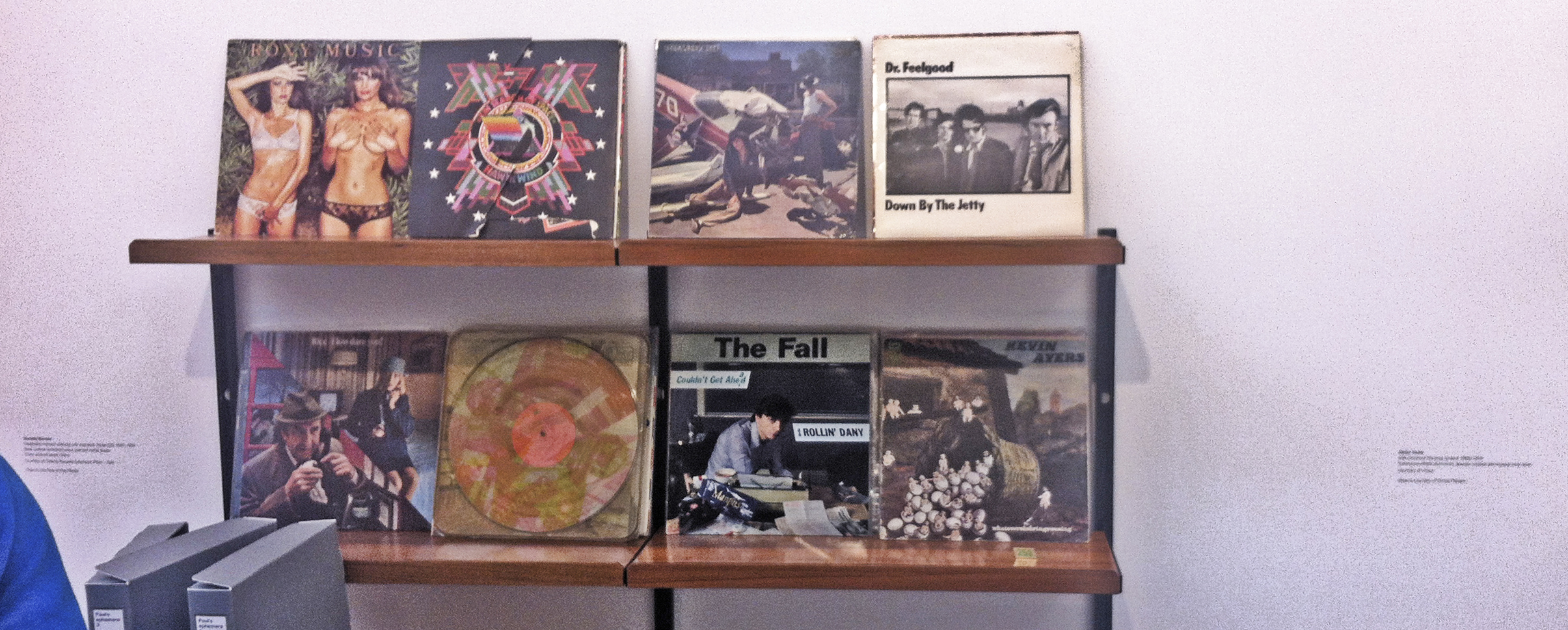
Brilliant Shelving Exhibition, Martino Gampler at the Serpentine Sackler Gallery
I know, a shelving exhibition! But it’s fantastic, not only for the iconic shelving systems, but for the witty way that they are dressed. This is the most music related, but the weakest of the exhibits. Go see the century brought to life through tiny things on shelves.

ShelvesThe Ballad of Geeshie and Elvie
I don’t feel qualified to even comment on this extraordinary piece from John Jeremiah Sullivan for The New York Times. If this is a subject you’re interested in, just read it. And watch the beautifully made films accompanying it (Photographs and video by Leslye Davis, production by Tom Giratikanon). And at the bottom, listen to the songs. And finally hear the Kronos Quartet’s version, scored by Jacob Garchik, to hear another setting of a melody so singular, so strange and so unique.

Jesse Winchester
A lovely tribute from Allen T, who had produced one of his albums, led me to this: the poise and perfection of both guitar and voice are really affecting.

A List to Argue Over
They’re wrong about five of them, I reckon.

Farfisa Organ, Steptoes & Son Scrap Yard, Peckham.
“Yours for £150, or £80 if you take it now, as I’m closing and then I won’t have to take it in…”

Farfisa


Five Things: Wednesday 9th April [This is late, too]

I Got Those Ol’ Subcomittee Blues Again
“As thousands take their seats Thursday night at New York’s Barclays Center to watch Kiss, Cat Stevens and other artists be inducted into the Rock and Roll Hall of Fame”, writes Marc Myers in the Wall Street Journal, “Cecil ‘Big Jay’ McNeely will be preparing dinner in his one-bedroom apartment in the Baldwin Hills section of central Los Angeles. In the late 1940s and early ’50s, Mr. McNeely helped pioneer rock ’n’ roll. His wailing blues saxophone and feverish R&B concerts set new showmanship standards for many rockers who followed—including Little Richard, Elvis Presley, Jerry Lee Lewis and James Brown. He also helped integrate R&B, paving the way for rock’s mass-market ascendancy in the second half of the 1950s… “Having more early R&B artists inducted would be great, but ultimately it’s the decision of the subcommittee,” said Rock and Roll Hall of Fame Foundation president and CEO Joel Peresman. “Then their recommendation needs to garner enough votes among nominating-committee members to get on the ballot.” That last sentence on Big Jay McNeely’s omission from the Rock and Roll Hall of Fame makes you question the very notion of a Rock and Roll Hall of Fame, doesn’t it?

“And the audience laughed at Lester Maddox, too”
Bob G. sends me a link to a site where eloquent strippers talk about music and politics, and one of the choices leads me to this discovery about Lester Maddox. As Wikipedia says: “Maddox’s name appears in the opening lines of Randy Newman’s song “Rednecks” in allusion to his appearance on The Dick Cavett Show:
“Last night I saw Lester Maddox on a TV show/With some smart-ass New York Jew/And the Jew laughed at Lester Maddox/And the audience laughed at Lester Maddox too.
Well, he may be a fool but he’s our fool/If they think they’re better than him they’re wrong/So I went to the park and I took some paper along/And that’s where I made this song.”
He was a populist Democrat, and a staunch segregationist, refusing to serve black customers in his Atlanta restaurant in defiance of the Civil Rights Act. Amazingly, Maddox was the 75th Governor of Georgia (from ’67 to ’71). After his 1974 gubernatorial bid, and with his political career seemingly over and with massive debts, Maddox began a short-lived nightclub comedy career in 1977 with an African-American musician, Bobby Lee Sears, who had worked as a busboy in his restaurant. Sears had served time in prison for a drug offense before Maddox, as lieutenant governor, was able to assist him in obtaining a pardon. Calling themselves The Governor and the Dishwasher, the duo performed comedy bits built around musical numbers with Maddox on harmonica and Sears on guitar.” Truth, truly stranger than fiction, as this newspaper clipping from the time attests.

Maddox


Duke Fakir, Four Tops singer, How We Made “Reach Out, I’ll Be There”, The Guardian
“We were all in the studio one day when Holland-Dozier-Holland said they wanted to try something experimental. They had this thumping backing track played by the Funk Brothers – it had an amazing drum beat created by timpani mallets hitting a tambourine. The sound was fabulous, but then Eddie said they wanted Levi Stubbs [the Four Tops’ lead singer] to do Bob Dylan-type singing over it. Levi was uncomfortable at first. He said: “I’m a singer. I don’t talk or shout.” But we worked on it for a couple of hours, recording it in pieces, talking part after talking part. Eddie realised that when Levi hit the top of his vocal range, it sounded like someone hurting, so he made him sing right up there. Levi complained, but we knew he loved it. Every time they thought he was at the top, he would reach a little further until you could hear the tears in his voice. The line “Just look over your shoulder” was something he threw in spontaneously. Levi was very creative like that, always adding something extra from the heart. The finished song didn’t sound like the Four Tops. We just assumed it was some experimental thing that would go on an album. A few weeks later, Motown boss Berry Gordy sent us a memo: “Make sure your taxes are taken care of – because we’re going to release the biggest record you’ve ever had.” He called us into his office, and I remember one of us asking: “So when are we going to record this great song?” He said: “You already have.” We’re all thinking: “Huh? Then he played “Reach Out” and we said: “Hold on, Berry, we were just experimenting. Please don’t release that as a single. It’s not us. It has a nice rhythm to it but if you release that we’ll be on the charts with an anchor.” He laughed, but we left the meeting feeling very upset, almost angry. I was out driving when I heard the song on the radio for the first time. It hit me like a lead pipe. I turned my car round and drove right back to Berry’s office. He was in a meeting but I opened the door and just said: “Berry, don’t ever talk to us about what you’re releasing. Just do what you do. Bye.”

Mistaken Wall Painting. Don’t Hold Front Page.
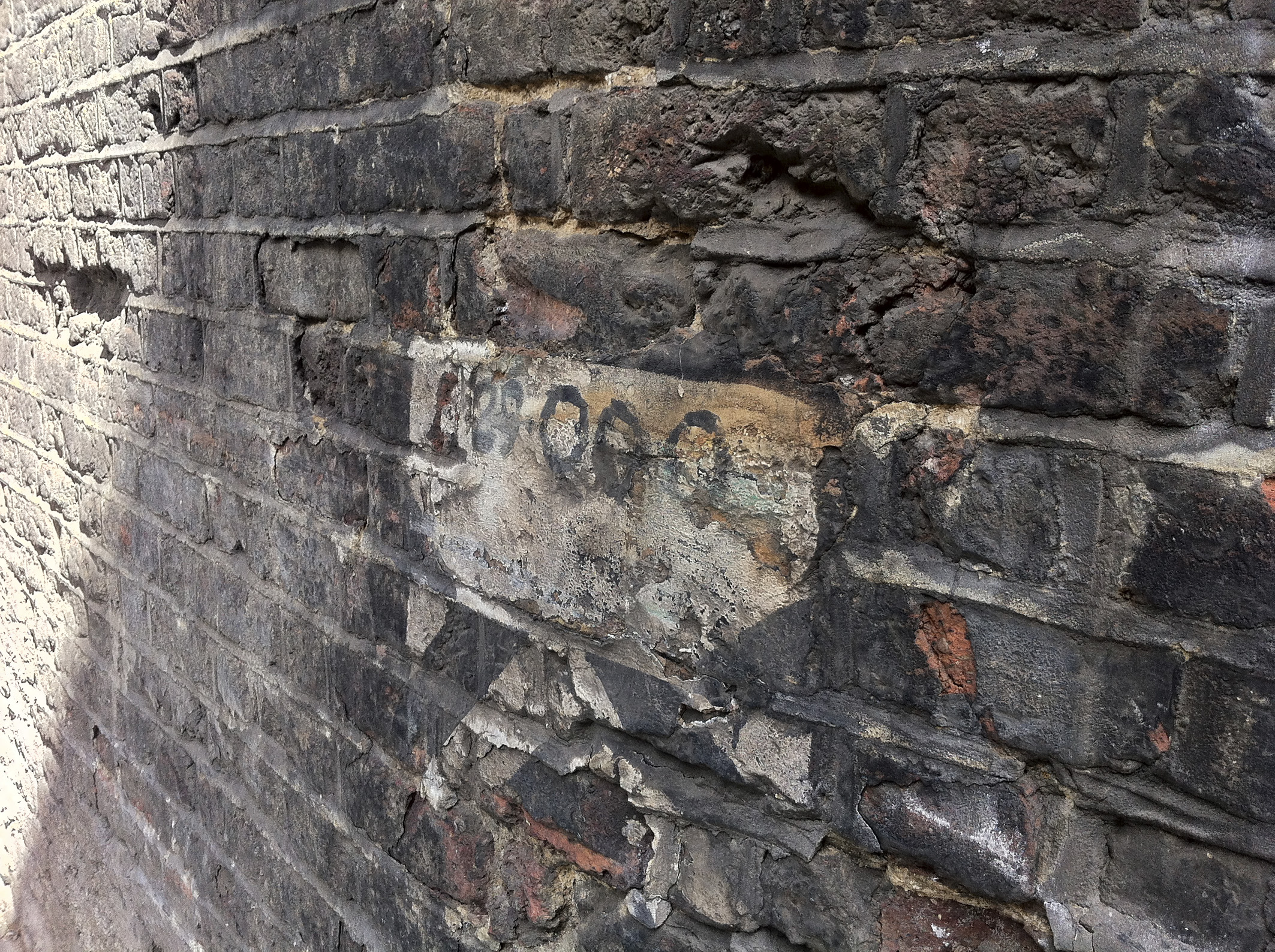
Waiting in the car, the sunlight drew me to something on the wall at the end of our street. And in one of those “doesn’t that look like the face of Jesus in my burnt tortilla?” moments, I thought it was a version of the cover of The Band. I know – mad. What it actually is: the number £29,000. Which in itself is quite strange…

Band

Ronnie Scott’s Jook Joint
Reading A London Year (a compilation of diary entries for each day drawn from myriad sources) I come upon this, written on the 27 march, 1776 by Edward Oxnard.

“In the evening went to Drury Lane to hear the Oratorio of the Messiah composed by Handel. It is impossible for me to express the pleasure I received. My mind was elevated to that degree, that I could almost imagine that I was being wafted to the mansions of the blest. There were more than a hundred performers, the best in England.”

I knew how he felt as I sat in the best seat of the house (thanks H+E!) and listened to Ronnie’s super-talented MD James Pearson lead his house band through a soul-heavy set that was flatly astonishing. If you’d asked me beforehand if I wanted to hear “Proud Mary”, I’d have politely declined. What could anyone bring to that karaoke warhorse, written by John Fogarty and pummeled into the ground by Tina Turner? I reckoned without Michelle Jones and a band who played everything with taste and feeling. It’s hard to know where to start… The first half had been the Alex Garnett quartet with Dave Jones on bass, fleet fingered but mountainously funky, Pearson on keys and Elliot Henshaw on drums, moving from the twenties to the seventies, jazz-wise, with ease. The same musicians became the nucleus of the band for the second set, joined by a five piece horn section featuring, joy of joys, a baritone sax. They also added three terrific singers and the sensational Adam Goldsmith, fresh from essaying every guitar style known to man in The Voice house band. A medley of Cop Theme Tunes was followed by a perfect “Night Train”, hot horns to the fore. There was so much to enjoy here, especially Goldsmith’s Curtis Mayfield-style licks wrapping around Polly Gibbon’s sultry vocal on Ray Charles “What Would I Do Without You?” and his angry soloing on “I’d Rather Go Blind”, counterpointing Michelle Jones.

I could have watched Elliot Henshaw all night. I had to go up to him afterwards and tell him that he was one of the best drummers I’ve ever seen. In the quartet it was “Big Noise From Winnetka” (expansive and dynamic Krupa-esque tom thumping) one moment, Mr Magic-era Harvey Mason (a model of funk precision) the next. His cymbal playing behind the soloists was hair-raisingly good, every intonation wieghted and propulsive. In the R ’n’ B/Soul second half, where they were reading charts for unfamiliar arrangements, he was just as jaw-dropping. Not a missed turnaround, not a bridge or chorus that didn’t lift higher than the one before. Hugely recommended, the Jook Joint’s on Sundays, once a month, with a shifting cast of great musicians.

Five Things: Wednesday 2nd April [Late]

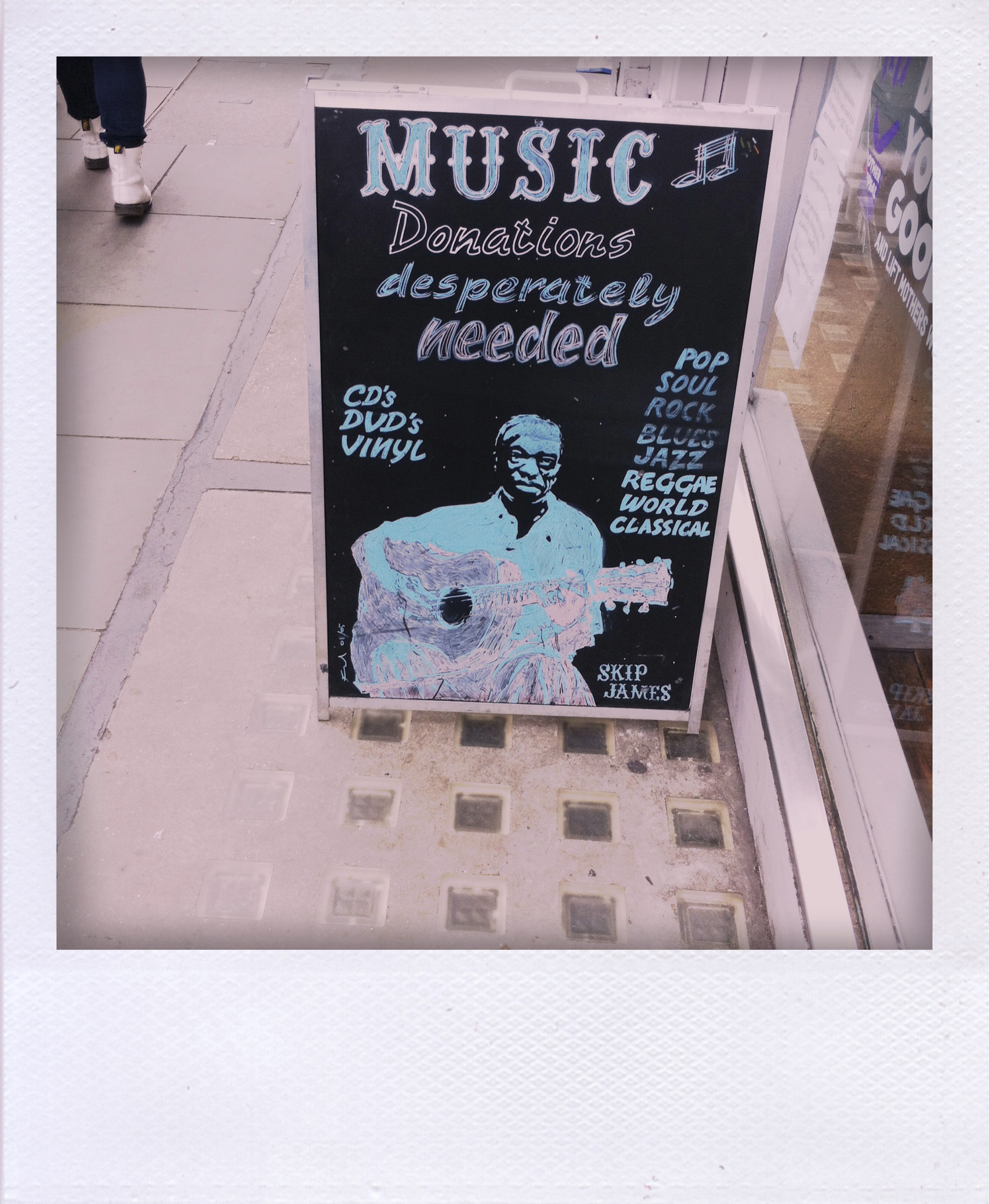
Oxfam Remembers The Great Skip James, Marylebone High Street

Oxfam


Jesse Winchester: Not Dark Yet
…although news travelled around that it was. Looked out his great first album, on Ampex (a tape manufacturers’ short-lived attempt to run a record label), and listened again to a fine set of songs, helped along by Robbie Robertson’s light-handed production. And what now seems an envelope-pushing fold out sleeve…

Jesse


Loved this Patti Smith Questionnaire
Favourite song That No One Else Has Heard Of: “The… song that I think of is “If I Can’t Have You” by Etta & Harvey. Etta James used to sing with Harvey Fuqua and it’s an awesome song. No one knows about it – I’ve asked a million people, do you know this song by Etta & Harvey? And there’s just something so… it’s a very sensual… it’s a badass song!” Check the elongated “I” just before a minute in, from Etta, and the “Well-a-hooo” that Harvey follows with. Sensational. And in the week that my sister-in-law gives birth to a baby girl called Etta, most appropriate.

Lunch With Sammy & Louise Rimington

Sammy


1970 Jazz Fest poster, bass drum in the basement (with a calfskin head that Sammy had fitted, Sammy playing his 1982 Fender Telecaster Elite (a commercial unsuccessful attempt to do a Fender version of a Gibson Les Paul Recording model) and the mandolin that Sammy will take to this year’s Jazz Fest for his string band with Sava Venet.

George Harrison Selfie, Taj Mahal, sometime in the Sixties. Cool wide-angle.

George


Five Things: Wednesday 26th March

It’s Album Week at 5 Things! New Album Display
These may be my favourite two album covers, ever. Jimmy Reed’s a study in perfect 50s still-life, and Blind Blake (or rather, Blake Alphonso Higgs, not Blind Blake the bluesman) looks like some proto-Neville Brody illustration (if you remember his illustrated 12-inch singles from the 80s, that is). The guitar neck and peghead is fantastic, and the fingers are a little like Robert Johnson…

Blake

Check out the wonderfully-named Dust & Grooves
I really like Jeff Gold and there’s much to enjoy here. Dig Jimi’s personal album collection, the Rolling Stones eponymous debut album – “the first pop album with no type on the cover, thanks to their innovative manager, Andrew Loog Oldham” – and the great see-through Faust album, which I remember owning (and liking for the cover more than the music), but can no longer find!

Faust

I Read this Guardian piece, titled “Is this the first post-internet album?”
And then I read it again. And both times I didn’t understand a word of it. I didn’t understand the subject and I certainly didn’t get a sense of what it may possibly sound like. So I find the first track, “Satellites” online and there’s some industrial noise, the words “open the satellites” repeated a lot, some beats and a haircut. And nothing that sounds remotely new, post-internet or like a musical version of a William Gibson book.

From the blog, Just A Hint of Mayhem
“Don’t you just love Elton John’s “Bennie And The Jets” from his 1973 double album Goodbye Yellow Brick Road? I certainly do. I knew that it wasn’t a live recording but the applause included on the track makes it sound as though it is. Did you know that the applause wasn’t even recorded at an Elton gig? In fact it is drawn from recordings of the audience clapping and shouting at Jimi Hendrix’s Isle Of Wight festival set in 1970. I know of another occasion where that kind of thing has happened too. The sound of the crowd used on the title track of David Bowie’s Diamond Dogs album is actually the applause taken from a live album by the Faces… Can any of you offer any similar gems?”

A Little More Llewyn Davis
Llewyn Davis has become our background music of choice over the last few months. I’m not sure why, as the album is not consistently good (in fact, I think the best thing on it are Dave Van Ronk’s “Green Green Rocky Road” and Dylan’s “Farewell”, the only original tracks) but it creates a great mood. So a few more ILD bits:

1> Annie Charters I wanted to know what Annie thought of the film and was pleased that both she and Sam loved it, while realising that it, of necessity, played loose with the truth of actual life in the village in 1962. Sam produced Inside Dave Van Ronk for Prestige, (apparently the cat was only there for a couple of frames as the cover was shot, but it was enough for the Coens), with Blue Note legend Rudy Van Gelder as engineer, which I hadn’t known. Annie took the lovely pic of Terri and Dave on a Village rooftop. She said that she and Sam were both mouth-agape at the re-creation of Moe Asch’s office (where he offers Llewyn Davis a coat instead of royalties). Apparently the walls really were covered with terrible paintings that Moe was convinced were priceless, and he left some to Sam and Ann in his will.

12-Inside
2> Oscar Isaac: “Here’s a crazy story. I was doing this really small movie and there was this guy in the scene, he was an extra, he’s in his sixties and he’s playing a drunk in a bar. There was this guitar just sitting there on the set and in between takes he picked it up and started playing. So I asked him what his story was, and he said that he was a guitar player from New York. So I told him that I had this audition coming up and that the part was based a little bit on Dave Van Ronk. So he says that he played with Dave Van Ronk. And then he told me to come by his place, and I asked him where that was and he told me that he lived above the Gaslight on MacDougal Street and that he’d lived there since the ’70s. It was like this time capsule. He had these stacks of records and guitars all over the place. And he doesn’t start playing Dave Van Ronk, he starts playing the stuff that Dave Van Ronk was listening to, like the Reverend Gary Davis and Lightnin’ Hopkins. And then he introduced me to Dave Van Ronk’s widow. And this was all before the audition. So I felt this has to happen. It was meant to be. So then I started playing with him. I’d go along to coffee houses and open up for him and we would share the basket. And that really immersed me in the whole scene and allowed an organic folk sound to come out.”
3> Richard Williams: “I’ve seen it a couple of times and was impressed by the faithful portrayal of the Greenwich Village folk scene as it prepared for the transition from Pete Seeger to Bob Dylan (although, as a friend pointed out, nobody tied a scarf with a loop in the way Oscar Isaac, who plays Davis, does until about 10 years ago).”

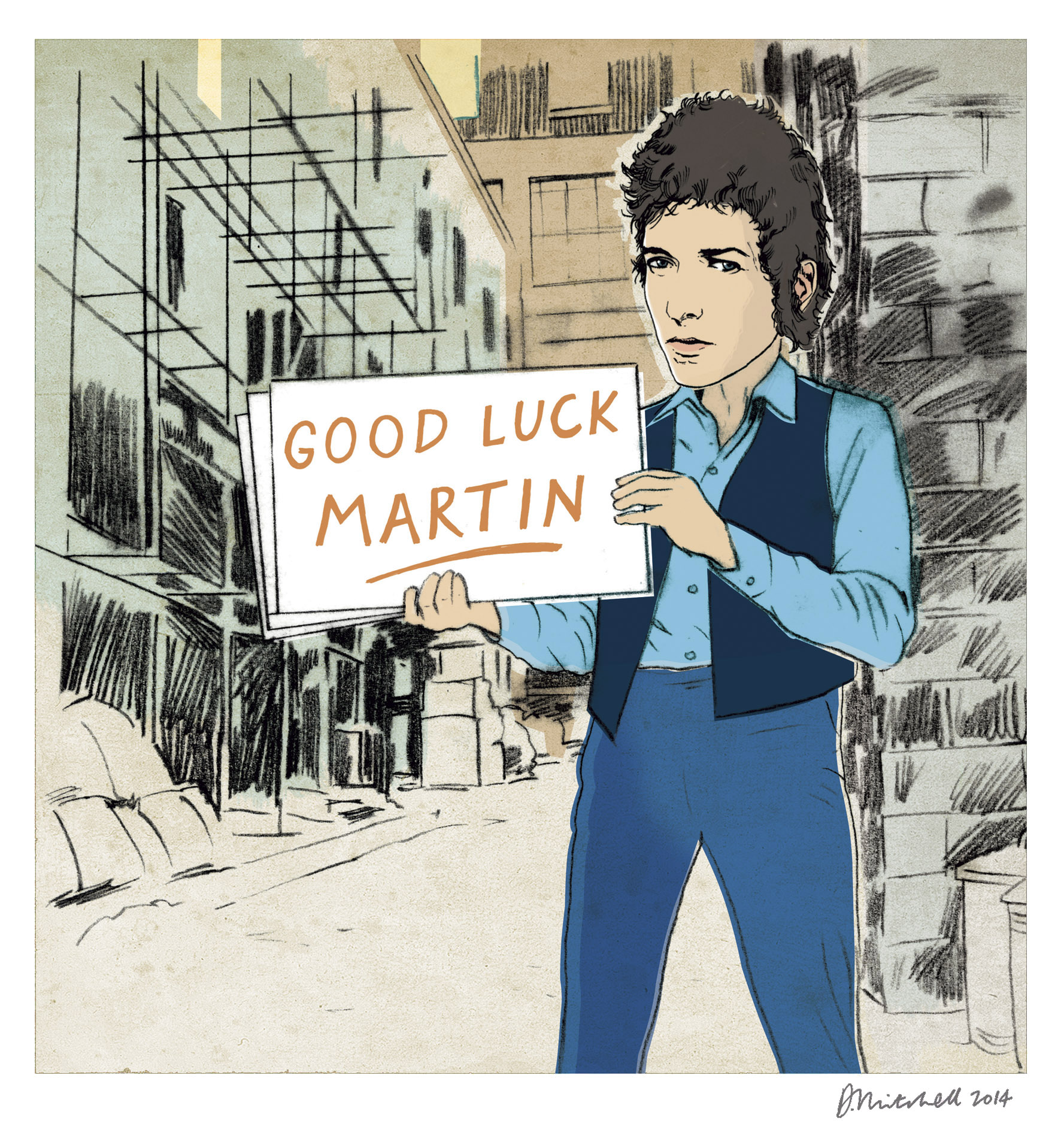
Extra! Goodbye Card from Dan Mitchell…
… as I leave my job. Thanks, Dan!

Good Luck

Five Things: Wednesday 19th March

Sammy Rimington, Martin Wheatley, Cuff Billett, Vic Pitt, Chris Barber, Kenny Milne, Camberley Cricket Club

Sammy&Chris

An unprepossessing room, but a great evening, with music ranging from New Orleans to St Louis and New York, via Hawaii (for Martin Wheatley’s cracking solo performance of “Laughing Rag”). Hadn’t seen Chris play for years, but nice to get a chance to thank him for his contributions to British & American music. And lovely to make the acquaintance of Martin, too modest to tell me that he was part of the Bryan Ferry Orchestra, but keen to share a love of Hawaiian guitarists in general and Roy Smeck, the “Wizard of the Strings”, in particular.

The Whistle Test 70s California Special
Two highlights (apart from the obvious ones, Little Feat’s “Rock ’n’ Roll Doctor” and James Taylor’s pellucid, almost weightless, guitar playing): JD Souther doing “Doolin-Dalton” with the accompaniment of a bass player who switched to piano for the bridge and coda, playing beautifully… just a shame that JD wasn’t handsome enough to join the Eagles. And Ry Cooder’s fantastic take on Sleepy John Estes “Goin’ To Brownsville” with quite the most violent mandolin playing ever committed to video.

Avicii, DJ, creator of the biggest hits on the planet, by Simon Mills, ES Magazine
“Bergling is on his computer. An Apple laptop screen illuminates the tired-looking but puckishly pretty-boy face (which Ralph Lauren chose to front its Denim & Supply jeans ads). His concentration is trance-like as his fingers move across the keyboard at the warp speed of a jonesing IT man. ‘Sorry. If you can wait a minute… I just have this tune in my head and I need to get it down before I forget.’ Avicii, who has worked with Madonna and Lenny Kravitz, the geeky Swede whom not even One Direction could knock off the number one spot last summer, is writing his next hit song. Right in front of me.

The melody coming from the mini speakers sounds plinky-plonky, almost puerile, but Bergling keeps trimming and honing, adding notes and beat-matching, turning the laptop to show me the Tetris visuals of the FL Studio programme. After five minutes, something approaching the top line of a hit emerges.
It’s impressive but somehow all too easy, too convenient to be what the old fart in me would call ‘real music’. ‘Listen,’ he says. ‘I don’t consider myself “a musician”. Yes, I can play guitar, I can play piano; in fact, I play almost every instrument. I was never good enough to perform with a band… but I always knew about melody. I could vision for how I wanted things to sound. And I don’t think you can say that what I do, what DJ producers do, is not “real music”… it’s electronic music. You are drawing the melodies, drawing the chord progressions. You are making music. Mozart wrote everything down on a piece of paper. DJs write on computers. I really don’t see any difference.’

There’s a pause. ‘I’m not comparing myself to Mozart, by the way…’

You just did.”

My New Favourite Blog: My Husband’s Stupid Record Collection
“Alex and I have lived together for 9 years. In those 9 years we have packed up, moved and unpacked his record collection 5 times. It’s about 15 boxes, about 1500 hundred records, “that includes the singles and stuff, which you’re also going to have to review.” Is what Alex just said to me from the other room.

This project was my idea, inspired by maybe one too many glasses of wine last weekend, when I was in charge of changing the music. So here we are. Alex’s taste in music could probably be best described as eclectic on the snobbier side. My taste in music has changed from the early beginnings of Disney musicals to Dave Matthews Band, to discovering the Pixies in college. I’ve never been ahead of the curve with music, but my taste could probably also be described as eclectic on the snobbier side too – just in a much more clueless way. Alex said reading a reaction from a person like me, rather than a person who knows about the history of what I might be listening to, who has been listening to the same stuff for decades and has the vocabulary to talk about it, will be funny, sincere and maybe even thought-provoking. Maybe? I don’t know, I guess we’ll see. Here are the rules I’ve set for my self. Start with the A’s. Listen to the entire thing even if I really hate it. And make sure to comment on the cover art. Are you with me? Let’s see how far I can go.”

Two excerpts: “There is an article by Ralph J. Gleason on the back cover of this album called Perspectives: The Death of Albert Ayler which is very good and making me wish I liked this music more. Maybe it’s an acquired taste. While I already knew that this type of jazz existed, this is probably my first time listening to an entire album of it all the way through and intentionally.”

“I really love these liner notes.  For the song “We all Love Peanut Butter” by the One Way Streets (which is also very good) it says: “One hot summer day in 1966, two mom-driven station wagons pulled up outside Sunrise Studios in Hamilton, Ohio and out piled 4 insane teens. While their moms set up a table on the lawn outside and played bridge and drank lemonade, the One Way Streets were inside the studio shredding their way through 2 songs they felt would create a major disturbance. As a finishing touch to their wild afternoon, they ripped off an eighty dollar mike on their way out the door and haven’t been heard of since.” Every single detail about that anecdote makes me very, very happy.”

Hate Is A Strong Word, Tim Chipping, Holy Moly, Thursday 13th March
“Just when you thought New Zealand singing teenager Lorde could do no wrong, she goes and upsets reggae fans. Lorde somewhat confusingly wrote on her blog: “I hate Reggae, Reggae makes me feel like am late for something.” She’s not welcome at the offices of newspaper The Jamaica Star. Their resident gossip columnist has put the “Royals” singer firmly in her place, roots-style. Writing in the paper’s Roun’ Up section, columnist Keisha says: “International artiste Lorde say she hate reggae music. Everybody nuh haffi like everything but HATE is a very strong word. Lorde, you always look like smeagol from Lord of the Rings. You always look like you a have seizure when you deh pon stage a try move you crawny body. If you need fi HATE anything, you need fi HATE you age paper. A nuh our fault say you a 17 and look like 3 million. A nuh our fault say you caan sing live. Gwaan from ya, Miss One Hit Wonder.”

Would anyone mind if we spent the rest of the day saying gwaan from ya?”

Five Things Photo Extra

Bob&Manny

Five Things: Wednesday 12th March

Photographers’ Gallery: Poor Andy Warhol Exhibition
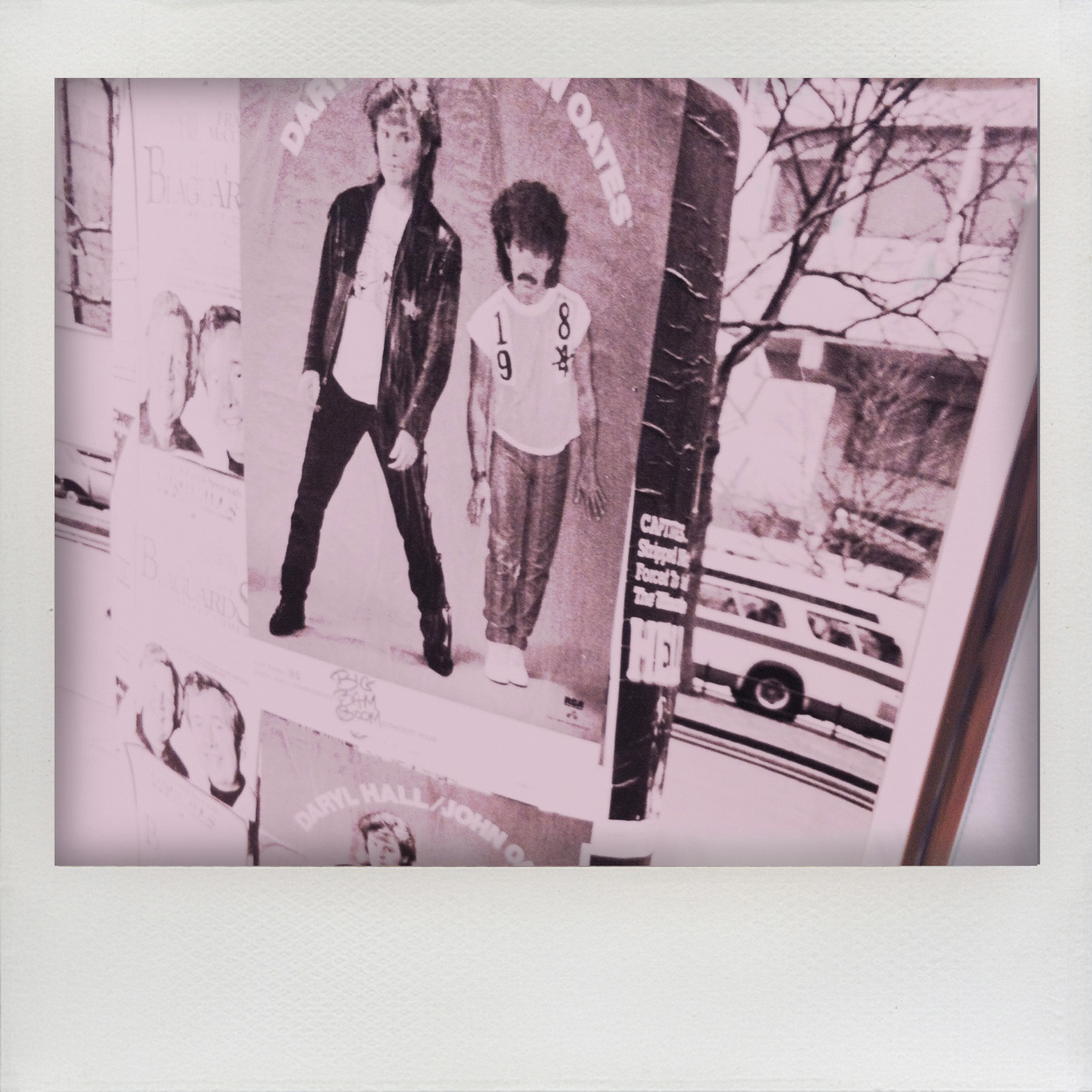
Negligible photos badly printed. This was the only one I liked, mainly for John Oates’ T-Shirt.

12-Warhol H&O

Jazz Names
In a pile of things, I find the launch issue of The Rocking Vicar, Mark Ellen’s pre-Word “magazine”, which grew out of an early email newsletter. My favourite nugget is David Quantick’s Jazz Names: adding your dad’s nickname to the place you live. Mine at this time? Bilco Fitzrovia. Send in more!

Nothing about the Music Business ever changes
March 1, 2014: David Palmer, who sang lead for Steely Dan in the early days, is suing his old band. In a suit filed in Los Angeles Palmer claims that he is owed money as a result of royalties earned via satellite and streaming services. Palmer is contractually listed as a founding member of the group, and therefore entitled to one-sixth of all royalties earned from songs on which he performed. – Hollywood Reporter. Palmer sang on five songs on Steely Dan’s 1972 debut, Can’t Buy a Thrill, including the lead on “Brooklyn (Owes the Charmer Under Me)” and the hit “Dirty Work”, and background vocals on several songs on 1974’s Countdown to Ecstasy. Back then, he also sang lead in concert because Donald Fagen was not yet comfortable singing lead. Palmer was fired in April 1973 due to, as reported in Brian Sweet’s bio Steely Dan: Reelin’ in the Years, concerns about both his ability to interpret the songs and his habit of performing under the influence of alcohol. The lawsuit may have resulted in the song “Dirty Work” being left off the CD release of the American Hustle soundtrack. Apparently Steely Dan refused to allow “Dirty Work” on the OST CD whereas all the other ’70s acts did.– Ultimateclassicrock.com

Carla Jean Whitney Calls…
and she’s writing a book on Muscle Shoals, and she’s found a picture that I took of the sign, “Welcome To Muscle Shoals, Hit Recording Capital of the World”. Looking for images for her, I find my favourite picture, of Heather and great bass player Bob Wray, recording at 1000 Alabama Avenue, and this business card that I didn’t know I had.

ShoalsBH

Rewatching the film on BBC4 I found myself wishing for less of the Singing River stuff, waaaaay less of Bono (he ever record there? No. His music influenced much by what was recorded there? No.) and much more music. What was there was fantastic, especially the Wilson Pickett sessions (love the look on Roger Hawkins’ face when he recalls Pickett complimenting him on his drumming) and, of course, Spooner at the Wurlitzer playing those immortal chords…

Sad (or maybe not) Site Of The Week: Forgotify

Forgotify