Extra! Bob Dylan & his band, RAH, 21st October

“Why can’t I be more conventional
People talk
People stare
So I try
But that’s not for me…”
– “Why Try to Change Me Now”, covered on Shadows in the Night

These things we know: that Bob has a great band, from the rock steady rhythm section, equally at home with brushes and bows as sticks and fingers – to the dazzling front line of guitar and pedal steel; that he has an unsurpassed choice of songs to sing; that he won’t respond to requests no matter how many times the audience shouts out their particular favourite song; that he will always be his own man, ploughing his own furrow.

This we didn’t know: that he could sing, live in concert, timeless songs of the 40’s and 50’s with a believable, vulnerable – but above all careful – voice.

It made him less cavalier with his own songs, too, and the contrast of the pedal steel and brushes-driven Sinatra songs gave his 21st century blues numbers more snap and bite – “Pay In Blood” was terrifying, phrase after phrase flung from the stage like Muddy Waters backed by Johnny Winter; “Long and Wasted Years” becoming a second cousin of “Brownsville Girl”, both in melody and narrative delivery.

He pays homage to the American music that still fuels him in the way he chooses to walk onto the stage. The first half kicked off with guitarist Stu Kimball playing an acoustic piece of western folk (think the “Pat Garrett“ soundtrack, or “Red River Valley”) as the rest of the band filed on. For the second half Kimball played an electric country blues, Mississippi via Chicago, for the band’s entrance. As he said in Chronicles, “Highway 61, the main thoroughfare of the country blues, begins about where I began. I always felt like I’d started on it, always had been on it and could go anywhere, even down in to the deep Delta country. It was my place in the universe, always felt like it was in my blood.”

I also thought of this quote, said when he was 21 and talking of the tradition that he wanted to work in… “I don’t carry myself yet the way that Big Joe Williams, Woody Guthrie, Leadbelly and Lightnin’ Hopkins have carried themselves. I hope to be able to someday, but they’re older people. You see, in time, with those old singers, music was a tool – a way to live more, a way to make themselves feel better at certain points.”

And even at his most forward-thinking, smashing the conventions of popular song, there would always be the blues: “Leopard Skin Pillbox Hat”, “Highway 61”, “It Takes a Lot to Laugh, It Takes a Train to Cry”. You wonder what his 1966 self would make of him singing Sinatra at the Albert Hall in 2015. I bet he’d be fine with it. He was 1966 in 1966, and he didn’t need to be that again. He’d be pleased that he still honoured his roots every night that he plays, whether it’s Crosby and Sinatra, Wolf and Waters, or Williams, Holly and Berry. And, as he encored – with a wonderfully rolling and tumbling, piano-led version of “Blowin’ in the Wind” that was almost-country (but mostly Bob), and a coruscating “Love Sick” – I kept coming back to that verse from “Why Try to Change Me Now”. It struck me as both the fulcrum of the night’s set, and of his entire enormous, chaotic, poetic, mind-blowing, career.
Tuesday, 20th October

Due to unforeseen circumstances, Five Things is a little all over the shop this week – some pieces are in the wrong place, and others, about things I actually saw this week, will be in next week’s column. I hope that’s clear… for instance, Friday bought Paolo Conte to the Barbican, and I’ll try to write about that next week. He’s 78, and was the first of The Big Beasts of the A/W 2015 Season™ – and was utterly fantastic. The others are Bob [74] this week, and Charles Aznavour [91!] in November.

EXTRA! 5 THINGS INTERIOR DÉCOR TIPS
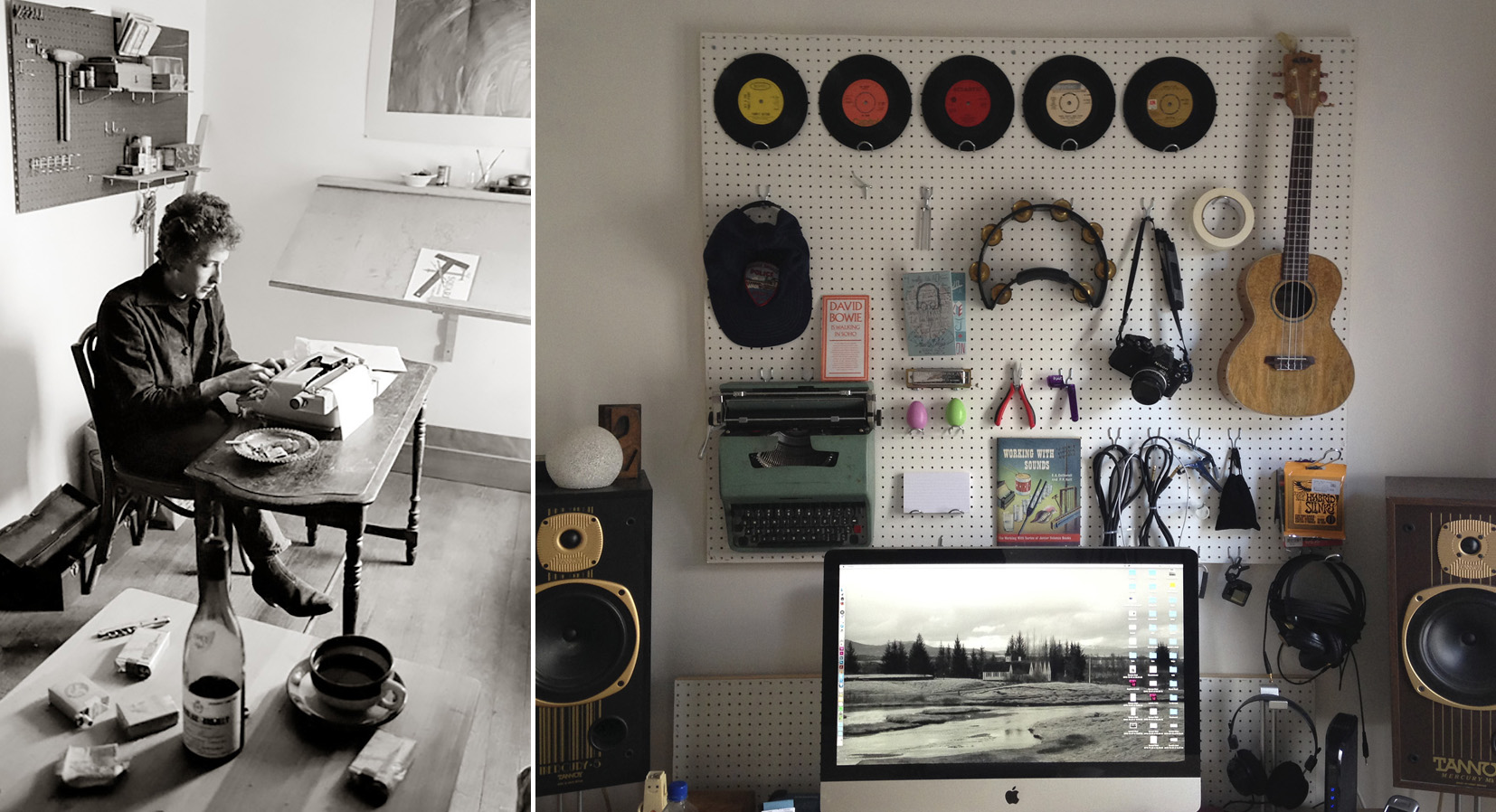
Years ago, Rolling Stone did a piece on Levon Helm’s studio, The Barn, and they were extremely taken with the full-size American flags that were hung from the tall double-height walls. They suggested that Levon could well turn his talents to interior design. Well, my current tip is inspired by Bernard Paturel’s Café Espresso in Woodstock. In a set of photos taken by Douglas Gilbert in 1964 for Look magazine – but rejected, as Dylan was deemed too scruffy – there are shots of Bob writing in the upstairs room. Behind him are tools hung on pegboard (perforated hardboard to the timber trade), and I became obsessed with finding some to put on the studio wall. Of course, it also has memories of record-listening booths in the early sixties, so seemed apposite. Thrilled to actually find some, this was the result. I am, obviously, available for all freelance interior design gigs…

Dylantypestudio[I also remember that we once saw Julia Childs’ kitchen at the Metropolitan Museum of Art in NYC. It had been taken from her home in Cambridge, Massachusetts to be displayed at The Smithsonian. She had used pegboards to hang her utensils.]

IT’S NOT HAPPY VALLEY…
but Unforgotten’s pretty good and the cast is cracking: Bernard Hill, Ruth Sheen, Brian Bovell, Tom Courtenay, Hannah Gordon, Cherie Lunghi and Trevor Eve among them. Loved the exchange between the lead detectives, Nicola Walker and Sanjeev Bhaskar. His character is nicknamed Sunny, and when he gives his boss (Walker) a piece of information that she’s been obsessing over, she breaks out Bobby Hebb: “Sunny, yesterday my life was full of rain, Sunny, you smiled at me and really eased the pain…”

IF YOU LIKED THAT, YOU MAY LIKE THIS…
Also in detfic news, Aby Morgan’s weird police procedural, River, (think Sixth Sense crossed with Prime Suspect) has a first episode brilliantly bookended by “I Love to Love (But My Baby Loves to Dance)” by Tina Charles, first as a singalong in the car, by Nicola Walker (excellent again) and Stellan Skarsgård, and at the end, as karaoke. Produced by Biddu (remember the Biddu Orchestra?) it’s a creditable lift of the TK house band sound – way better than I remember it.

RADIATING SUNSHINE
Not being able to find Sunny at home and wanting to hear it again I went to YouTube, and discovered this excellent tv performance with Bobby Hebb accompanied by the great Ron Carter on (electric!) bass. After the intro, Bobby goes into the setup for the first verse but unaccountably, teasingly, slips in a bit of the James Bond theme. And the way the key just gets higher and higher towards the end is just great. Don Cheadle could play him in a heartbeat.

Richard Williams wrote a terrific obituary when Bobby died in 2010: “Two minutes and 44 seconds of unrepeatable pop-soul alchemy, recorded almost as an afterthought at the end of a session in which greater attention had been paid to other songs. A two-second snare-drum roll, an irresistibly cool bass figure, the mentholated chimes of a vibraphone, and a guitar and a hi-hat italicising the backbeat introduced Hebb’s light-toned but unmistakably ardent voice, soon buttressed by a purring horn section, kicking drums and cooing backup vocals. It was a gift to discotheques everywhere.”

Bobby had a proper backstory, too… “He was born [Robert Von Hebb] in Nashville, Tennessee, the son of blind musicians, and he and his brother Harold, who was six years older, performed on the street as part of the family’s washboard band, Hebb’s Kitchen Cabinet Orchestra, while they were still children. In his teens, Hebb became the only black member of Roy Acuff’s Smoky Mountain Boys, playing the spoons and other instruments, at a time when commercial country music was an exclusively white preserve.” See what I mean?

You can also watch James Brown kicking it out of the park here. This performance was uploaded by rare soul films, which does what it says on the tin – a real treasure chest of great tv performances.

SPEAKING OF DON CHEADLE
An interesting review of Don’s Miles Davis biopic from Matt Patches of US Esquire:
“In his prismatic, percussive biopic Miles Ahead, which just premiered at the New York Film Festival, actor-director Don Cheadle picks up with Davis at his lowest point, a late-’70s stretch of musician’s block provoked by depression and fluffed with cocaine. Through flashbacks and haunting memories, we see the full pendulum swing – from success stories, down to derailment, and all that jazz in between. Cheadle evokes Davis’ recordings with mercurial style and his own rambunctious performance as the late legend. The past ebbs and flows out of the present. Deeper cuts (think Agharta) rub against the classics in an anachronistic splatter painting. The main thrust of the film, the hunt for stolen studio tapes, imagines Davis and amalgamated Rolling Stone writer Dave Brill (Ewan McGregor) in a swinging version of T.J. Hooker. Cheadle pulls out all the stops to capture Davis’ essence. He never quite gets there. Miles Ahead is the rare biopic in need of Hollywood’s “cradle to grave” blueprints. By scrapping Davis’ origin story – picking up his first trumpet, finding his sound, abandoning the culture around him – the film simply insists upon importance. The music never speaks for itself.”

Monday, 12th October

VISUAL OF THE WEEK

BobSHB

From the promo short for the next Bootleg Series, number 12, film of Bob looking at a music shop window the day that “Subterranean Homesick Blues” goes on sale (as does Cilla’s new single!).

IF YOU NEED CHEERING UP…
Then you may need to watch Salman Rushdie reciting the lyrics of Canadian rapper Drake…

Or listen to letter G of Joe Boyd’s A-Z, which features fascinating insights into the poetry of Lucinda Williams’ Car Wheels on a Gravel Road, and the story of its tortuous gestation. She left Rick Rubin’s label in tears – after playing the first version of the album to him, his only comment concerned adding tambourine on one of the tracks – and ended up finishing the album for Polygram with E Street keyboardist Roy Bittan producing. Bittan himself recently talked to Rolling Stone about it: “Lucinda was making the record down in Nashville, and I think she hit a wall. She wasn’t grooving in the studio and was having difficulty finishing it off. I knew her bass player, so they wound up flying me down to produce the thing. I was told the whole thing had stalled. We wound up re-cutting most of the tracks, though the drums and bass parts were pretty good… Lucinda is just this tremendous, authentic, fantastic artist. She reminds me of Bruce, even though they have very, very different styles. She’s a great songwriter with an extremely beautiful, vulnerable voice. I produced the record, but unfortunately they already made a deal where Rick Rubin mixed it. I would have liked to have done that. But he did a great job.”

ON THE OTHER HAND, IF YOU NEED DEPRESSING…
Then find the latest advert for the launch of a new perfume, Decadence. Apparently, Adriana Lima captures the glamour and luxury of the fragrance in a mesmerising TV campaign. No. What happens is that, thanks to Marc Jacobs, the Marvelettes fabulous, Smokey-produced, “The Hunter Gets Captured by the Game” is sullied by a truly poxy faux-sleaze tv ad, that doesn’t scream decadence as much as it screams desperate cliché.

A FASCINATING INTERVIEW…
from every record tells a story, although in this case it’s the photos that do the talking –“Incredible Archive of Lost Photos Unearthed of Led Zep, Bowie, Rolling Stones…”
So why didn’t you go on to be a professional photographer?
Bottom line is, I really wasn’t suited to being a photographer. I was as blind as a bat! I could have passed as a poster child for kids with “Coke bottle” glasses. So I had to look through thick lenses, then through the viewfinder in the dark with the lights flashing and changing and reflecting into my glasses – when I did this, it wasn’t about the photography. It was about the moments and the music and the people that I was watching and was so passionate about. To me it was all so unreal and unbelievable that this pasty white, skinny, tall, long-hair kid was standing ten feet from Bob Dylan and George Harrison. That’s what it was all about for me.”

FROM JAZZWAX…
the ever-interesting blog by Marc Myers, comes Yogi Berra on jazz. Berra was one of those characters that you knew of growing up on a diet of Mad Magazine, as I did. I’m not sure I ever knew really what he did or meant to Americans, but I did cotton on to the fact that he mangled the English language in ways that were extremely funny. He was, in fact, a great baseball player for the New York Yankees, but as Wikepedia has it, “he was also known for his malapropisms as well as pithy and paradoxical quotes, such as “It ain’t over ’til it’s over,” while speaking to reporters. Simultaneously denying and confirming his reputation, Berra once stated, “I really didn’t say everything I said.”

Yogi Berra Explains Jazz:
Interviewer: Can you explain jazz? 


Yogi: I can’t, but I will. 90% of all jazz is half improvisation. The other half is the part people play while others are playing something they never played with anyone who played that part. So if you play the wrong part, it’s right. If you play the right part, it might be right if you play it wrong enough. But if you play it too right, it’s wrong.
Interviewer: I don’t understand.
Yogi: Anyone who understands jazz knows that you can’t understand it. It’s too complicated. That’s what’s so simple about it. 

Interviewer: Do you understand it? 


Yogi: No. That’s why I can explain it. If I understood it, I wouldn’t know anything about it. 


Interviewer: What is syncopation?
Yogi: That’s when the note that you should hear now happens either before or after you hear it. In jazz, you don’t hear notes when they happen because that would be some other type of music…
Interviewer: Now I really don’t understand.
Yogi: I haven’t taught you enough for you to not understand jazz that well.

IN US TV NEWS!
THE LATE SHOW WITH STEPHEN COLBERT: It’s worth subscribing to their YouTube channel – the music spots are often interesting, and they upload them for each show. The Kendrick Lamar performance from a couple of weeks ago was staggering, and there’s an affecting, if slightly stumbling performance on the anniversary of 9/11 by Paul Simon (strangely not looking like Paul Simon), playing “American Tune”*.

CARPOOLING WITH JAMES CORDEN: Try as I might to dislike James Corden, I can’t. Get past the first feeble joke of this segment, and it’s very funny. The premise is that James can only use the carpool lane to get to work on his new chatshow if someone travels with him, and he uses this idea with the show’s musical guests – so he’s accompanied by Iggy Azelia, Justin Beiber, Mariah Carey, Rod Stewart at al. Here’s a link to the Stevie Wonder episode – the love Corden has of the Wonder back catalogue is palpable, and he’s clearly thrilled to have Stevie along for the ride.

[*Fascinating fact: Mandy Patinkin recorded the song in Yiddish on his 1998 album “Mamaloshen.” Now, don’t all rush to iTunes…]

Five Things Extra: thinking about Sam Charters and a few nice things

I woke up at 5am on the day we were to go to Uppsala to meet Annie, who was going to read some of Sam’s poetry at an evening performance at the English Bookshop, during Uppsala’s yearly Culture Night. Annie had asked me to say something about collaborating with Sam on a book of poems and photographs that we had published near the end of his life.

 I awoke with thoughts going around my head of what I would say, and decided to get up and write them down, as I’d either not get back to sleep if I didn’t, or remember them if I did. So in the apartment that we had spent such memorable times, I wrote as swiftly as I could.

*****

I always looked up to Sam – as a young boy, in a physical sense, as he was a towering figure dressed in Levis’ 501s, Bass loafers with cream socks, a light blue shirt, with a v-neck dark blue pullover, a canvas-coloured London Fog raincoat. From the age that I could understand what Sam said and did, I looked up to him as a mentor and guide.

His intellectual presence was all about the expanding of horizons. I can see him now, padding around my parents’ Charing Cross Road flat, a suitcase full of books and notes and records – always open – that spoke of exotic places, exotic thoughts, exotic music.

In 1968, we were sent three plane tickets – Pan Am, London to New York – to visit with the Charters. So for three weeks we soaked up America with Ann and Sam as our guides. My dad Bill was sent on his first visit to New Orleans, to hang out in the places – and with the people – that his brother Ken had written about so vividly in 1952 when he jumped ship to play with his heroes. We, meanwhile, headed to the Newport Folk Festival to stay in a spookily empty school dormitory and watch Arlo Guthrie and Janis Joplin and Buddy Guy and Junior Wells. Sam was Buddy and Junior’s record producer, and he took me backstage to their trailer where Buddy let me hold his guitar. That was an education right there.

*****

When Sam came through London in 1970, en route to a new life in Sweden (he’d felt that staying in the States at that point would mean joining the Weathermen), he left with me some of his favourite albums. There was God Bless Tiny Tim; there was I-Feel-Like-I’m-Fixin’-to-Die by Country Joe and the Fish (produced by Sam); more indelibly, Music From Big Pink was there, and I remember Sam saying that Richard Manuel’s “In a Station” was his favourite track.

Around this time (I was about fifteen) there was an open invitation to visit whatever project Sam was currently working on, so after school most days and weeks that he was in town, I would make my way over to Sound Techniques, a recording studio housed in an old dairy building off the King’s Road in Chelsea. I’d sit on the couch at the back of the control room as Sam produced American protest singers, English folksters, blues guitarists and Ragtime Orchestras, always with the same good humour, but also with an intense desire to bring out the core of whichever artist he was working with.

I saw his rapport with them, his subtle direction of them, and his real love for what they did. I experienced at first hand the camaraderie of musicians, the application of their gifts, their ability to come together and coax magic from thin air. These things have always stayed with me.

*****

Sam had a really sophisticated knowledge of music and its history and such a wide-ranging love of song. He’d gone with Ann on voyages of discovery that, for some, equaled Stanley’s trek to find Livingstone or Vespucci, America – voyages that took them back into the struggles and art of an earlier America. Yet he wore his knowledge lightly and often worked with music rooted in apparent simplicity, always coming back – in some way – to the blues, a music that had spoken across states and racial boundaries and decades of time to him. And although he often wrote of the past, it was always the future for Sam: there was the next project, just around the bend, to find and illuminate another neglected or wrongly understood strand of music. It’s no coincidence that one of his final journeys was to tell the little-known story behind the creation of the songbook Slave Songs of the United States, and the woman who made it happen, Lucy McKim Garrison.

When I was eighteen, about to go to art school, Sam was in town, working. He had the record company, who he’d just written a liner note for, make the cheque for his payment of £60 out to me. A week before, I had seen an advert for a Leitz enlarger, a photographic printer that allowed you to turn a bathroom into a darkroom. With Sam’s cheque I bought it and began my practical journey into photography. I didn’t become a photographer – music and design were what I became mixed up in – but it gave me an appreciation of the commitment photographers, like musicians, need to make their work happen.

*****

Sam and Annie have been a constant and wonderful presence in the life of my family and 14 months ago, when Sam asked if a package had arrived in London ahead of our trip to Stockholm, I had no idea that he was asking me to collaborate on a project with him, designing and adding photos to a collection of his London poems. I was touched and thrilled to do it, worried about my rusty photographic skills, but up for the challenge. I remembered the day in 1973 when we trekked around the city finding poems in boxes at the locations that had inspired them, before meeting up with Sam in a pub in Hampstead where he put a cover on our sheets and stapled them together into a book. Batting the design of the new book, back and forth across the internet, was among the best experiences of my working life…

And when I think of Sam now, as I often do, I mostly think of him laughing, as he talked of the absurdities of life, of the footwork of Zlatan Ibrahimović, of finding rare sheet music in the Canary Islands, of the value and import of friendship, love and art. He taught me to pay it forward; to work with collaborators that you liked; to encourage other people’s talent. He was an inspiration to me, as he was to many others, and he showed me not only how to be enthusiastic but – more importantly – how best to use that enthusiasm.

Sam Arsta

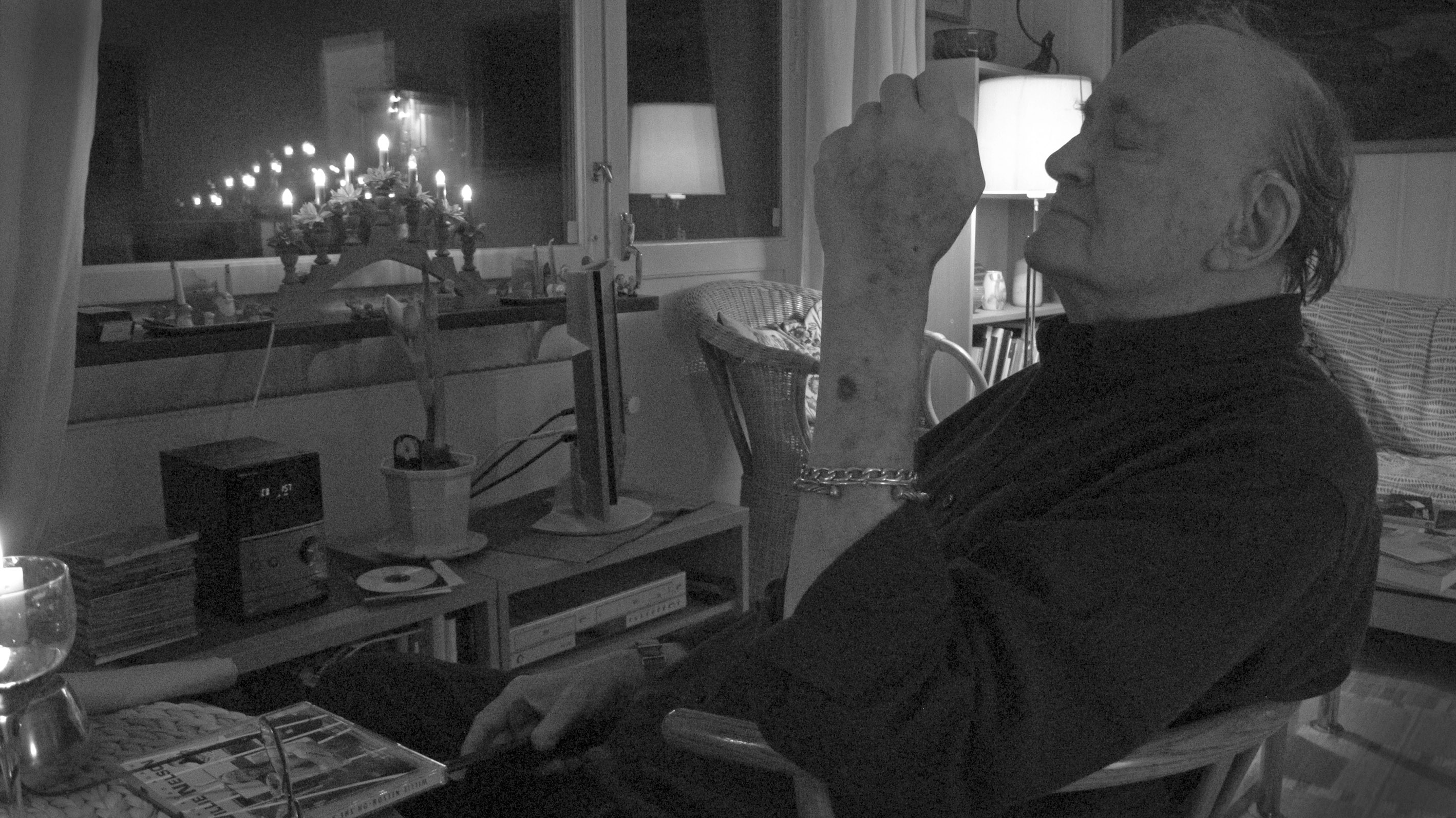
Sam, Årsta, Jan 8th, 2015, listening to Willie Nelson singing Steve Fromholz’s “I’d Have to be Crazy”.

Friday, 25th September

bobedge

VISUAL OF THE WEEK
This may be some form of Holy Grail. I tried working out how long this would take to listen to – I’m not even sure I’ve heard all of the 6CD Basement Tapes yet – and came up with 32 hours (379 times an average of 5 minutes per track (obviously some are uncompleted takes, but some will run longer and there’ll be lots of chat). I’ve put something on the music player on the right that will be included – an outtake/alternate version of “I’ll Keep it with Mine (or, Bank Account Blues)”.

Excerpts from a few things that I liked recently but forgot, or only just got round to reading

SHOUT-OUT TO THE DRUMMER’S MUM
Charlotte Church writing in The Guardian: “But, in the face of overwhelming scientific consensus against it, how can anybody possibly think that drilling in the Arctic is OK? There have already been many, much more scholarly and informed articles and books written on the subject than I could offer, such as Rick Steiner’s essay on Arctic drilling, Terry Macalister’s book Polar Opposites: Opportunities and Threats in the Arctic; and Naomi Klein, Bill McKibben and Annie Leonard, published in June. I wouldn’t have read any of them had I not been approached by my drummer’s mum, who spoke to me extensively in my kitchen about the (at that point) intended drilling plans, and encouraged me to sign the Arctic Declaration. I implore you all to go speak to your own drummer’s mum.”

KEITH RICHARDS INTERVIEWED BY SCOTT RAAB, US ESQUIRE:
Do you know that José 
Feliciano lives in the same town as you in Connecticut?
“I do know that, but I’ve never met him. We’ve never crossed paths, even though Weston is a very small town – there’s a gas station and a market.
So you’re actually the 
second-best guitarist in Weston, Connecticut.
“I’d go for that. He’s a far better guitar player than me.”

I don’t think so.
“No – I mean technically, classically. I ain’t trained that way. I force the thing to do as it’s told.

I don’t know much beyond the sounds I hear.
“Thank God, nor do I. The technical aspects – my horror is doing interviews with Guitar Magazine or something. I’ve got my favorite axes that I 
do know quite a bit about, 
but when they start to go, “Is that the Gibson S3?” – I don’t fucking know. It works all right for me.”

Listening to Crosseyed Heart, Keith’s new album, I’m struck by the youthfulness of his voice, and the fact that, in places, he sounds like Mark Knopfler. Hell, in places it even sounds like a Dire Straits record…

SUBSCRIPTION ADVICE
Tune in to Joe Boyd’s A-Z. He’s up to F! The first [A] is partly about Andy Razaf, lyricist on “Gee, Baby, Ain’t I Good to You”, “Ain’t Misbehavin’” and “Honeysuckle Rose”, the second [B] about Rastafarians in Jamaica and the birth of Reggae. Toots & The Maytals song “Bam Bam” is the B of the A-Z. “Those trombone parts were overdubbed by Rico Rodriguez, a great Rasta trombone player. Toots had no written arrangements, he would just go into the studio and hum a melody line in Rico’s ear, and Rico would try and follow it. When he got one line done, Toots would them hum a harmony, and once they’d got that done, we’d move on to the next bar. It was a very, very slow process – they went in the studio about nine, and emerged about four in the morning with blood trickling down Rico’s chin from his split lip. But he was grinning…”

That’s as far as I’ve got, but they are highly recommended for information illumination par excellence.

ONE MORE PIECE OF FILM (FOR THE ROAD)
Watch this staggering film. I was sent there by Jonny Trunk in his always amusing 50p Friday emails: “I managed to license some very good music this week by the amazing Ernest Berk. He was a ballet dancer, teacher and modern creative thinker who turned to avant-garde composing for his own ballets. All I can say is wow. And then wow again. I came across him a few years ago and it’s taken me years to track down some music and actually license it. To give you a flavour of what lies ahead here is one of his scores, made for David Gladwell’s 1964 An Unitled Film for the BFI. Hold tight. I suggest you do not look if you are a vegetarian. [Ed’s note… Type lovers, check out the titles, where more prominence is given to the words FOR THE than either the filmaker or the BFI. David Gladwell, best known as an editor (Lindsay Anderson’s If… and O Lucky Man!) filmed this short at 200 fps. As the BFI says, “it depicts a series of pastoral scenes from a British farm, edited together to produce a suggestion of violence in contrast to its visual beauty”].

Friday, 18th September

auction

IMAGES OF THE WEEK
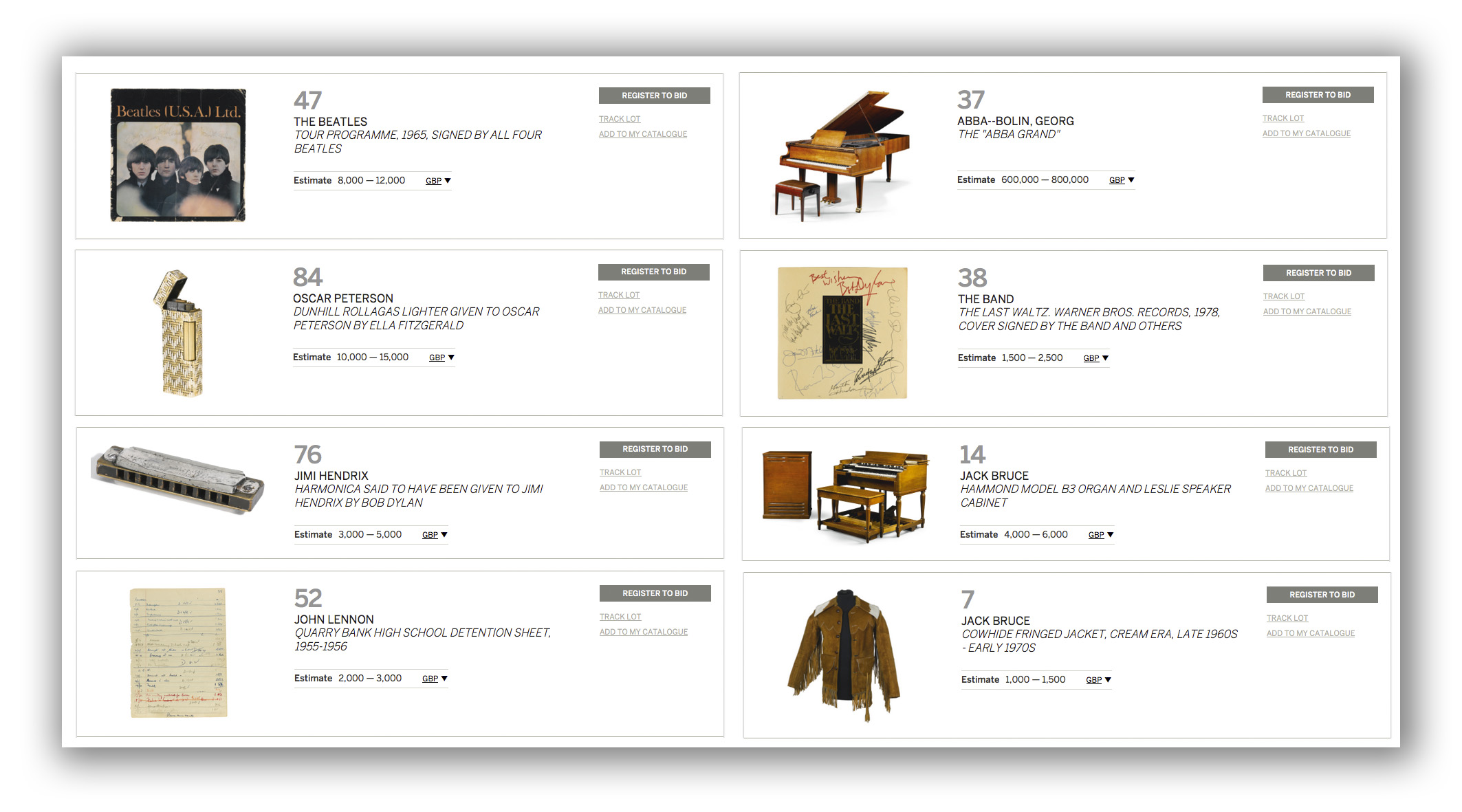
From the upcoming (September 29th) Rock & Pop auction at Sotheby’s in London, these eight lots are my favourites. A spare £150,000 may get you Bob’s original “Hard Rain” lyrics… [From the family of Elisabeth (Lily) Djehizian, the first wife of Hugh Romney (“Wavy Gravy”). Lily met Romney whilst working as a waitress at the Gas Light and was closely associated with many of the artists working in Greenwich Village in the early 1960’s, most notably Lenny Bruce.] Click to enlarge – check out the great Beatles’ (U.S.A.) Ltd. typography.

WELL THIS RAISES THE GAME A LITTLE BIT
Spellbinding six-minute overview of the current state of Kendrick Lamar’s music on the Late Show with Stephen Colbert. Lamar makes most current music look dumb and pallid. It isn’t just the crack rhythm section or the compelling jittery shapes he throws as he sings, it’s the delivery and the timing. He romps through the mid-section with the fantastic beat of To Pimp a Butterfly’s “King Kunte” dissing musical frauds– “I can dig rappin’, but wait! a rapper with a ghost writer? tell me what happened!?“ The song relentlessly builds by moving up a semi-tone every chorus, the two bass players powering it on and on, before it morphs into a effects-driven jazzy end section with an amazing repeated vocal riff on “lovin’ you is complicated…” Staggering.

NOT STAGGERING
Is it just me, or is this as tuneless as I think? One of Apple’s new Apple Music adverts with Leon Bridges, or as he’s known in our house, Aloe Blacc without a decent song. The others aren’t much more convincing – I’m not sure Shamir or Flo Morrisey are doing anything not done better before.

BEST TELEPHONE TREE HOLD MUSIC THIS WEEK!
…and the winner is: Southern Electric, with the Miles Davis Quartet (Miles on trumpet, Red Garland on piano, Paul Chambers on bass and Philly Joe Jones on drums) playing “When I Fall in Love (it Will be Forever)”. It was on repeat and made the resulting 25-minute wait way more pleasant.

FROM MARK MYERS’ WSJ PIECE ON THE MAKING OF STEELY DAN’S “DEACON BLUE”
Strangely, Mr Christlieb is referred to as Pete…
Mr Fagen: “When everything was recorded – the rhythm section, the horns and the background vocals – Walter and I sat in the studio listening back and decided we needed a sax solo, someone to speak for the main character. We liked the sound of a tenor saxophonist who played in Johnny Carson’s Tonight Show band, a cat who blew like crazy when the show went to a commercial. He had this gutsy sound, but we didn’t know who it was.”

Mr Becker: “We had our producer Gary Katz ask around and he found out it was Pete Christlieb. Pete had invented any number of cool harmonic devices that made his playing sound unique. He just sounded like a take-charge soloist, a gunner.”

Pete Christlieb: “I went over to the studio one night after the Tonight Show finished taping at 6:30 p.m. When I listened on headphones to the track Tom [Scott] had arranged, there was just enough space for me to play a solo. As I listened, I realized Donald and Walter were using jazz chord changes, not the block chords of rock. This gave me a solid base for improvisation. They just told me to play what I felt. Hey, I’m a jazz musician, that’s what I do. So I listened again and recorded my first solo. We listened back and they said it was great. I recorded a second take and that’s the one they used. I was gone in a half-hour. The next thing I know I’m hearing myself in every airport bathroom in the world.”

EXTRA! FOR ALL YOU NIGHTHAWKS OUT THERE…
It’s Pete Christlieb’s sax on Tom Waits’ wonderful Nighthawks at the Diner. I found this piece on its recording, a Dan Daley interview with Bones Howe… We started talking about where we could do an album that would have a live feel to it. We thought about clubs, but the well-known ones like the Troubadour were toilets in those days. Then I remembered that Barbra Streisand had made a record at the old Record Plant studios, when they were on 3rd Street near Cahuenga Boulevard. It’s a mall now. There was a room there that she got an entire orchestra into. Back in those days they would just roll the consoles around to where they needed them. So Herb and I said let’s see if we can put tables and chairs in there and get an audience in and record a show. I got Michael Melvoin on piano, and he was one of the greatest jazz arrangers ever; I had Jim Hughart on [upright] bass, Bill Goodwin on drums and Pete Christlieb on sax. It was a totally jazz rhythm section. Herb gave out tickets to all his friends, we set up a bar, put potato chips on the tables and we had a sell-out, two nights, two shows a night, July 30 and 31, 1975. I remember that the opening act was a stripper. Her name was Dewana and her husband was a taxi driver. So for her the band played bump-and-grind music –and there’s no jazz player who has never played a strip joint, so they knew exactly what to do. But it put the room in exactly the right mood. Then Waits came out and sang “Emotional Weather Report”. Then he turned around to face the band and read the classified section of the paper while they played. It was like Allen Ginsberg with a really, really good band.” From Tomwaitsfan.com

nighthawks-soundonsound

Bones Howe’s original layout diagram for the live recording.

Wednesday, 9th September

…including one thing from a couple of weeks ago…

Lonnie

LONNIE HOLLEY AND ALEXIS TAYLOR, DAVID BYRNE’S MELTDOWN, QEH
It’s tough to be a support act – unfamiliar music played to unfamiliar faces, only a few waiting for their favourite tunes. And Alexis Taylor at first seems an odd pairing with Lonnie Holley, as his new album, Await Barbarians, is all Seventies electric piano-driven singer-songwriterness, albeit with lovely Wurlitzer and restlessly inventive guitar [I missed the guitarist’s name].

What gradually pulls me in, though, is the wonderful drumming of Sarah Jones. On a couple of songs (the ones that seem to be teetering on the edge of turning into Neil Young’s “See the Sky About to Rain”) she sounds just like she’s stepped out of the Hi Records Studio in 1972 – the kit compressed and gated so the hats are as loud as the snare, with that deliberate, almost ponderous, beat. It’s wonderful. Her whole approach is really considered, like she feels herself to be totally at the service of the songs, treading carefully through a set of short, sweet tunes – including a cover of “Don’t it Make My Brown Eyes Blue”, where Alexis floats over the song, aided by great distorted guitar. The one exception to this mood was towards the end, when they played a beast of a thing (called something like “Vortex”) that alternately sounded like a Kurosawa soundtrack and Can at their most driven. This was where Sarah Jones took the lead with a swaggering set of tom rolls allied to a mighty beat that gradually drew the other musicians in and built to a blistering crescendo.

During the interval, a couple of rows down, David Byrne is chatting to Robert Wyatt. The QEH is maybe half full as the lights go down. The crowd greet the main act ecstatically, a woman behind me almost sobbing with delight-slash-hysteria, her hands clasped together in supplication.

Stage left, drumkit, stage right, cello. In the middle behind a bank of keyboards, Lonnie Holley, covered in rings and scarves. I have no idea what to expect. “Here we go, here we go… here we go”, says Lonnie softly, his fingers starting the fluttering, repetitive figures on the piano that will set the style for the next hour. These flurries are given shape and dynamics by the excellent cellist and by Lonnie’s voice, often melodically entwined. The drumming is free but receptive to the nuances of Lonnie’s direction. From what I could make out, most of the spontaneous lyrics are platitudes about mother earth and treating each other well, but it’s the mellow and soulful sound of his voice that catches you. It’s a hypnotic thing, found in, say, Al Green’s or Marvin Gaye’s oeuvre – coming from the Gospel tradition, but played out in a certain kind of soul music as seduction. Whatever, it was like being enveloped in warm bathwater, or more accurately, a flotation tank, with the outside world banished for as long as he performed. Priscilla Frank put it nicely in The Huffington Post: “From the rings on his fingers to the words in his mouth, Lonnie Holley is always at work on the art that is Lonnie Holley. He’s a scavenger and a shaman, a performer, a storyteller and a genuine spirit. Despite the relentless barrage of tragedy Holley faced throughout his life, he salvaged his very being like a discarded object left in a sewage pipe, and turned it into something wildly beautiful.” And that’s what the ebb and flow of his show was – beautiful.

A very nice set of B&W photographs of the soundcheck by Stuart Leech, shot for music website The 405, can be found here.

SMILES OF A SUMMER NIGHT
As we set off for Stockholm for a literary festival in Uppsala, where we’ll read some of Sam Charters’ poetry and celebrate his life, I looked for some performances by Peps Persson, a Swedish bluesman who Sam produced. I loved Peps’ first album, especially his version of “The Sky is Crying”. His voice sounds a little like Dave Van Ronk’s (who Sam also produced) on this terrific track “Samma Lea, Snae Blues”. The long-held note at the beginning of the second verse is beautiful, the band cruise with just the right amount of low down groove, just the right amount of precision, and the drummer’s leap to the cymbal at the end is great.

YABBA, YABBA, HEY
Glad to see my favourite post-rock, math-rock combo Battles are back in the fray. This video catches them playing about-to-be-released song “The Yabba”. Always fun to watch John Stanier drumming, and love the way he comes back in at around the 6:00 mark as the song reaches its chaotic conclusion.

THIS WEEK I STUMBLED UPON… 1
I was idly looking for stuff about how Willie and Al Jackson and Howard Grimes got the “Willie Mitchell drum sound” and, as is the internet’s way, I ended up at Al Green playing “Simply Beautiful”, which does not contravene the Trades Description Act in any way, shape or form. And if you like that, check this – his incredible performance of the Gibb Brothers’ “How Can You Mend a Broken Heart”. I had an mp3 of this performance, but didn’t realise there was video… brilliantly directed, too. The opening verse shot in half-profile; the way Al bears down on “mend”, the enraptured kid in the front row. Oh, to be in that tv studio in New York in 1973…

THIS WEEK I STUMBLED UPON… 2
A Post-MusiCares Conversation with Bill Flanagan
Bill: I noticed that some people who were not at the event read the transcript of your speech and didn’t get that some of it was tongue in cheek. When you said, “why me, lord?” in the room you were laughing and so was the audience. In print, some people thought it was all serious.

Bob: Yeah, well you had to be there.

Bill: How did you select all the performers for the Musicares tribute, was that difficult?

Bob: “It really wasn’t. Most all of them had recorded versions of those songs over the years. Garth had made “Make You Feel My Love” a number one hit. Tom Jones had done an incredible version of “What Good Am I.” Beck had recorded “Leopardskin Pillbox Hat.” Bonnie had recorded astonishing versions of “Standing in the Doorway” and “Million Miles.” So no, it wasn’t that hard. I’d even seen Alanis Morissette sing “Subterranean Homesick Blues” somewhere and I couldn’t believe she got that so right, something I’d never been able to do. Neil of course, he’s been doing “Blowin’ In the Wind” for a while and he does it the way it should be done and that song needed to be there. Some people called up right away and wanted to be on the show, so Don Was found a few songs for them. But mostly, they were all recorded versions that we were hearing except maybe for Aaron Neville’s version of “Shooting Star.” I could always hear him singing that song. He’s recorded other songs of mine, all great performances, but for some reason I kept thinking about “Shooting Star,” something he’s never recorded but I knew that he could. I could always hear him singing it for some reason, even when I wrote it. I mean, what can you say? He’s the most soulful of singers, maybe in all of recorded history. If angels sing, they must sing in that voice. I just think his gift is so great. The man has no flaws, never has. He’s always been one of my favorite singers right from the beginning. “Tell it Like it Is,” that could be my theme song. It’s strange, because he’s the kind of performer that can do your songs better than you, but you can’t do his better than him. Really, you can’t say enough about Aaron Neville. We won’t see his likes again.”

TAKE-AWAY PLAYLISTS
Every so often in a shop or cafe you hear something so out of the blue that you have real difficulty placing just who it is, even though you may know the song well. This happened post-dropoff at the McDonald’s on the edge of Stansted Airport. In between the Calvin Harris and Taylor Swift came Polica, who stood out (to me, anyway) like a sore thumb. It’s always nice to hear things you like, unexpectedly. The same thing happened in Pret recently when Jenny Owen Youngs “Led to the Sea” was playing… If you don’t know Polica, start with “Dark Star”. Two drummers, synth, bass, multi-tracked and staggered vocals and a fabulous horn part. What are you waiting for? For Jenny Owen Youngs, start with “Fuck Was I” (as in “What the fuck was I thinking?”). If you like that, try “Woodcut” (The Age Of Rockets Remix), or “Nighty Night”.

JAZZ, NICE (ACCORDING TO SHORTLIST MAGAZINE)
“Looking to fine-tune your style for autumn? Need a new fashion father figure? No musical genre turned out more sharp Gs than jazz…” Dig the fashionista’s take on Max Roach

Roach

Friday, 28th August

batchtandy

VISUAL OF THE WEEK
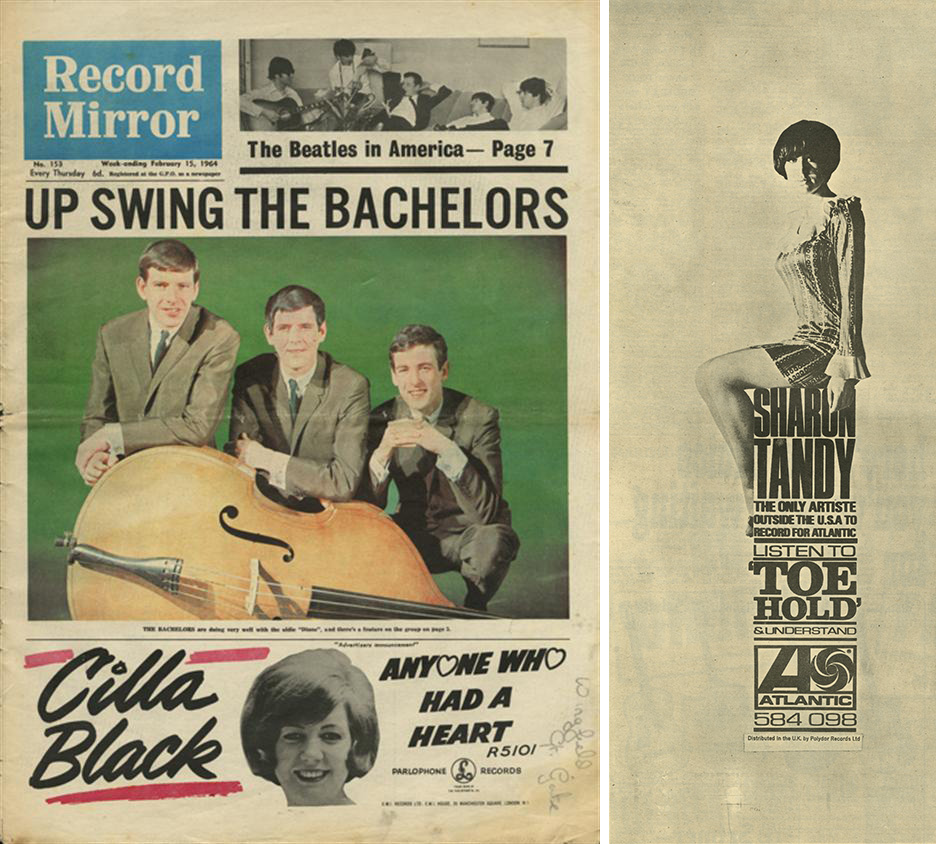
Now that’s a magazine cover. Love the Cilla type, too. And Sharon Tandy! Atlantic’s marketing guys knew how to use white space. Both of these from the Rock’s Backpages archive… I have Sharon Tandy’s single from ’67 of “Stay With Me”, but I think it doesn’t quite hit the heights of the Lorraine Ellison original, produced (and written) by Jerry Ragavoy. Philly’s Queen of Soul, indeed – a performance for the ages.

COVER GIRL
The 50th anniversary of Otis Blue is being celebrated by Rhino Records with a deluxe edition. There’s a search on to find out just who it is in the cover photo. Rhino’s press release: “The photograph was a stock image licensed for use on the cover, which was standard at the time. Recently, the photographer, Peter Sahula, told Stax Museum archivist Tim Sampson that “I’m almost sure this is Dagmar [Dreger], but I can’t find any others from that shoot, and her face is in shadow. So it’s hard for me even to be sure…” Sahula further went on to explain that if it wasn’t Dagmar, it was almost certainly Nico, the enigmatic singer for The Velvet Underground, who was also an occasional model for Mr Sahula’s shoots. So, using a combination of Otis Redding’s Facebook reach (strange concept, no? – Ed) and other online efforts, it is hoped that the worldwide community can find Ms Dreger to confirm this. Join the search by following @OtisRedding on Facebook or Twitter, and contribute information with the hashtag #FindDagmar.”

COVER ME
With a mighty bound, a favourite Bruce Springsteen bootleg springs free of storage and is quickly digitised. In the music player on the right you’ll find one of my favourite ever Bob covers. As Michael Hann wrote in The Guardian a few years back, “Extended runs through “Kitty’s Back”, “New York City Serenade” and “Rosalita”, one of the most vivid expressions of joy rock has ever produced, highlight both the incredible understanding of the band, with instinct supplemented by hours of hard graft, and their empathy for their leader’s needs. But for all the epicry, the covers here show the true heart of the E Street Band: Harold Dorman’s “Mountain of Love”, a 1960 rock’n’roll throwaway, is given a treatment so overwhelming it sounds like a showstopper. Only some problems with sound quality prevent this eclipsing any official Springsteen live release.”

TWO SONGS THAT MADE A GREAT SOUNDTRACK…
to driving across town with money for the builders – Quincy Jones’ “Money Runner” (excellent wah-wah and groove) and ZZ Top’s “I Gotsta Get Paid” (a cover of a famous 90’s Houston hip-hop track called ”25 Lighters”). If you haven’t heard this, do. It’s insane. Gnarly riffs, fantastically bluesy breaks, a mighty groove. Poor video, tho.

COME ON YOU O’s
I had kind of hoped that I’d see out my days without ever again being reminded of Chicory Tip’s “Son of My Father”, but it was not to be. At the first game of Orient’s season, a chant started not long after the kick off to a tune I couldn’t place. A couple of more times and I had it: “Son of My Father”, a particularly egregious example of early Seventies Production-Line Pop, notable as the “first UK number one single to prominently feature a synthesizer, in this case a Moog”, playing a particularly hideous riff. Apparently a terrace favourite around the country for years (what do I know?), it was written by Georgio Moroder, and under his own name was a rare miss. The lyrics. Well, the lyrics are fine: “Son of my father / Molded, I was folded, I was preform-packed / Son of my father / Commanded, I was branded in a plastic vac / Surrounded and confounded by statistic facts”. [By the way, in Orient news, it’s been a great start to the now-League Two club’s season, and if any Premiership scouts are reading, check out wing back Sean Clohessy, a player who combines a fantastic attitude with real skill – not only terrific defensively, but also involved in virtually every goal.]

REVIEW OF THE WEEK
This reminded me of the classic Charles Shaar Murray NME review of Lee Hazlewood’s Poet, Fool or Bum album, which was one word shorter. Bum.

F4 Review CSM Lee Hazelwood

Friday, 21st August

VISUAL OF THE WEEK (Personal)
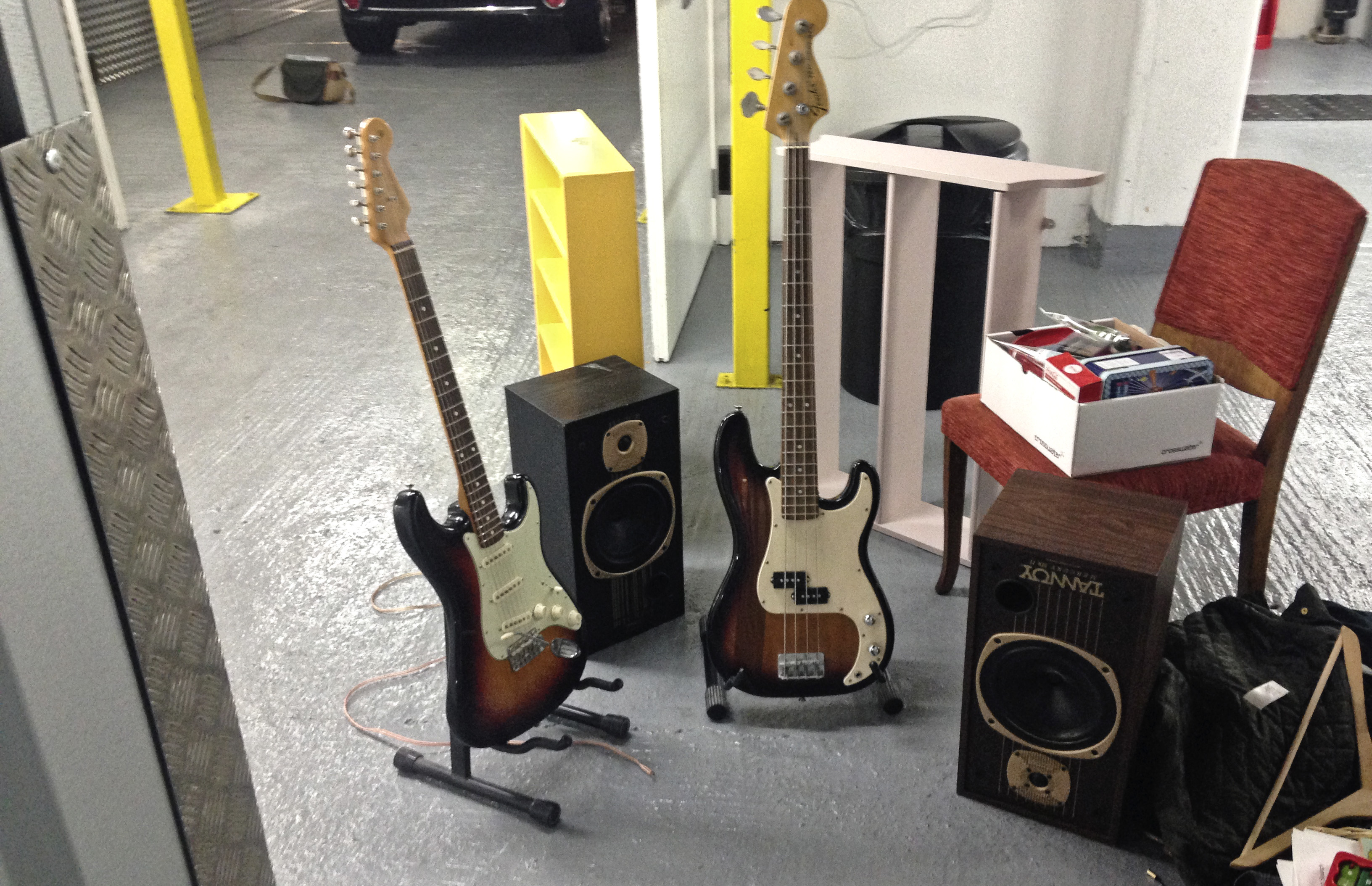
Guitars out of Storage!

guitars

VISUAL OF THE WEEK 2 (Public)
Wall of musicians of colour from an fine-looking exhibition, African Industrial Revolution (A.I.R.) by e-studio Luanda, an artist collective and studio complex founded in 2012 in the Angolan capital by Francisco Vidal, Rita GT, António Ole and Nelo Teixeira. Impressed by the range from Ellington to Martina Topley Bird, I was annoyed that I’d managed to miss it.

ex

LORD, WON’T YOU BUY ME A LONNIE HOLLEY TICKET
My habit of buying tickets to gigs I know nothing about continues. Anyone fancy coming to see Lonnie Holley and Alexis Taylor on Monday night at the RFH? Just drop me a line at martinworkbench@gmail.com if your interest is piqued, as mine was, by this paragraph on the Meltdown website:
“Lonnie builds a bridge between Gil Scott-Heron and Alice Coltrane’s Turiya Sings. He approaches both his visual art and his music by reacting to what is in front of him: his music is about the very moment in which it unfolds. Lonnie’s words, on the other hand, are based on his experiences. His endless energy and wild curiosity are capturing hearts and minds in the worlds of both music and fine art.”
I have no idea what that means, but I’m sure as hell up for it. The website also notes that “Lonnie Holley was born in Birmingham, Alabama in 1950, the seventh of 27 children, and claims he was traded for a bottle of whiskey when he was four.”

THINGS FOUND ONLINE
St Anthony: Rather wonderful tribute poem/track by Mike Garry & Joe Duddell to Tony Wilson, delivered with the kind of front that only Mancunians seem to have. How much would you love to have this done as a tribute to you after your death?

Demented Bobness: Graham sends a Weird Al Yankovitch Dylan parody, only using all-palindromic lyrics (my favourite is “Lisa Bonet ate no basil”) allied to a creditable Highway 61 pastiche.

The Beatles at Shea Stadium: Mark Myers (again) points the way to something interesting… a little-seen documentary from ’66. “As for me, I was 9 in 1965 and lived in Manhattan. While I didn’t go to see the Beatles at Shea Stadium, I probably would have gone if I had had a sister. What I do remember about that summer was the universal passion among girls and boys for all things British. Like every other preteen, I saw Mary Poppins, The Sound of Music, My Fair Lady… London, for me, was imagined as a Candyland of the mind… on the radio, British artists such as Petula Clark, Herman’s Hermits, the Rolling Stones, and Tom Jones had hits. I wanted to go downtown to meet Mrs. Brown’s lovely daughter and seek satisfaction, whatever all of that meant.” It’s full of wonderful stuff: nine minutes into the film, the Discotheque dancers take the stage after Murray the K and run through every dance step that is now regularly parodied when people think of 60s dancers. Absolutely hysterical. The voice-over interviews with the lads are terrific – street smart and eloquent in equal measure. I loved the sound guys behind the stage – the film cuts to them at around thirteen minutes, as King Curtis and the Kingpins are playing. As a portrait of the times it’s top-notch.

TITLE OF THE WEEK
News that David Rawlings has a new album, with the great title, Nashville Obsolete, prompts me to listen again to his first under the rubrik of the Dave Rawlings Machine, A Friend of a Friend, especially its most luminous song, “Bells of Harlem”. Here it is in live form – a lovely song, beautifully played. Catch the guitar outro, a fabulous circular melody spinning to a hushed conclusion. For another terrific piece of Rawlings’ guitaring, check out “Ruby” from the same KEXP session, where he plays a flatly stunning solo in the middle, not to mention an beautiful set of harmonics before the last chorus. What I love about him is the fact he’s sui generis – there are obvious bluegrass antecedents, but really he’s created a parched flamboyancy all his own.

Some things from the last couple of weeks, posted on Monday 10th August

VISUAL OF THE WEEK

bike
Funny how “For What It’s Worth” continues to exert its pull on film-makers and advertisers, for uses entirely unrelated to its subject matter, which is the Sunset Strip riots of 1966. Maybe it’s the guitar harmonic that repeats throughout… Here is a rather exquisite matching of the song to a stunning slopestyle mountain bike run (whatever that is – didn’t it used to be BMXing?) with beautifully liquid camera work in one uninterrupted shot. Bike helmets off to Brandon Semenuk on the bike, and Anthill Films for the production and filming.

MARIO WIENERROITHER HAD THE EXCELLENT IDEA…
to remove the music from pop videos, and Lionel Richie’s “Hello” with no music, just reduced to its creepiest parts, is a cracker.

THE B OF THE BANG…
Spookiest sound heard lately? The silence of the 40,000 strong crowd a moment before the 100m final at the Olympic Stadium a couple of weeks ago. Not even one throat-clearing… Usain Bolt’s start was slow but he powered through on a wet track to win in 9.87 seconds. Amused afterwards when he said that he lost focus in the middle of the race. In the middle of a race lasting under ten seconds? Extraordinary.

OR MAYBE THE S OF “SHUT UP…”
I hadn’t realised that all large athletics competitions have a stomping soundtrack throughout. Sometimes it’s groan-worthily obvious: Van Halen’s “Jump” for, well, you can guess. Most of the time it’s just irritating. It set me wondering who makes the music choices. Is there a job title that goes with that? Most of the athletes seem to have bought into the whole “hype up the audience” thing, leading the clapping in the build up to their next attempt. Most blatant offender was the half-bearded (look it up) Italian high jumper Gianmarco Tamberi, although in fairness it did give that competition a slightly hysterical edge which was thoroughly enjoyable.

The organising of the programme is extremely slick and the events run parallel in a really clever way. Our favourite: the North Korea-like synchronicity of the Hurdles prep, with small trucks dispensing assistants (and hurdles) at precise intervals. However, the big screen presentation was lacking. Too many announcements that you couldn’t hear properly over the PA, the huge screens bereft of interesting statistics, with poorly judged replays and focus – why, when Laura Weightman was being interviewed after a fine run (by one of the air-headed personality interviewers – echoes of Smashy and Nicey here) were we treated to a close up of a High Jumper wandering around. Why, when the women’s Triple Jump was happening was the entrance in tracksuits of the men’s 100m finalists deemed more interesting? Dumb.

DYLAN STUFF AND NONSENSE OF THE WEEK
50 years on, it still fascinates. Marc Myers of the Wall Street Journal wrote about the electric Newport ’65 concert on his excellent Jazz Wax blog, and received this missive from Al Kooper, the organist in the band:
“Did it not occur to anyone that the reason people were really upset was that the headliner of the entire festival, the person that most people had traveled a distance to see, the person that they sat through three days of music, only played for 17 minutes? That was the problem, Marc. Journalists turned that around into booing – I only heard people yelling, More! More! More! – and false images of Pete Seeger walking around with a fire ax to cut the sound cables. The fact is someone who shouldn’t have touched the house sound for Dylan’s set did, and did a bad job. Listen to the mono mix on the film versions, as only Bob’s voice and Mike Bloomfield’s guitar can be heard – no drums, no bass, no organ and no piano.”
As for the recording of “Like a Rolling Stone” in June 1965, Al said this:
“Bob didn’t really switch the instrumentation. He just went from 3/4 to 4/4 time. I didn’t think of it as ‘acoustic.’ Bob spent a day (June 15th) working on the 3/4 version and overnight decided to switch to 4/4. Since going electric, he’s always had his 3/4 and 6/8 compositions. “Winterlude” comes to mind. I think the lyric on “Like a Rolling Stone” was more balanced to sing in 4/4 and overnight he came to that conclusion. Some band members were switched, but the instrumentation remained the same until they moved Paul Griffin to piano and changed my life (and instrument).”
And reader Daniel Mainzer added the following…
“Interesting article about Bob Dylan at Newport. I was there. The prevailing mood of the crowd reflected much of our generation’s attitude toward social change as reflected by the music. The Beatles, the Rolling Stones, Jefferson Airplane and others lit it up in the late 1960s, and the brief flirtation with folk was over, since it was boring. We wanted to move and dance, not sway like seaweed in a gentle tide. I think Dylan felt this too and wanted to break out, to give the people what they wanted. Seeger’s music, and folk in general, was always about social injustice and a heavy message. While well done, the repetition just killed the music. Not to mention the acoustic guitar with no beat. Boring!!! Dylan knew the effect of a pounding rhythm section and let this loose on us. What a relief! Now we could enjoy Dylan instead of putting him on the back shelf.”

ES MAGAZINE QUESTIONNAIRE: LOUISE BREALEY
The Sherlock actress on the first thing she does when she arrives back in London: “I play London is the Place for Me by Lord Kitchener as I drive down the motorway. My best friend Chris put it on a mixtape for me when I was homesick doing Casualty in Bristol in 2002.” A fine choice – it’s in the Music Player to the right.