Five Things I Saw & Heard This Week: Wednesday 12th December

Dave Brubeck, talking to Marian McPartland
…on her wonderful series, Piano Jazz, for NPR, about his great collaborator, Paul Desmond. “I loved listening to him, every night, and the humour—if he wanted to say something funny through the horn—would just break me up… If I did something wrong, that he didn’t like, he’d usually play I’m An Old Cowhand (From The Rio Grande) because I was raised on a cattle ranch and he’d bring that up, musically. Or Don’t Fence Me In—anything that he didn’t like, that was going on, he’d play a quote to get you back in line. It was something that was always so funny, you’d laugh—you’d never take it too badly. He could tell a complete story in quotes of what just happened, his mind was so quick… [One night they had been] arrested for speeding on the Pennsylvania Turnpike, he did the whole story; of the arrest, where they went, all in tune titles. It was amazing…

[On playing a Country Fair and Horse Show] “A guy came up on the stand with spurs on and he drug them across the stage and he walked up to me and he said, “Tell the guy playing the traps [drums] that he’s spookin’ the horses…” and Paul was in hysterics, and when he started playing, he hit some high notes and all the chickens went crazy and started cackling…Paul was going to write a book [about all these tours] called How Many Of You Are There In The Quartet?”

What? What? What Am I Not Getting Here?
Mumford and Sons, Babel
@Big Boi (of Outkast) responds to a fan enquiring after his favourite non-hip hop album of the year.

Richard Thompson, New Album, Great Quote
Electric is produced by Buddy Miller at his home studio in Nashville, TN. “We did it ridiculously quickly. It was just stupid. But it sounds great. It turned out surprisingly funky, sort of a new genre—folk-funk. It’s quite snappy, somewhere between Judy Collins and Bootsy Collins.”

Tom Waits letter to The Nation, 2002, from Letters Of Note:
“Thank you for your eloquent “rant” by John Densmore of The Doors on the subject of artists allowing their songs to be used in commercials. I spoke out whenever possible on the topic even before the Frito Lay case (Waits v. Frito Lay), where they used a sound-alike version of my song Step Right Up so convincingly that I thought it was me. Ultimately, after much trial and tribulation, we prevailed and the court determined that my voice is my property.

Songs carry emotional information and some transport us back to a poignant time, place or event in our lives. It’s no wonder a corporation would want to hitch a ride on the spell these songs cast and encourage you to buy soft drinks, underwear or automobiles while you’re in the trance. Artists who take money for ads poison and pervert their songs. It reduces them to the level of a jingle, a word that describes the sound of change in your pocket, which is what your songs become. Remember, when you sell your songs for commercials, you are selling your audience as well…

Eventually, artists will be going onstage like race-car drivers covered in hundreds of logos. John, stay pure. Your credibility, your integrity and your honor are things no company should be able to buy.”

Tift Merritt’s Red Guitar, Later
Ooooooooh, that is one great guitar, a cherry red Gibson J-45, sweetly played and with a wonderfully soft & rounded tone…

Tift

Five Things I Saw & Heard This Week: Wednesday 5th December

This is the West, Sir. When the legend
becomes fact, print the legend.”
James Stewart as Maxwell Scott, in The Man Who Shot Liberty Valance. As I read Mojo’s obit of Terry Callier, the folk-jazz-soul singer songwriter, my heart sinks as the oft-retold story of his first album is reprinted—yet again. Lois Wilson writes: “The following year saw him team with Prestige producer Samuel Charters. The New Folk Sound should have seated him next to Gil Scott-Heron and Nina Simone, such was its innovative cross-fertilization of jazz, folk, soul, blues and civil rights, but it finally arrived without fanfare in 1968, after Charters went AWOL with the tapes to Mexico.”
Here’s Wikipedia: “He met Samuel Charters of Prestige Records in 1964, and the following year they recorded his debut album. Charters then took the tapes away with him into the Mexican desert, and the album was eventually released in 1968 as The New Folk Sound of Terry Callier.”
From The Guardian, Callier interviewed by Will Hodgkinson: “Callier recorded his album, The New Folk Sound, under the influence of Coltrane, using two upright basses and two acoustic guitars to create a unique sound. The record would probably have been a hit but for the fact that its producer, Samuel Charters, took the tapes of The New Folk Sound on a voyage of self-discovery into the North American desert, where he lived with the Yaki Indians for the next three years.”

I decide to do the journalistic thing and ask someone who was there.
Sam Charters: “There’s been so much confusion there’s no quick answer. I was doing a lot of Chicago folk artists for Prestige, and I heard Terry at a folk club. I talked to him about recording and then I went to his family’s apartment in one of the project buildings one evening and he sang his songs. Sweet family, and he was a very pleasant young guy.

When we came to the studio he had new ideas, and there were two bass players; one on either side of him but with wide distances between. Then he wanted to record in the dark. When we had to turn on the lights between takes to do adjustments I was sure the basses were creeping up on me. Then I did the usual editing and we had the usual Friday afternoon sales meeting at Prestige—the only time we saw Bob Weinstock [owner of Prestige], if he even turned up—and the sales manager said we had to sell it as protest song album, since he was a black folk singer. So that was the promotion pitch, but otherwise it was just another of the Chicago albums I did that didn’t sell a lot, because he didn’t have much of a club audience.

I didn’t think about it again until the stories began circulating that I’d stolen the tapes and taken them to Mexico and that was why the album didn’t come out for two years and was a flop. I was fired about the time the record came out and Annie and I did drive to Mexico and California, but we were back in New York in April for the world premiere of Ives’ 4th Symphony, with Stokowski conducting [Leopold Stokowski conducted it with the American Symphony Orchestra at Carnegie Hall on April 26, 1965].

When the stories started about me and the stolen tapes in Terry’s interviews I regarded it as just one of those weird things. I tried to correct it when there was an article in the New York Times, but the journalist was in love with the story and wouldn’t give it up. Fantasy had the old Prestige album and some sort of recording rights and Bill Belmont called and asked if I’d like to produce a new album and I said very quickly no. Terry did appear in Stockholm a year later and told the same story and I thought of calling him and then I decided—why? His story was much better and he felt good with it and it didn’t matter to me one way or another. I’d produced a lot of records for Prestige that didn’t sell and I’m sure the artists have some equally colorful story.”

Quote Of The Week
Peter Doherty interview, Angelique Chrisafis, The Guardian.
Another French royal whose path he crossed was Carla Bruni, when he was invited to some music sessions at the house she shared with Nicolas Sarkozy, then president.Her house was “a really strange scene, where you’ve got a guy with a submachine gun on each door.” Did he meet Sarkozy? “You’re joking, aren’t you?” he laughs, blaming his bad reputation. “She told me she took him to see Bob Dylan. She had the harmonica that Dylan gave her, and apparently he was like: I don’t want to meet this guy, who is he anyway?”

Bold As Joan Osborne
Another Day, Another Cover, but a sweet one: From Joan Osborne’s album earlier this year, mostly singing songs written by black songwriters, her cover of Jimi’s Bold As Love stands out. Hendrix is rarely covered, especially by non-guitarists, with the notable exception of Emmylou Harris and Daniel Lanois (This Must Be Love on Wrecking Ball). Great Melodies, wonderful changes and sweet, tremulous, touching lyrics are all present in a joyous stew. Osborne’s a great singer—check out her performance of What Becomes Of The Brokenhearted in Standing In The Shadows Of Motown, especially the breakdown halfway through when the Tell Me! Call & Response starts happening…

Title Fight
Adam Ant’s new album title—Adam Ant Is the Blueblack Hussar in Marrying the Gunner’s Daughter—made me vaguely curious as to the longest album title. It turns out to be this 865 character cracker from Chumbawumba in 2008:
The Boy Bands Have Won, and All the Copyists and the Tribute Bands and the TV Talent Show Producers Have Won, If We Allow Our Culture to Be Shaped by Mimicry, Whether from Lack of Ideas or From Exaggerated Respect. You Should Never Try to Freeze Culture. What You Can Do Is Recycle That Culture. Take Your Older Brother’s Hand-Me-Down Jacket and Re-Style It, Re-Fashion It to the Point Where It Becomes Your Own. But Don’t Just Regurgitate Creative History, or Hold Art and Music and Literature as Fixed, Untouchable and Kept Under Glass. The People Who Try to ‘Guard’ Any Particular Form of Music Are, Like the Copyists and Manufactured Bands, Doing It the Worst Disservice, Because the Only Thing That You Can Do to Music That Will Damage It Is Not Change It, Not Make It Your Own. Because Then It Dies, Then It’s Over, Then It’s Done, and the Boy Bands Have Won. Soon to be re-released on Syco Records, apparently.

Liooel Riihie?
Found during iPhoto cull. Travelling in California last year, accidentally turning on the subtitling on the motel’s TV during Lionel Richie’s Who Do You Think You Are? programme.

Lionel

Five Things I Saw & Heard This Week: Wednesday 28th November

The Return Of Scott Walker
Exciting news for us Scott fans! In a relatively revealing Guardian interview as his new album, Bish Bosch, is launched, Scott talks about his fear of performing, as well as saying that no promoter would put him on anyway, as they’re only interested in money. But Scott could tour cultural festivals, not rock arenas, if he chose. In 2008, for instance, The Barbican put on Drifting and Tilting—The Songs of Scott Walker. It was more opera than rock. Scott, eyes hidden beneath baseball cap, stood at the mixing desk conducting his collaborator Peter Walsh. It was all I could do to drag my eyes away and back to the stage, which teemed with extraordinary visions. The most arresting image? Possibly a boxer using a pig’s carcass as a percussion instrument. Or maybe Gavin Friday as Elvis (“It casts its ruins in shadows/Under Memphis moonlight”), perched on a stool, singing to his stillborn twin Jesse, while a bequiffed and backlit figure strode  from the back of the stage until he assumed gigantic proportions, looming over the whole theatre. Whichever, it was an evening that lives on in the memory. Long may Scott run.

Amy’s Blues
The National Portrait Gallery in London buys a portrait by Marlene Dumas of the late Amy Winehouse, and  the curator says: “Dumas said that she had been very moved by the news of Winehouse’s death.” Which sort of begs the question: why not be moved by something useful like her talent or her voice—while she was alive. What’s “moving” about her death? “Dumas, who is based in Amsterdam, sought out images of Winehouse online for the work which draws the viewer in to the singer’s distinctive eyes and eye liner.” Yes, you read that right. In Art Speak, she sought out images of Amy online. And then copied some of the photos she found, quite badly. So, basically, this mediocre fan painting was co-created by Google Image Search (79,600,000 results).

Kermit The Frog, Meet Miles Davis & Louis Malle & Jeanne Moreau
Genius overlay of Davis’ session (filmed by Malle) recording the soundtrack to Lift To The Scaffold, the great French noir from ’58, with LCD Soundsystem’s New York I Love You, But You’re Bringing Me Down. The film of Davis playing to a huge projection of Moreau walking the streets of Paris at night is just stunning. That’s cut with Kermit on a rock across the river from midtown, and in Times Square. Hats off to Alessandro Grespan for his inspired and crazy jamming together of these two videos. The despairing mood of both pieces is eloquently summed up in James Murphy’s brilliant couplet “There’s a ton of the twist, but we’re fresh out of shout…”

Is It Rolling, Keith?
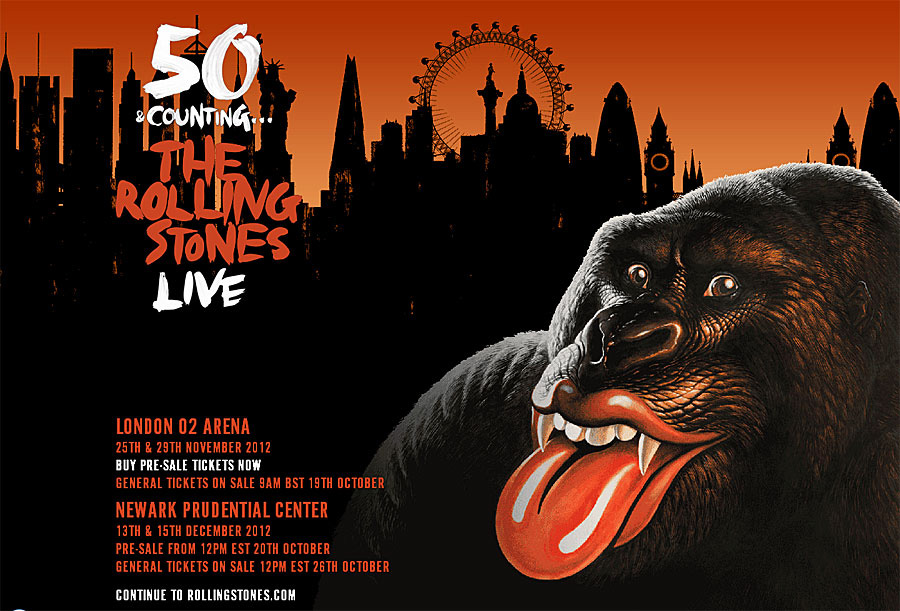
My favourite moment so far in Crossfire Hurricane, the Stones doc, is the extraordinary stage invasion footage. Keith: “It started, man, on the first tour. Half way through things started to get crazy [here the on-stage cameras filming the concert record a group of young besuited guys pushing the Stones over, singing into Jagger’s mic, attempting to pull Brian Jones’ guitar off, as the soundtrack becomes phased and fragmented]… we didn’t play a show after that, that was ever completed, for three years… we’d take bets on how long a show would last—you’re on, 10 minutes…”

Christies Pop Culture Auction Preview, South Kensington
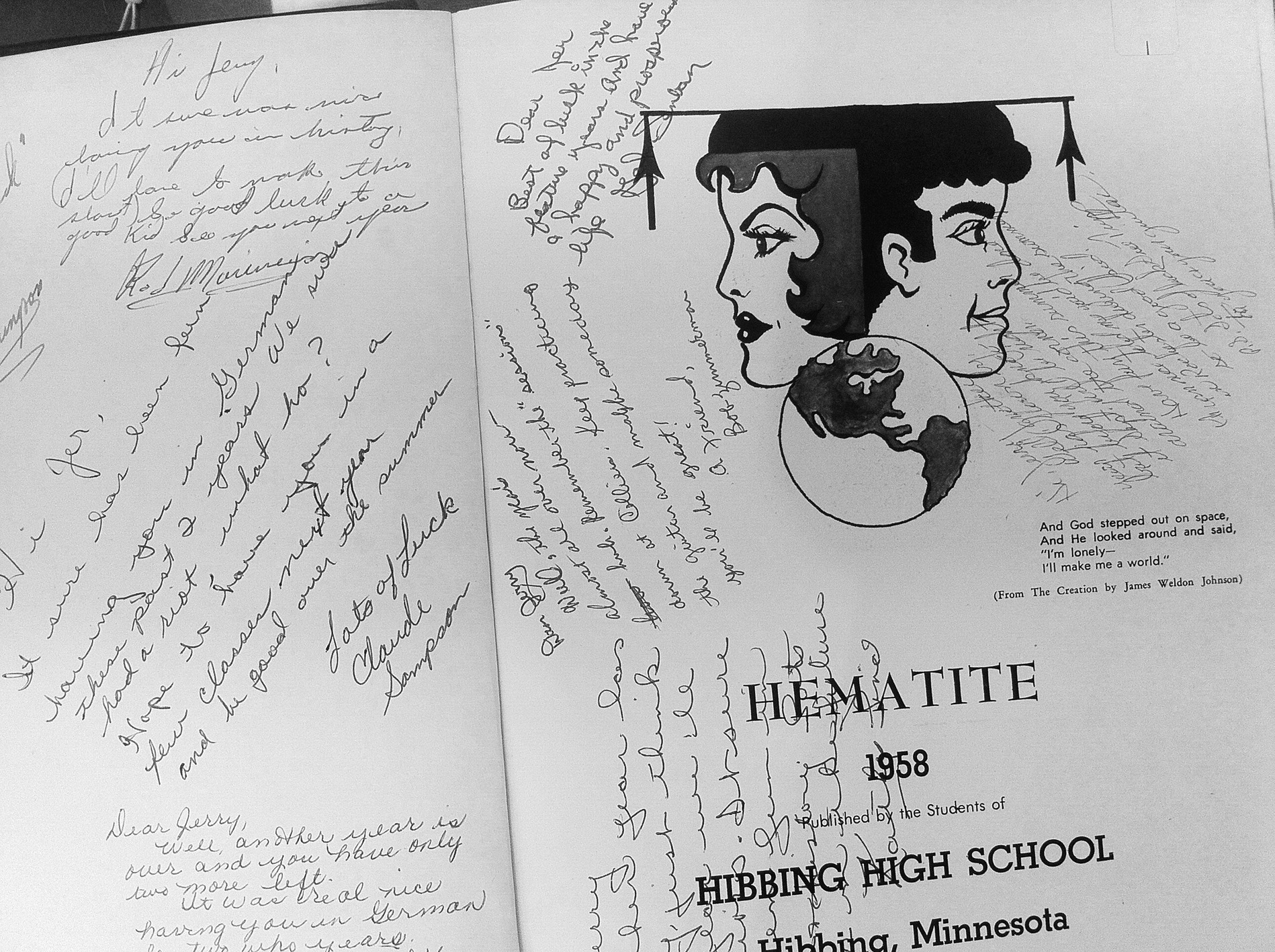
A random sampling of the 20th Century, from chairs that were part of the set of Rick’s Cafe in Casablanca, via Harrison Ford’s bullwhip from Raiders to the ‘Iron Maiden’ from Ken Russell’s Tommy (a snip if it goes for its estimate of £1000). I was there to gaze upon Mitch Mitchell’s snare drum (as featured on Purple Haze, The Wind Cries Mary, Hey Joe etc) and Andy Warhol’s mock-up of an unpublished book of the Stones ’75 tour. Favourite item? Hibbing High School Yearbook, 1958, signed, “Dear Jerry, Well the year’s almost all over now, huh. Remember the “sessions” down at Colliers. Keep practicing the guitar and maybe someday you’ll be great! A friend, Bob Zimmerman”

Jerry’s Yearbook, Hibbing High School, 1958

Five Things I Saw & Heard This Week: Wednesday 21st November

Cover Me
Around the time of the singer songwriter boom of the early 70’s, cover versions used to be odd one-offs, musicians showing respect for their elders & forbears, and subsidiary to the act’s own material. Then covers became cute—hipper bands would cover less hip pop songs, thus hipping them up. Then it all seemed to go wrong when people stared making tribute cover albums. Steve McL, who posts interesting and entertaining covers, usually themed, at the excellent coverfreak, puts it pithily in his manifesto:

“You should only cover a song if you have a reason for covering it. Financial considerations don’t count. Bring something new to the song. Make it your own. You’re a musician, interpret the music! It can be good or bad, just make it different from the original. Otherwise, what’s the point? My mission here is to spread Good Covers in the hope that they will overtake the bland and boring ones. If I post one that you enjoy, tell your friends and help me in my lonely battle…”

This is all a roundabout way of saying that Meshell Ndegeocello’s album of songs associated with the late, great Nina Simone—Pour une âme souveraine [“For a sovereign soul”]—is great. So far, her reworkings of Please Don’t Let Me Be Misunderstood, Feelin’ Good (I know, daunting to even attempt), Don’t Take All Night with Sinead, and Young Gifted & Black with Cody ChesnuTT are the ones I keep going back to, but the whole album is a triumph, and in a week where I heard the Mumfords wanly strum through The Boxer, a necessity.

The First Thirty Seconds Of “Jive Talking”
Go on, listen to them. Chunks of muted guitar. Then a kick drum and a nasty, grungy synth bass. Then some sweetness with a little Chic-like rhythm guitar before the snare and a double-tracked Barry come strutting in. Actually the whole song is pretty wonderful, especially the great drumming of Dennis Bryon.

Leonard Cohen Screensaver. Thanks, Antonio Zazueta Olmos

Southern Soul Odyssey One
An email with this attachment from my relative Brett, taking a break from touring and holidaying in Alabama: “Trip Down Memory Lane!”

I’m put in mind of time spent in the Shoals. I found this scan the other day of Jimmy Johnson’s pick, which later served time as the rocksbackpages logo…


Southern Soul Odyssey Two

Coincidentally, we were talking about artworks where someone instructs others to do the work, with the visiting Bob & Sam Gumpert. I was obsessed at one time with Letterpress printing and sourced an order form for a great Printshop in the 80s called Tribune Showprint, out of Earl Park, Indiana. They printed posters for the Chiltlin’ circuit and Soul Shows, often on hand screenprinted ‘rainbow’ cards. Mark and I immediately got them to do posters and covers for Hot House, our band. How great—typing out the wording and enclosing a glossy 10 x 8, posting the order off airmail, and three weeks later getting 50 cardboard posters back.


I’m pretty sure that it influenced this…

Boris Vian, Man Of Vision
From the IHT auction catalogue (see last week). “The Pianoctail is a strange instrument, imagined by Boris Vian in his novel L’Écume des Jours. The renowned writer, who died in 1959, conceived this cocktail-making piano which would make a drink according to the notes played. An Americano is made when a major chord is played, and when a triad or tonic chord is played, you get a gin-fizz. The instrument was displayed this morning in a Parisian cinema, where the film is being shown tonight. March 20, 1968.”

“For each note there’s a corresponding drink – either a wine, spirit, liqueur or fruit juice. The loud pedal puts in egg flip and the soft pedal adds ice. For soda you play a cadenza in F sharp. The quantities depend on how long a note is held – you get the sixteenth of a measure for a hemidemisemiquaver; a whole measure for a black note; and four measures for a semibreve. When you play a slow tune, then tone comes into control to prevent the amounts growing too large and the drink getting too big for a cocktail – but the alcoholic content remains unchanged. And, depending on the length of the tune, you can, if you like, vary the measures used, reducing them, say, to a hundredth in order to get a drink taking advantage of all the harmonics, by means of an adjustment on the side.”

Five Things I Saw & Heard This Week: Wednesday 14th November

Steely Dan Sang, “Call Me Deacon Blue…”
Steve Miller sang, “Some people call me the Space Cowboy, some call me the Gangster Of Love.” Carly Rae Jepsen sang Call Me Maybe. Blondie and Al Green just sang “Call Me…” Beth Orton, on her new album Sugaring Time, sings “Call Me The Breeze.” And it’s wonderful. It sits on a groove that doesn’t quit—the great jazzist Brian Blade drums, with Sebastian Steinberg on bass, and a loopy Nick Drakesque folk guitar—and builds on the interplay between the dead-on bass pulse and Blade’s drums skipping and punctuating the 4/4, keeping it off-kilter enough to really hook you in. Atop this sit wonderful entwining vocals and a glorious organ solo that creeps up out of the track, attempting to wrest it away from the massed ranks of Beth. Beth just about wins. Interestingly, I can barely find a reference to this song in any review that I’ve read. It doesn’t fall into the “mournful serious intense thang” that all reviewers seem to need in female singer songwriters, like only those type of songs have any heft. Go figure.

Is There A “Boutique Festival” Setting?

My brother-in-law has a brilliant new stereo set-up in his house, and his new Yamaha amp offers to model the sound of your tracks for you—giving them the vibe and atmos of a Viennese Concert Hall, say, or a Cellar Club. At the rock end it offers two clubs from the Seventies, The Roxy in Los Angeles, and The Bottom Line in New York. If you buy a more expensive model, it gives you the Village Vanguard (“Nice!”) or a Warehouse loft (how bad does that sound, I wonder). Sadly, there’s no Boutique Festival, where the music is drowned out by the clatter of glasses and middle-class chatter. We decide the sound is kind of great with no modelling at all.

Shaken, Not Stirred. Credit Sequence, Skyfall
Yes, Adele’s song is very nice, all Bassey-isms present and correct, and it insinuates itself into your head really efficiently, but oh my, the film… Following an Istanbul-set opening sequence that isn’t a patch on Taken 2’s Istanbul-set chase sequences (and let’s not forget that Taken 2 is a B picture photocopied from another B picture, albeit a great one) the credits are unbelievably cheesy. Incoherent and naff images glide by with no stylistic consistency at all and it just makes you fearful of the next two hours. Rightly, as it turns out. Has Sam Mendes not seen The Girl With The Dragon Tattoo?

Trey Songz’ Rhythm Section, Later, Friday
Trey sings his glassy, glossy pop hit, Simply Amazing, his schtick a little out of place on Later, and it’s all pretty groovy and pleasant enough until about a minute and a half in, when you’re not listening to Trey at all, you’re just listening for what Nate Jones on bass will do next—adding little filigree high-register melodies, dropping back to the root notes on his way deep 5 string, totally in the pocket of the groove. About a minute from the end they drop into a breakdown section, and that’s when drummer Antwan “Amadeus” Thompson and Jones decide to have a party on the tune. An outrageous series of rolls and hi-hat snaps are followed by Nate giving it the full Level 42, bass jutted out in front of him like he was Chuck Berry. At the end Trey does a boxer’s shuffle and feint to the bassist, which I fondly think is to honour an exceptional performance.

The Crop Marks & Arrows Of Outrageous Fortune
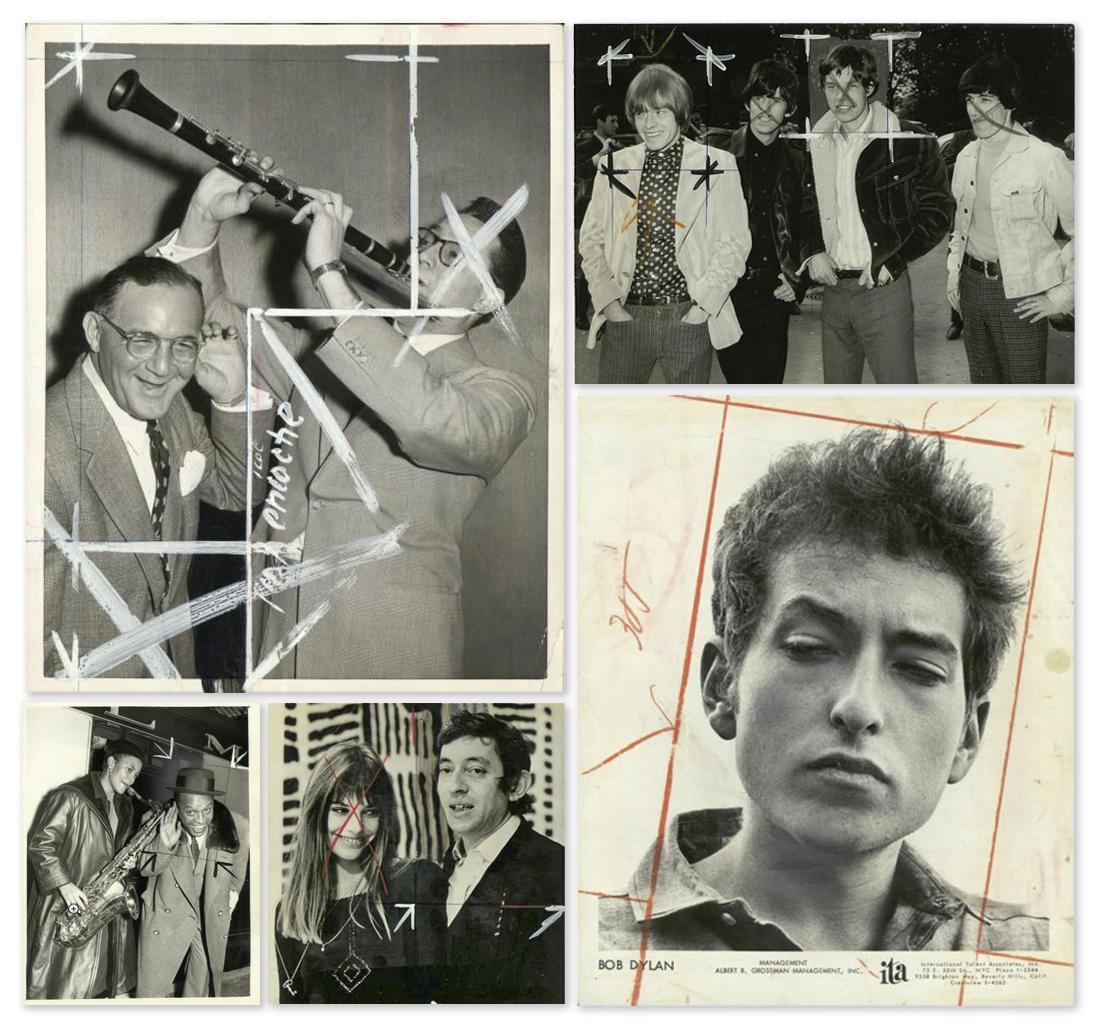
The International Herald Tribune, celebrating its 125th anniversary, has an auction of pictures from its archives on Monday 19 November. Looking through the catalogue, I’m mostly struck by the pictures of musicians, especially the ones that have compositors marks and instructions and arrows on, showing how the photo will be cropped, focusing on who the editors deemed the important part of the story…

Bennie Goodman clowning with Steve Allen; The Stones in Paris (only Brian Jones escapes a wax pencil cross); Dylan press release shot for The Times They Are A Changin’; Jane Birkin with Serge Gainsbourg; Lionel Hampton clowning around with Elsie Smith; notice how Jazz musicians always seem forced to ‘clown around’…

Five Things I Saw & Heard This Week: Wednesday 7th November

Best Music-Related Tok Pisin Phrase
“The Prince of Wales spoke in the local language called Tok Pisin as he introduced himself as the nambawan pikinini bilong Misis Kwin—the number one child belonging to Mrs Queen. It is a creole language widely spoken in Papua New Guinea. Tok is derived from the English word talk and Pisin from pidgin. Much of its vocabulary has a charm of its own. For instance, liklik box you pull him he cry you push him he cry is an accordion…”

The Video That Killed A Career
Alexis Petridis wrote an interesting piece about the new book, I Want My MTV, a few weeks back, and mentioned eighties arena rock star Billy Squier and the video for the track Rock Me Tonite, directed by Kenny Ortega. I finally got around to watching it, and it is quite the most deranged and strange video ever made (it often makes lists of the worst videos of all time), after which Billy’s career tanked. As I watched it I felt sad for Billy, and perused the usual sidebar links to other Billy Squier videos. I alighted on one where he’s sitting on a high stool in a lecture theatre, alone except for a blonde Telecaster, capo’d at A. I clicked the link. He’s playing a smallish fundraiser, fairly recently. He has a suit jacket on, and looks like a better preserved, more dignified Joe Perry. The guitar is powerfully amped, and he starts a strutting riff as he plays In The Dark. It’s terrific. A fairly generic eighties rock number, he gives it 110%, wailing and bending strings like a man possessed, and for as long as it plays you want to be driving down a road, really fast, at night.

Nail. Head. Ladies & Gentlemen, Robbie Fulks
On sifting and sorting and downsizing his CD collection: “Scrapping fat glossy packages by the likes of Timbaland, Nelly, Luke Bryan, and T.G. Sheppard (to be clear, and not to inflame everyone, I like a few songs by all these guys okay, but can’t justify the permanent storage of dozens of them) reminds me of the passing nature of fashionable taste, and the extravagance of the moneyed sector of the music industry in satisfying it. The photography on the Timbaland record that has somehow come into my possession looks like it cost a hundred thousand dollars. The booklet is so thick you can hardly coax it from the jewel case. If some dude turns a goofball idea into a popular hit and everyone dances around and enjoys the summer more, it doesn’t seem very objectionable. But when you give a moment’s thought to the year-of-vaccines-for-Bangladeshis’ worth of art design, the carbon footprint of multiple buses crisscrossing the country for years on end, and the transfer of millions upon millions of dollars from work-weary parents to summer-enjoying kids… you almost have to weep.”

Albert Hall Ceiling

No Day In The Life references here, no siree…

What Has Happened Down Here Is The Wind Have Changed
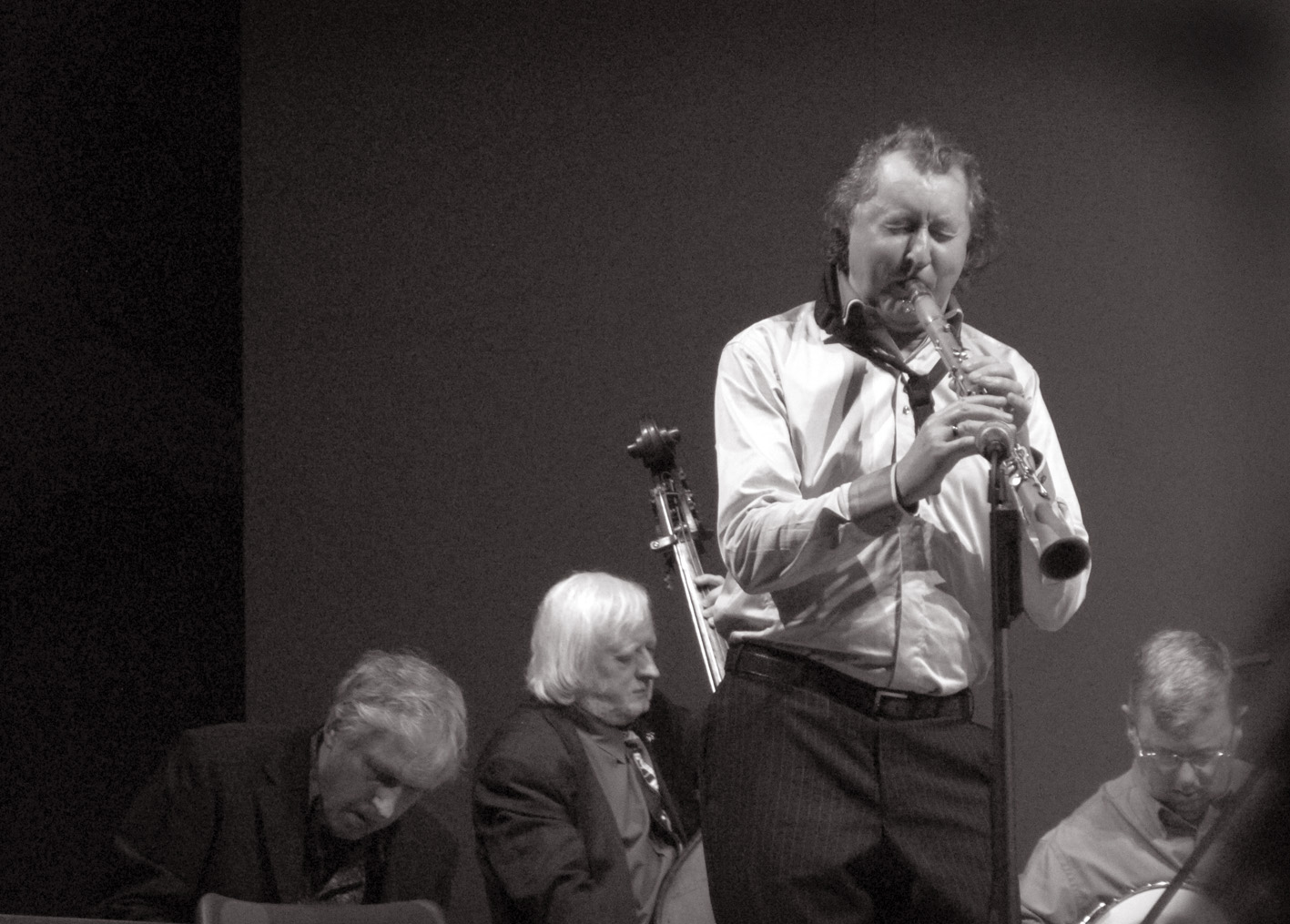
Listening to jazz clarinetist Sammy Rimington sing River Stay Away From My Door on Saturday night, I’m put in mind of the effects of Hurricane Sandy on friends on the East Coast. Rick in NYC: “It’s weird and slightly creepy walking back into the deep dark of lower Manhattan below 30th Street at night. I expect highwaymen with every breeze.” And John in Woodstock: “A bunch of big old trees came down, leaving us cold and dark and off the grid until early this morning. The soundtrack is chainsaws, nothing but chainsaws.” As the song’s lovely Carmichaelish melody unfolds, Sammy sings plaintively over the top: “Don’t come up any higher/Cause I’m all so alone/Just stay away from my bed and my fire/Cause that’s all I own…”

The Sammy Rimington International Band, Headcorn Village Hall

Five Things I Saw & Heard This Week: Wednesday 31st October

Danny Baker, Shortlist Questionnaire
Who’s the most overrated band of your lifetime? “Queen. A dreadful group. They were neither Led Zeppelin nor Bowie and they played that middle ground in between. Punk rock didn’t come around because of prog rock or anything like that, it came around because of Queen. Abba, Queen and ELO—that was what people were trying to move away from. You can find everything Queen did better elsewhere.”

Bob Dylan & The Poetry Of The Blues
Michael Gray, my favourite writer on Bob Dylan, gives a talk in Canterbury, close enough to drive to. Mick Gold comes with me, supplying an excellent compilation CD and fascinating conversation for our tiny road trip. Michael’s presentation is terrific—funny and revelatory. Over a meal afterwards we talk about the fact that Freddy Koella is both Michael and my favourite Dylan guitarslinger. Mick reveals that the night before, Freddy had guested for two songs at Bob’s Santa Barbara gig—the first time since he was a member of the Never-Ending Tour Band in 2004.
Michael on Freddy: “Freddy was Dylan’s best-ever lead electric guitarist (and just might be the best electric guitarist altogether since the heyday of Hubert Sumlin). Robbie Robertson was near sublime—the next best, a very close second—but Freddy was better. And in The Band all the other musicians were crucial too, whereas in Dylan’s band Freddy had to carry the whole front line. Of course you could say Mike Bloomfield was right up there, but he was, though a virtuoso, essentially more limited (Dylan had to tell him, for Like A Rolling Stone, to play ‘none of that B.B. King shit’); and G.E. Smith was terrific, but safe. You never wondered excitedly what he might do next. Whereas Freddy played by living on the edge, like Bob, fusing Django Reinhardt and Carl Perkins and playing as if it were 1957 now. He was the electric lead guitarist Dylan himself would have been, had Dylan ever bothered to master the instrument.” That line is fantastic, and spot on—“Playing as if it were 1957 now…”

Papa Nez’s Blues
To the Queen Elizabeth Hall with my mum to see her old fave, Mike Nesmith (The First & Second National Band stuff, not The Monkees, just so’s you know). I seem to be making it a point lately to see only Senior Citizens Of Rock™ but it’s just coincidental. It’s instructive to compare and contrast the approaches, however.
Leonard “Ladies’ Man” Cohen, 78, 4 years into his latest group of tours, is in fantastic voice, playing three-and-a half-hour shows with some of the finest musicians on God’s earth and playing versions of his songs that make the original tracks seem pale shadows. It is, in all senses, not just another show. It’s a summation of a life’s work.
Ian “Mott To Trot” Hunter, 73, belts out his impressive and rockin’ back catalogue with ferocious intent, fronting a hell-for-leather combo, The Rant Band. On lead guitar, Mark Bosch is a passionate and note/feel-perfect Seventies/Eighties Noo Yawk (think Leslie West or Mike Rathke) player, matching Hunter every step of the way. His tribute to Mick Ronson, Michael Picasso, is really moving, and the sense of community between him and his fans something to feel.
Mike “Papa Nez” Nesmith, 70, hasn’t played London since 1975, and makes a rather terrible decision. Sold to the audience as cutting edge technology by Nesmith, the three musicians on stage play along with pre-recorded tracks (mostly triggered by the keyboardist), which a) makes the sound terrible, all clunky Casio drums and booming sound effects, and b) forces everyone into a rather tight and metronomic way of playing—an already fairly predictable bass player becomes almost immobile, and the music has no sway or grace. This seems a real shame, as Nesmith’s use of soundscapes on tracks like Nevada Fighter, Bonaparte’s Retreat or Beyond The Blue Horizon were really innovative, especially in a country rock context. There are some beautiful songs here, from Joanne to The Grand Ennui to Rio, and Nesmith has the fine idea of setting up each song with a short piece of fiction contextualising the events that have (supposedly) led up to the song. But the bad sound, the gloopy and excessive synth string playing, the hopeless beats and Nesmith’s out of practice and strained voice leaves us feeling underwhelmed.

www.bullettmedia.com/article/music-journalism-cliches-that-need-to-be-retired-today/
Well, this brilliant broadside by Luke O’Neil makes rock journalism just that bit more difficult (but—hey—upside… potentially better!)

Not So Lucky, Lucky, Lucky
“I love all the PWL stuff slowed down, it sounds great.” says Kylie talking about The Abbey Road Sessions, where she re-records her pop hits of the eighties. I remember when the band I was part of (who NME saw as the antithesis of Stock, Aitken and Waterman’s PWL stuff—Rick Astley, Kylie, Jason Donovan etc.) decided to record a slow version of Kylie’s I Should Be So Lucky for a radio session. Sounded great when Mark roughed it out on piano with Heather, but someone somewhere hit the Irony Alert! button and thought better of it…

Five Things I Saw & Heard This Week: Wednesday 17th October

Rock Me, Davy!
1972, Fulham. Tony Cane Honeysett calls me over to his record player. Listen to this! he says. The 45 starts with a snarly riff, before going into a moody, groovy blues, with snappy drums and hooky fuzz guitars. The singer sounds both pop and familiar. After a few minutes I tumble. It’s David Cassidy, essaying a new, more grown-up direction, trying to move on from teen fandom to a kind of rock/blues. In May of ’72 he’ll pose nearly naked for Annie Leibovitz in Rolling Stone. This week in 2012, four of Cassidy’s albums from this period are re-released. Not sure I’ll check them out, but for old times sake (Hey, Tone!) I re-listen to Rock Me Baby, and it’s great. The Wrecking Crew rhythm section—Hal Blaine on drums and Joe Osbourne on bass—get down while Mike Melvoin (father of Wendy) prowls around the edges on piano. In the centre of the soundstage Larry Carlton and Dean Parks strut and fret, combining to brew up a nasty Southern Rock snarl. It’s just great, and I’m back in Anselm Road with Tony…

Seamus Ryan Sings ‘Liverpool Lou’
We had 12 minutes to photograph Billy Connolly in a room in a painfully Boutique Hotel™ this week. Photographer [to the stars] Seamus breaks the ice and makes a connection by revealing that he’s Dominic Behan’s godson, and Billy, famously, once decked Dominic in a bar, a fight broken up by Ronnie Drew of the Dubliners. Billy remembers the incident in detail, including the fact that he apologized the next morning to Dominic (sober throughout the whole fracas). At one point in the twelve minutes Seamus sings a few bars of Liverpool Lou, one of his godfather’s most famous songs [he also wrote The Patriot Game], very prettily. On a recent Desert Island Discs, Yoko Ono selected Liverpool Lou as one of her choices, remembering that her husband had sung it to their son as a lullaby. Oh, and Seamus delivered, as always.

Now This Sounds Intriguing…
The Coen brothers’ next film is Inside Llewyn Davis, about a struggling folk musician in the Village at the height of the 1960s folk scene. Apparently, the film’s title character is based on Dave Van Ronk. Bob Sheldon called him The Mayor of MacDougal Street [the name of Van Ronk’s autobiography, written with Elijah Wald] and everyone who went through Greenwich Village at that time seems to owe him a debt, most famously Dylan. John Goodman was interviewed in US Esquire this month by Scott Raab, and talked about it:
Raab: What are you shooting in New York?
Goodman: Inside Llewyn Davis. I’m playing a junkie jazz musician for Joel and Ethan Coen. I haven’t worked with them since O Brother, Where Art Thou?—15 years. Boy, it’s great to be back with them again. We have a real good comfort zone. I just adore being with those guys. It’s like hanging around with high school guys or something.
Raab: I’ve heard the film is based on folk singer Dave Van Ronk’s life. So it’s set in Greenwich Village in the ’60s?
Goodman: Right on the cusp of Dylan’s big explosion.
Raab: I’m probably one of the few people who’s seen Masked and Anonymous, the movie you were in with Dylan, half a dozen times. It’s such a strange movie, and it has so many moving parts. It’s a fascinating film. How was Dylan on set?
Goodman: Being around Bob was a trip. I just hung back and watched him. When the cats had downtime, they’d go somewhere and play together. And I’d listen to that. The film got a god-awful reception at Sundance. There were a lot of walkouts, but who cares? It was kind of an absurdist, futurist piece. It was fun. And I got to work with Jeff Bridges again. I got to stand next to the fabulous Penélope Cruz for a little while. That was worth the price of admission. Senorita Cruz.”

Mortification Corner
1>
“Diana Krall has collaborated with Academy Award winning costume designer Colleen Atwood and acclaimed photographer Mark Seliger to create a series of beautiful and striking images for Krall’s new album, Glad Rag Doll. They are inspired by Alfred Cheney Johnston’s pictures of the girls of the Ziegfeld Follies taken during the 1920s.” Well, if you say so…
2> Pity poor Art Garfunkel as he sits on the sofa being interviewed by the One Show dolts whilst they implore the Mrs Robinson’s in their audience to text photos of themselves, preferably with toyboys. Art tried to modify the disdain in his expression, but didn’t quite succeed…

King Harvest (Has Surely Come): Hyde Park, Saturday

“Corn in the field, listen to the cars when they cross Hyde Park Corner…”

Five Things I Saw & Heard This Week: Wednesday 10th October

Genius Idea Of The Week
Nick Paumgarten writes about record producer Scott Litt, New Yorker, October 1st.
When Scott Litt built a recording studio in the back of his house, in Venice, California, seven years ago, he did it with Bob Dylan in mind. He pictured Dylan sitting there at the Hammond organ, accompanied by nothing but drums and a standup bass. Or maybe in an arrangement featuring a banjo and a trumpet. “I always imagined him having a Louis Armstrong Hello, Dolly sound,” Litt said the other day. “Musically, that’s as American as it gets.” [Sadly, when Litt was hired to engineer Bob’s latest, Tempest, and] …got up the nerve to mention his idea, it didn’t go over very well. [Bob] just went, “Heh heh heh—Hello Dolly.”

This, From The Very Wonderful “Letters Of Note”
In 1919 [at which point he was just 9 years old] Samuel Barber wrote the following letter to his mother and left it on his desk for her to find. She did, and a year later Barber began to compose his first opera, The Rose Tree. He was still only 26 years of age when, in 1936, he finished his most famous work, Adagio for Strings.
“NOTICE to Mother and nobody else
Dear Mother: I have written this to tell you my worrying secret. Now don’t cry when you read it because it is neither yours nor my fault. I suppose I will have to tell it now without any nonsense. To begin with I was not meant to be an athlet [sic]. I was meant to be a composer, and will be I’m sure. I’ll ask you one more thing.—Don’t ask me to try to forget this unpleasant thing and go play football.—Please—Sometimes I’ve been worrying about this so much that it makes me mad (not very),
Love,
Sam Barber II

Roll On, John
Stanley Reynolds’ piece for The Guardian, 3 June 1963, reprinted this week: “Inside the club, down CND symbol smeared walls to a dark and bronchial cave, the dancers have originated the Cavern Stomp, because they did not have room enough to twist. In the dressing room off stage a steady flow of rock artistes come to talk with Mr Bob Wooler, the Cavern’s full-time disc jockey whose visiting card tells you, with Dickensian charm, that he is “a rhythm and blues consultant.” That is The Cavern, duffel coats and feigned boredom. On tour it is like a Hollywood success story. At the Odeon, Manchester, in the Beatles’ dressing room, the four boys were asking a reporter from a disc magazine to please see if she could do something to stop girls from sending them jelly babies. She had once said they liked them. “We’ve got two ton of them now,” John Lennon said. “Tell them to send us E-type Jaguars or button-down shirts.” Someone came in and said two girls had won them in a contest. “Just who are these girls who won us?” John Lennon asked. “I mean, how long have they won us for.”

“Hear What I’m Saying, I’m Not Saying It Right”
Random Acts [a series of short films chosen for their bold and original expressions of creativity] Channel 4.
Comedian and poet Sean Mahoney, directed by Jeremy Cole. An age-old subject, a harrington jacket, a little bit of Mike Skinner in the delivery. Vulnerable and sharp at the same time. A talent. Lovely.

Record Cover Of The Week

Paris flea market purchase. Just listened to. As you’d expect, The Surfaris via St Malo.