Sunday, March 10th, 2024

{ONE} A RAINY NIGHT IN SOHO
Crossing from a Mayfair private view into Soho, I put the airpods in and hit play, and DJ Shadow is thrown up by the randomiser that is Shuffle. It’s “Midnight in a Perfect World” and it is indeed perfect, for this moment, in this imperfect world. I find myself slouching along in time to its wonderful backbeat as I walk through St Anne’s Court to the Elizabeth Line Tottenham Court Road entrance — TfL missed a trick in not calling it TCR [Soho]. Walking in the rain in London at night never loses its appeal.


{TWO} THE RESISTANCE OF POP MUSIC, PT 1
I keep waiting for Pop to Eat Itself, as the most brilliantly named group of the Eighties would have it, but Pop doesn’t seem to be going anywhere, and it’s a driver or important component, in many of the new series and movies on Netflix or Apple or Terrestrial TV. For me, All of Us Strangers has the most evocative use of a single song. Nothing we’ve watched recently was as poignant, melancholy, and controlled as Andrew Haigh’s film. There’s no weakness, and the extraordinary performances of Claire Foy and Jamie Bell are so quiet and nuanced that you catch your breath as their story with their [now] adult son plays out. The film has its theme song, and it’s perfect — the Pet Shop Boys “West End Girls”* with its talk of “too many shadows, whispering voices”, and although it tracks club dancing, its melancholy is worn on its sleeve. And the original video had Tennant’s partner in PSB, Chris Lowe, as a ghostly figure in the street scenes…

* I’d forgotten the verse, “We’ve got no future / we’ve got no past / here today, built to last / In every city, in every nation / from Lake Geneva to the Finland Station.” (The Finland Station in Leningrad is the place where Lenin got off the train on the night of April 3, 1917, to take charge of the Russian revolution), but if anyone’s going to put that in a pure Pop hit it’d be Neil Tennant, no?


{THREE} FILM 2024
I had watched Claire Foy and Andrew Haigh talking about All of Us Strangers (if you’ve seen it, you’ll understand the difficulty) at Mark Kermode’s MK3D show at the BFI on the South Bank. As I had designed the slides for Mark’s show, I’d popped backstage to say hi. It was an interesting Green Room — Claire Foy and Andrew Haigh; Mahalia Belo (director) and Alice Birch (writer, from a novel by Megan Hunter) of The End We Start From, which features an excellent, panicky score by Anna Meredith and a standout performance from Jodie Comer; Jane Giles and Ali Catterall with their film, Scala!!!, about the King’s Cross Cinema and the extraordinarily diverse programming that inspired future generations of filmmakers and musicians; and Jerskin Fendrix, composer of the exceptional Poor Things soundtrack.


{FOUR} THE RESISTANCE OF POP MUSIC, PT 2
Mark Kermode: “Yorgos Lanthimos said he just knew from listening to your album (Winterreise — it came out in 2020, tagged as Indie Pop by Apple Music) that you could do the soundtrack. He said he played the album to Emma Stone and she said that when she heard it, it was like everything exploded, your head exploded into music, which I thought was a fabulous description. But it’s a really big thing to be asked to score a major motion picture straight out the gate. Did you know that you could do it?”
Jerskin: “I spend a lot of time not going to the cinema — I’m sure you might be more familiar with it, but it was an odd mental thing, just being in the studio by myself, already being isolated by lockdown, and thinking everything I’m doing right now is going to end up in a colossal environment in a lot of places in the world. The mental gymnastics of that was sort of impossible…”
Mark: “The score is right at the heart of the film — I think it would be quite easy for the film to be emotionally alienating and I talked to Yorgos and we agreed on this point — what you need is an emotional, visceral reaction. I’m just astonished that it’s your first film. It’s like you were always ready to do this.”
Jerskin: “I think it was very lucky that it was this exact film, this exact project, with this exact director, because my background up until that point had been pop music. I think there’s a level of emotion, and a level of hyper-exaggerated emotion that you can play with in pop song writing, which in most other art forms verges on the cloying.”
Mark: “What was the first pop record you ever bought?”
Jerskin: “The first pop record I remember listening to was The Wild, the Innocent, and the E Street Shuffle by Bruce Springsteen”.
Mark: “Wow! My first one was Alvin Stardust, “Jealous Mind!”

Jerskin then went on to detail his recent love for Carly Rae Jepson’s album Emotion — “Every song has this incredible core”. I checked — it does have all the elements that are present in Jerskin’s own album, and the Poor Things soundtrack — sparkling synth hooks, woozy atmospherics and all sorts of sounds used as beats and percussion without being drums, as well as on-the-nose pop melodies. I ended up talking to Jerskin after the show about Bruce, The Wild etc… and the song that he feels combined everything he loves about Pop Music in all its unabashed brilliance, “Jungleland” (from Born to Run). We also talked pitch-bending (you’ll know if you’ve seen Poor Things), and I ended by wishing him luck for the Oscars, for which his soundtrack has been nominated. How incredible is that? First Soundtrack, first Oscar Nom…


{FIVE} AND THE OSCAR GOES TO…
For Best Original Soundtrack, I think that the Academy will probably give it to Robbie Robertson for his work over four decades with Martin Scorsese. Killers of the Flower Moon is a really powerful soundtrack, full of bluesy foreboding, deep, rough sonics, heartbeats, and overdriven slide guitar. It also has one final send-off of a song, ”Still Standing”, poignant and moving as sung by an eighty-year-old Robertson, sounding as full of piss and vinegar as he did as a sixteen-year-old sending shards of guitar around Ronnie Hawkins as he sang “Who Do You Love.” [Update: I was wrong, Oppenheimer won, soundtrack by the brilliant Ludwig Göransson.]


{EXTRA} SHOALS’ SOUL
I was reminded of James & Bobby Purify’s wonderful track by a nice interview with Dan Penn in The Guardian this week by my friend Garth Cartwright. “I’m Your Puppet” was the only song cut at Muscle Shoals by James and Bobby (their record label sent them to Moman’s American Studio in Memphis for their follow-up), but I’ve always had a soft spot for the song, mainly for its rolling melody line, sitting atop a lovely chord progression. The Guardian piece was timed to the release of a great album that Dan cut on Bobby Purify in 2005 that is only now seeing the light of day: The Inside Track on Bobby Purify (The Last Music Company). It consists of Dan’s heartfelt demos, followed by the album itself. Find it, buy it, support real soul music. 

When we recorded half our first album in Muscle Shoals, Alabama, Mark and I were in thrall to Southern Soul (our more Northern and Western influences being Prince, Ray Charles and Bobby Womack). The classic songs of Penn, Spooner Oldham, Chips Moman, Eddie Hinton, Donnie Fritts and others were really important to us, from “Dark End of the Street” to “Do Right Woman, Do Right Man”. The weeks we spent there were among our best musical memories, warmed by the fantastic hospitality and talent of all at Muscle Shoals Sound. 

A few years later, our career in the dumpster, I asked Mark to add piano and bass to a version I had started recording as a gift for a friend’s wedding [long story]. I can’t sing like the great Purify cousins, so I opted for a cooler, slightly swampier version with a dobro lick replacing the lovely xylophone on the original. I love Mark’s playing here — he has the South in his veins! — with his elegant take on Floyd Cramer’s country piano stylings. Enjoy…
More Than 5 Things, September 12th, Pt. 1

I’ve seen lots of stuff over the weeks since the last post, and here it is, in no particular order. It has nothing to do with music, but you have to watch The Octopus in My House on iPlayer to see the finest nature programme of the past year. Three-hearted, blue-blooded and entirely boneless… you’ll never order octopus in a restaurant again. And, as the publicity happens for The Last Waltz at 40 tour, I’m just trying to figure out why none of the publicity mentions Garth Hudson, only musicians like Warren Haynes and Jamey Johnson, who, last time I looked, have no real Band connections. It’s also been amusing to see which media outlets had an issue with Lana Del Rey’s latest, Norman Fucking Rockwell, and how they decided to deal with that middle word. Was it F***ing? F—ng? Or F@!%ing? And there are no words for what’s happening politically at the moment in Britain, so on with the show…

{ONE} I LOVE A GOOD INTERVIEW
Fascinating Clive Davis interview by David Browne in Rolling Stone.
Which act do you regret not breaking?
“You’re always somewhat regretful of any artist you thought would break. There was the Alpha Band years ago that had T Bone Burnett and a young violinist named David Mansfield. And there were the Funky Kings with Jack Tempchin, who has written so many great songs [the Eagles’ “Peaceful Easy Feeling,” “Already Gone”]”.

I may be the only person who has all three of The Alpha Band albums. Featuring great T-Bone Burnett songs like “The Statue Makers of Hollywood” and “Perverse Generation”, and even a song written with artist Larry Poons. They broke in my house, but possibly not in anyone else’s. Here’s the photographic proof…

AND ALSO…
Rob Stoner interviewed by Jason Woodbury on Aquarium Drunkard, about his role in Rolling Thunder, and what he thought of the Scorsese film. He asks Stoner about Dylan’s tendancy to cloud and obscure facts about his life and work: “I mean you could even look at that as in his sartorial approach, how he changes his lid every era: started out with a little newsboy hat, a little commie, comrade worker hat, and then he went on to the top hat, then the cowboy hat, then the fucking cab driver hat. It’s all part of him just being a shapeshifter. It’s all intentional, and it’s all in fun. It makes for a more entertaining movie than just another goddamn rock documentary. Also, it’s because it poses more questions than it answers. It sets them up for a sequel.”
AD: Do you think that there will be one?
Rob Stoner: Well, they’ve got plenty of performances left in the can, and furthermore, when they set out to begin this project 12 years ago, Scorsese sent a team around to every principal who was alive at the time to do a day’s worth of interviews. They came to my house. Bob’s manager, Jeff Rosen, sat in my studio with me for an entire day, interviewing me. So they have all these interviews in the can. They’ve got enough to do it. This time, if they do it again, hopefully they’ll mention Jacques Levy, Howard Alk, and Paul Goldsmith.
When asked how he handled working with demanding artists, he put it down to “incredibly good luck and people skills. You have to employ a lot of psychology and tap dancing and tip-toeing around these people’s idiosyncrasies. These idiosyncratic individuals, man, they’re artists. Some of them have acquired their strange quirks and personality by design, some of them are just naturally that way, but either way, you have to accommodate them. It’s all about psychology, really.
AD: And that was just a natural skill set that you possessed?
Rob Stoner: Well, basically, it was a desire to keep the job!
AD: Did you ever work for anybody who was more difficult to please than Dylan?
Rob Stoner: I’m gonna have to save that one for my book, man. [Laughs]

{TWO} MUSIC TO WORK TO

At least, that’s how this track worked for me. Forty two minutes and twenty seconds of “Wichita Lineman”. In places it is exquisitely beautiful. Apparently mentioned in Dylan Jones’ new book about the song (yes, just that song. A whole book). Hear DJ talk about it on the Rock’s Backpages Podcast here (it’s Episode 37).

{THREE} WORLD’S COOLEST TRUMPET?

Coming up in late October, as part of Christies Exceptional Auction, this Miles Davis-owned trumpet… “The trumpet was made by the Martin Company, which had been founded in Chicago in 1865 by the German instrument-maker, Johann Heinrich Martin. By the middle of the 20th century, demand for its trumpets was pretty much insatiable. Dizzy Gillespie was a huge fan, Miles Davis was another. Davis was particularly fond of a model called the Committee. So much so that when the Martin Company was sold to a rival manufacturer in the 1960s – and the production of Committee trumpets officially stopped – they continued to be custom-made for Davis. The Committee horn being auctioned was one of a set of three conceived by designer Larry Ramirez, who was a part-time jazz trumpeter himself. At Davis’s request, one was coloured red, one blue and one black – each of them decorated with a gilt moon and stars, and with the word ‘Miles’ inscribed inside the bell. Ramirez told the story, in later life, of the nerves he’d felt at the moment Davis handed him back one of the horns and said, ‘You play, don’t you?’. He duly played a tentative passage from Joaquín Rodrigo’s Concierto de Aranjuez and remembers his relief when Davis observed, ‘Man, you play pretty good’.”

{FOUR} RIP JIMMY JOHNSON, RIP DONNIE FRITTS
When we recorded in the Shoals, Jimmy lent Mark his Telecaster, and us his car. Jimmy, like all of the Shoals team, wanted to help out. Tape Ops, receptionists, engineers, legends – all of them the embodiment of Southern Hospitality. I promptly reversed the car into a telegraph pole. Here I am on the bonnet of the Jimmymobile, pre-prang.

And Donnie (Flip-Side) Fritts was the subject of this lovely memoir by David Hood’s son Patterson (thanks, Bob, for The Bitter Southerner tip). A tribute to “Alabama’s Leaning Man”, he starts, “There was never a time when I didn’t know Funky Donnie Fritts…” and goes on to tell of Donnie’s life and times. “One of my favorites among Donnie’s songs was “Where’s Eddie,” which he and Eddie Hinton co-wrote around sunrise one morning. They got drunk, climbed a tree, and wrote the tune while sitting among the limbs. The British artist Lulu ended up recording it for New Routes, the album she recorded in Muscle Shoals. Years later, my band Drive-By Truckers recorded it for our album Go-Go Boots. Donnie later told me that he and Hinton drunkenly argued over whose name would grace the title. Fortunately, neither fell out of that tree.”

Donnie Fritts and Jimmy Johnson at Muscle Shoals Sound during the Prone to Lean Sessions

{FIVE} NICE NAMING, BRIAN…
The excellent film on Dieter Rams, part of the BBC’s Design Week of programmes, was graced with a fine Eno soundtrack (evocatively named, as usual). The three outliers were a Lotte Lenya Brecht/Weill track, Mancini’s “Days of Wine and Roses” and John Lewis’ “D&E”, both performed by Oscar Peterson.

{BEFORE YOU GO…}
The Tom Waits song location map

The RBP podcast with Richard Williams
A great episode. As Barney writes, “In the latest episode of the Rock’s Backpages podcast, Jasper Murison-Bowie (left) and I talk with very special guest Richard Williams about his long & august career as a writer, editor & author… and about Easy Rider, Arthur Lee, Albert Ayler, Laura Nyro, Melody Maker & much, much more. Richard gave me my first break as a music writer when he (and Ian Birch) gave me some reviews to write for MM in 1979. I owe him more than I can ever express. His taste and erudition have been beacons for me for at least 45 years. Thank you, sir.” Find it here (it’s Episode 41).

Life looks better in Super 8
Rather beautiful Super 8 movies of the Elliot Lawrence Big Band on the road in 1950, from Marc Myers’ JazzWax.

If you’re receiving the email out, please click on the Date Headline of the page for the full Five Things experience. It will bring you to the site (which allows you to see the Music Player) and all the links will open in another tab or window in your browser.

The book of Five Things is available from Amazon here.

Front Cover

“He writes with the insight of someone who has inhabited the world of the professional musician but also with the infectious enthusiasm of someone who is a fan like anyone of us. He also comes at the subject from an entirely personal, slightly sideways perspective, with no agenda and no product to sell. It’s entertaining and inspiring in equal measure.” – from an Amazon review by Zuma
“A terrific book, stuffed to the gills with snippets of news items and observations all with a musical theme, pulled together by the watchful eye of Martin Colyer… lovingly compiled, rammed with colour photos and interesting stories. He has a good ear for a tune, an eye for the out-of-ordinary and can write a bit too.” – Steve Carr, everyrecordtellsastory.com

Wednesday, 12th November

Swampers

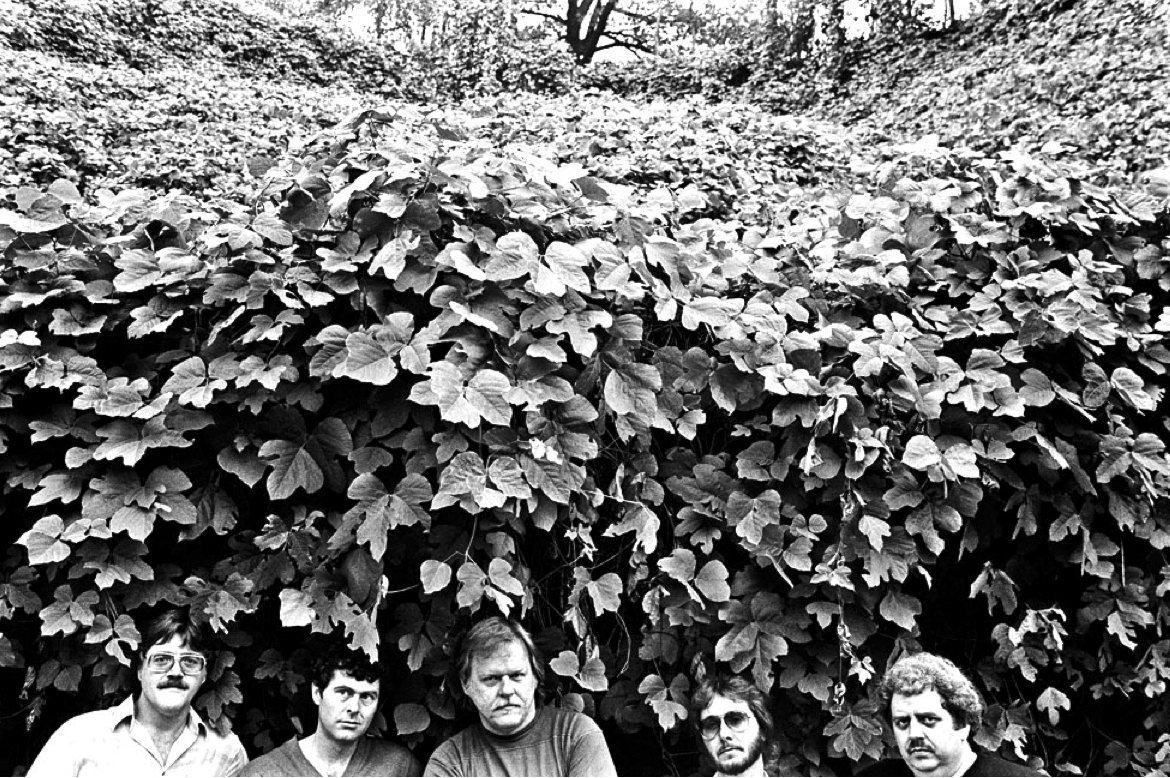
I’m away, so there is no 5 Things this week. Apropos of last week’s talk of Robert Cray and Deborah Feingold, here’s my favourite pic of The Swampers, the rhythm section at Muscle Shoals Sound, taken by Deborah in 1982. Her portraits of jazz musicians are something else. Check them out here.

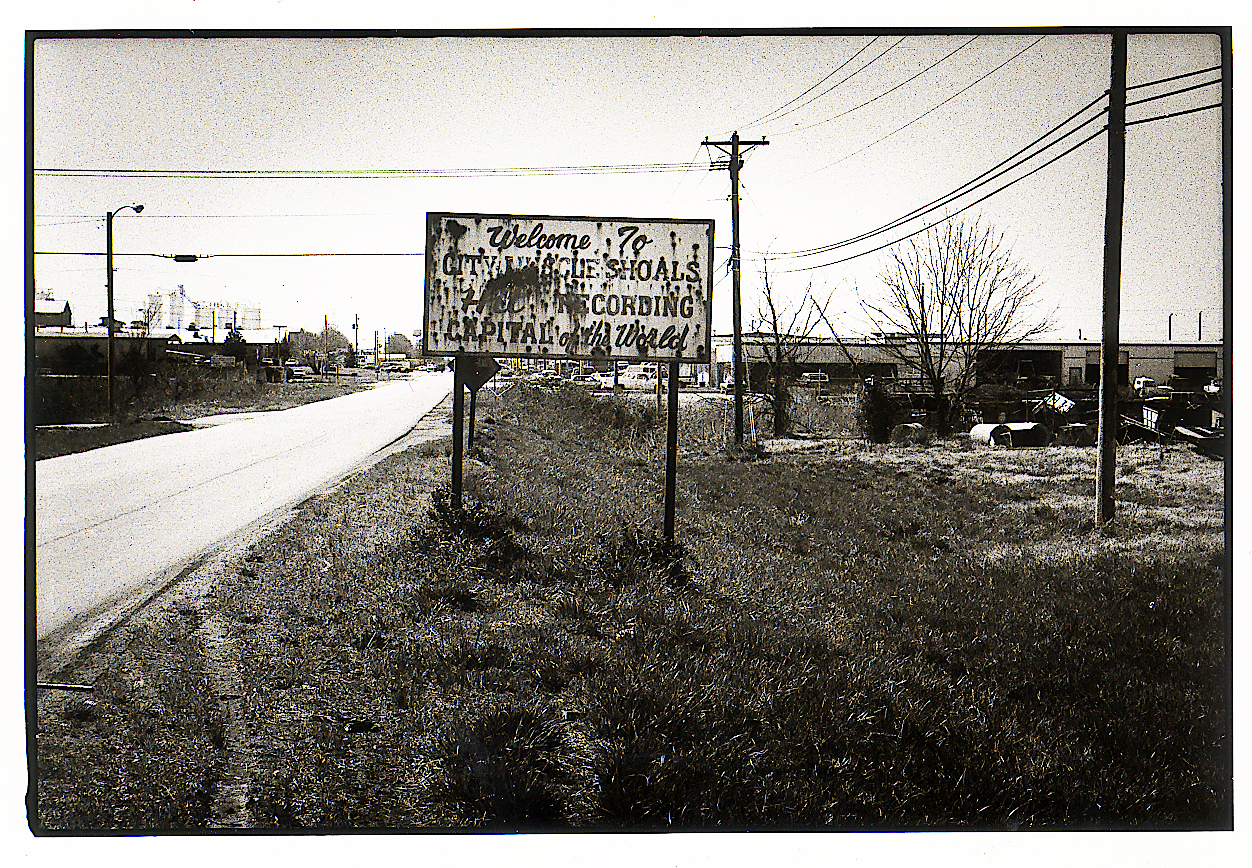
Five Things Extra: Welcome To Muscle Shoals, Hit Recording Capital Of The World

“David, little David, help me now, c’mon little David…”

ShoalsSign

Excerpts from David Hood Q&A, Soho Hotel Cinema

Audience member: Do you have a theory about what the magic of Muscle Shoals was?
DH: I think it’s a group of young people who wanted to make good music, that was the driving force. We never thought we’d be famous, we never thought we’d be Beatles or anything like that… always my role has been a supporting role. I was always the guy by the drummer playing and trying to do whatever I could to make the artist sound good… we all had the same goal and that was to play great music and to hear it on the radio. And that was a thrill… it’s still a thrill.

I was interested in the fallout of Aretha’s appearance in the Shoals and her sudden departure after Rick Hall and her husband, Ted White, came to blows. Was there a difference in feel, working in New York, where the sessions relocated, compared to the Shoals?
DH: Well it was a lot more formal. There were union guys saying You can’t unplug that amplifier, we gotta have someone come in. We did the Letterman show three weeks ago in New York and we’re setting up and I wanted to move my amplifier, and… In Muscle Shoals, we were the guys, that’s the thing. [But in New York] once we got in there, got in our positions, playing the music, it was the same, then…

Our little studio, 3614 Jackson Ave., when Paul Simon came and recorded there, he came to record “Take Me To The Mardi Gras”, because he had heard “I’ll Take You There” and wanted those black Jamaican musicians to play, so he came and booked the studio time. He booked four days for that song and when he came in it was raining and the studio leaked… I don’t know if it’s polite to say this but the sound engineer [Jerry Masters] taped tampons across the back of the control room roof, because the water was dripping on the control board. We got “Take Me” on the second take, so we had three more days – Paul Simon’s not going to give up the studio time he’s paying for so we cut “Kodachrome” and those other things… [those other things included “Loves Me Like A Rock”, “One Man’s Ceiling Is Another Man’s Floor” and the luminous and delicate “St. Judy’s Comet”, showing the deft touch that made them perfect collaborators. Just listen to Pete Carr’s guitar fills, Hood’s super-melodic bass and Barry Beckett’s cool vibes. The Rhythm Section also cut “Still Crazy After All These Years” and “My Little Town” with Simon].

So, very primitive facilities that we had… but it’s the sound of the musicians – it’s not the room, it’s the musicians. Many, many accidents happen in music. At the end of “Kodachrome” you hear Paul Simon go “OK” – that’s when he’s trying to get us to stop, to do it again, and we keep playin’ and it sort of becomes the record, so you never know on things like that.

My friend Alex: Often in the film Rick Hall comes across as an eccentric and sometimes brutal character – is that a fair depiction?
DH: That’s some true depiction – to this day. The session where you see [in the film] Candi Staton  recording ”I Ain’t Easy To Love”…

Alex: He’s all over it, isn’t he…
DH: He was so typical Rick Hall. He was still as awful as he ever was. “No man, that’s no good! That’s not what I want…”

Audience member: Is it a love/hate thing?
DH: Mostly love [audience laughs]. He gave me my start, I would be nowhere without him… I tell him that every time I see him. It’s a small town where we are. You either love each other or kill each other!

Other than the fact that I missed MSTthere being any mention of Eddie Hinton (add your own non-hitmaking Shoals denizen here), the film captures something of the time and place that those wonderful records came from. Read Mick Brown’s lovely piece on the Telegraph’s site, that tells you what you need to know.

I caught up with David after 25 or so years – the last time we talked was in his office at 1000 Alabama Avenue. I wore the T-Shirt the studio had given us, and Alex took a picture on his phone.

Quote at the top: Mavis Staples’ exhortation to David Hood in “I’ll Take You There”. Sign photograph taken by me in ’87.