Wednesday, 9th September

…including one thing from a couple of weeks ago…

Lonnie

LONNIE HOLLEY AND ALEXIS TAYLOR, DAVID BYRNE’S MELTDOWN, QEH
It’s tough to be a support act – unfamiliar music played to unfamiliar faces, only a few waiting for their favourite tunes. And Alexis Taylor at first seems an odd pairing with Lonnie Holley, as his new album, Await Barbarians, is all Seventies electric piano-driven singer-songwriterness, albeit with lovely Wurlitzer and restlessly inventive guitar [I missed the guitarist’s name].

What gradually pulls me in, though, is the wonderful drumming of Sarah Jones. On a couple of songs (the ones that seem to be teetering on the edge of turning into Neil Young’s “See the Sky About to Rain”) she sounds just like she’s stepped out of the Hi Records Studio in 1972 – the kit compressed and gated so the hats are as loud as the snare, with that deliberate, almost ponderous, beat. It’s wonderful. Her whole approach is really considered, like she feels herself to be totally at the service of the songs, treading carefully through a set of short, sweet tunes – including a cover of “Don’t it Make My Brown Eyes Blue”, where Alexis floats over the song, aided by great distorted guitar. The one exception to this mood was towards the end, when they played a beast of a thing (called something like “Vortex”) that alternately sounded like a Kurosawa soundtrack and Can at their most driven. This was where Sarah Jones took the lead with a swaggering set of tom rolls allied to a mighty beat that gradually drew the other musicians in and built to a blistering crescendo.

During the interval, a couple of rows down, David Byrne is chatting to Robert Wyatt. The QEH is maybe half full as the lights go down. The crowd greet the main act ecstatically, a woman behind me almost sobbing with delight-slash-hysteria, her hands clasped together in supplication.

Stage left, drumkit, stage right, cello. In the middle behind a bank of keyboards, Lonnie Holley, covered in rings and scarves. I have no idea what to expect. “Here we go, here we go… here we go”, says Lonnie softly, his fingers starting the fluttering, repetitive figures on the piano that will set the style for the next hour. These flurries are given shape and dynamics by the excellent cellist and by Lonnie’s voice, often melodically entwined. The drumming is free but receptive to the nuances of Lonnie’s direction. From what I could make out, most of the spontaneous lyrics are platitudes about mother earth and treating each other well, but it’s the mellow and soulful sound of his voice that catches you. It’s a hypnotic thing, found in, say, Al Green’s or Marvin Gaye’s oeuvre – coming from the Gospel tradition, but played out in a certain kind of soul music as seduction. Whatever, it was like being enveloped in warm bathwater, or more accurately, a flotation tank, with the outside world banished for as long as he performed. Priscilla Frank put it nicely in The Huffington Post: “From the rings on his fingers to the words in his mouth, Lonnie Holley is always at work on the art that is Lonnie Holley. He’s a scavenger and a shaman, a performer, a storyteller and a genuine spirit. Despite the relentless barrage of tragedy Holley faced throughout his life, he salvaged his very being like a discarded object left in a sewage pipe, and turned it into something wildly beautiful.” And that’s what the ebb and flow of his show was – beautiful.

A very nice set of B&W photographs of the soundcheck by Stuart Leech, shot for music website The 405, can be found here.

SMILES OF A SUMMER NIGHT
As we set off for Stockholm for a literary festival in Uppsala, where we’ll read some of Sam Charters’ poetry and celebrate his life, I looked for some performances by Peps Persson, a Swedish bluesman who Sam produced. I loved Peps’ first album, especially his version of “The Sky is Crying”. His voice sounds a little like Dave Van Ronk’s (who Sam also produced) on this terrific track “Samma Lea, Snae Blues”. The long-held note at the beginning of the second verse is beautiful, the band cruise with just the right amount of low down groove, just the right amount of precision, and the drummer’s leap to the cymbal at the end is great.

YABBA, YABBA, HEY
Glad to see my favourite post-rock, math-rock combo Battles are back in the fray. This video catches them playing about-to-be-released song “The Yabba”. Always fun to watch John Stanier drumming, and love the way he comes back in at around the 6:00 mark as the song reaches its chaotic conclusion.

THIS WEEK I STUMBLED UPON… 1
I was idly looking for stuff about how Willie and Al Jackson and Howard Grimes got the “Willie Mitchell drum sound” and, as is the internet’s way, I ended up at Al Green playing “Simply Beautiful”, which does not contravene the Trades Description Act in any way, shape or form. And if you like that, check this – his incredible performance of the Gibb Brothers’ “How Can You Mend a Broken Heart”. I had an mp3 of this performance, but didn’t realise there was video… brilliantly directed, too. The opening verse shot in half-profile; the way Al bears down on “mend”, the enraptured kid in the front row. Oh, to be in that tv studio in New York in 1973…

THIS WEEK I STUMBLED UPON… 2
A Post-MusiCares Conversation with Bill Flanagan
Bill: I noticed that some people who were not at the event read the transcript of your speech and didn’t get that some of it was tongue in cheek. When you said, “why me, lord?” in the room you were laughing and so was the audience. In print, some people thought it was all serious.

Bob: Yeah, well you had to be there.

Bill: How did you select all the performers for the Musicares tribute, was that difficult?

Bob: “It really wasn’t. Most all of them had recorded versions of those songs over the years. Garth had made “Make You Feel My Love” a number one hit. Tom Jones had done an incredible version of “What Good Am I.” Beck had recorded “Leopardskin Pillbox Hat.” Bonnie had recorded astonishing versions of “Standing in the Doorway” and “Million Miles.” So no, it wasn’t that hard. I’d even seen Alanis Morissette sing “Subterranean Homesick Blues” somewhere and I couldn’t believe she got that so right, something I’d never been able to do. Neil of course, he’s been doing “Blowin’ In the Wind” for a while and he does it the way it should be done and that song needed to be there. Some people called up right away and wanted to be on the show, so Don Was found a few songs for them. But mostly, they were all recorded versions that we were hearing except maybe for Aaron Neville’s version of “Shooting Star.” I could always hear him singing that song. He’s recorded other songs of mine, all great performances, but for some reason I kept thinking about “Shooting Star,” something he’s never recorded but I knew that he could. I could always hear him singing it for some reason, even when I wrote it. I mean, what can you say? He’s the most soulful of singers, maybe in all of recorded history. If angels sing, they must sing in that voice. I just think his gift is so great. The man has no flaws, never has. He’s always been one of my favorite singers right from the beginning. “Tell it Like it Is,” that could be my theme song. It’s strange, because he’s the kind of performer that can do your songs better than you, but you can’t do his better than him. Really, you can’t say enough about Aaron Neville. We won’t see his likes again.”

TAKE-AWAY PLAYLISTS
Every so often in a shop or cafe you hear something so out of the blue that you have real difficulty placing just who it is, even though you may know the song well. This happened post-dropoff at the McDonald’s on the edge of Stansted Airport. In between the Calvin Harris and Taylor Swift came Polica, who stood out (to me, anyway) like a sore thumb. It’s always nice to hear things you like, unexpectedly. The same thing happened in Pret recently when Jenny Owen Youngs “Led to the Sea” was playing… If you don’t know Polica, start with “Dark Star”. Two drummers, synth, bass, multi-tracked and staggered vocals and a fabulous horn part. What are you waiting for? For Jenny Owen Youngs, start with “Fuck Was I” (as in “What the fuck was I thinking?”). If you like that, try “Woodcut” (The Age Of Rockets Remix), or “Nighty Night”.

JAZZ, NICE (ACCORDING TO SHORTLIST MAGAZINE)
“Looking to fine-tune your style for autumn? Need a new fashion father figure? No musical genre turned out more sharp Gs than jazz…” Dig the fashionista’s take on Max Roach

Roach

Friday, 28th August

batchtandy

VISUAL OF THE WEEK
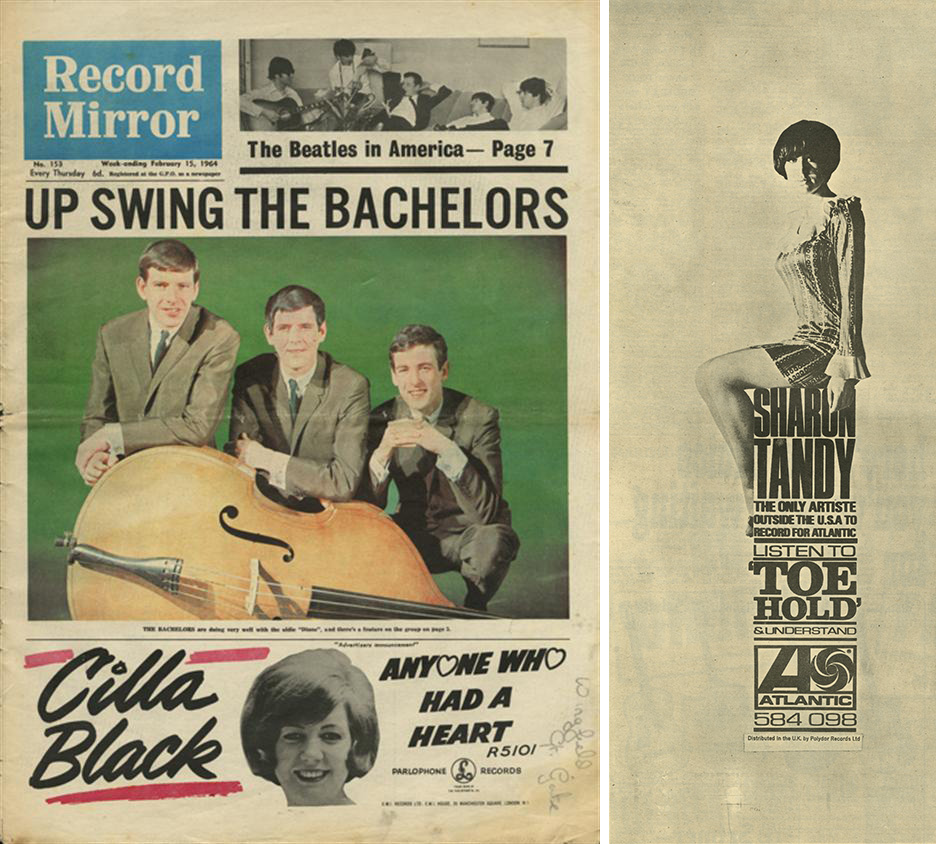
Now that’s a magazine cover. Love the Cilla type, too. And Sharon Tandy! Atlantic’s marketing guys knew how to use white space. Both of these from the Rock’s Backpages archive… I have Sharon Tandy’s single from ’67 of “Stay With Me”, but I think it doesn’t quite hit the heights of the Lorraine Ellison original, produced (and written) by Jerry Ragavoy. Philly’s Queen of Soul, indeed – a performance for the ages.

COVER GIRL
The 50th anniversary of Otis Blue is being celebrated by Rhino Records with a deluxe edition. There’s a search on to find out just who it is in the cover photo. Rhino’s press release: “The photograph was a stock image licensed for use on the cover, which was standard at the time. Recently, the photographer, Peter Sahula, told Stax Museum archivist Tim Sampson that “I’m almost sure this is Dagmar [Dreger], but I can’t find any others from that shoot, and her face is in shadow. So it’s hard for me even to be sure…” Sahula further went on to explain that if it wasn’t Dagmar, it was almost certainly Nico, the enigmatic singer for The Velvet Underground, who was also an occasional model for Mr Sahula’s shoots. So, using a combination of Otis Redding’s Facebook reach (strange concept, no? – Ed) and other online efforts, it is hoped that the worldwide community can find Ms Dreger to confirm this. Join the search by following @OtisRedding on Facebook or Twitter, and contribute information with the hashtag #FindDagmar.”

COVER ME
With a mighty bound, a favourite Bruce Springsteen bootleg springs free of storage and is quickly digitised. In the music player on the right you’ll find one of my favourite ever Bob covers. As Michael Hann wrote in The Guardian a few years back, “Extended runs through “Kitty’s Back”, “New York City Serenade” and “Rosalita”, one of the most vivid expressions of joy rock has ever produced, highlight both the incredible understanding of the band, with instinct supplemented by hours of hard graft, and their empathy for their leader’s needs. But for all the epicry, the covers here show the true heart of the E Street Band: Harold Dorman’s “Mountain of Love”, a 1960 rock’n’roll throwaway, is given a treatment so overwhelming it sounds like a showstopper. Only some problems with sound quality prevent this eclipsing any official Springsteen live release.”

TWO SONGS THAT MADE A GREAT SOUNDTRACK…
to driving across town with money for the builders – Quincy Jones’ “Money Runner” (excellent wah-wah and groove) and ZZ Top’s “I Gotsta Get Paid” (a cover of a famous 90’s Houston hip-hop track called ”25 Lighters”). If you haven’t heard this, do. It’s insane. Gnarly riffs, fantastically bluesy breaks, a mighty groove. Poor video, tho.

COME ON YOU O’s
I had kind of hoped that I’d see out my days without ever again being reminded of Chicory Tip’s “Son of My Father”, but it was not to be. At the first game of Orient’s season, a chant started not long after the kick off to a tune I couldn’t place. A couple of more times and I had it: “Son of My Father”, a particularly egregious example of early Seventies Production-Line Pop, notable as the “first UK number one single to prominently feature a synthesizer, in this case a Moog”, playing a particularly hideous riff. Apparently a terrace favourite around the country for years (what do I know?), it was written by Georgio Moroder, and under his own name was a rare miss. The lyrics. Well, the lyrics are fine: “Son of my father / Molded, I was folded, I was preform-packed / Son of my father / Commanded, I was branded in a plastic vac / Surrounded and confounded by statistic facts”. [By the way, in Orient news, it’s been a great start to the now-League Two club’s season, and if any Premiership scouts are reading, check out wing back Sean Clohessy, a player who combines a fantastic attitude with real skill – not only terrific defensively, but also involved in virtually every goal.]

REVIEW OF THE WEEK
This reminded me of the classic Charles Shaar Murray NME review of Lee Hazlewood’s Poet, Fool or Bum album, which was one word shorter. Bum.

F4 Review CSM Lee Hazelwood

Friday, 21st August

VISUAL OF THE WEEK (Personal)
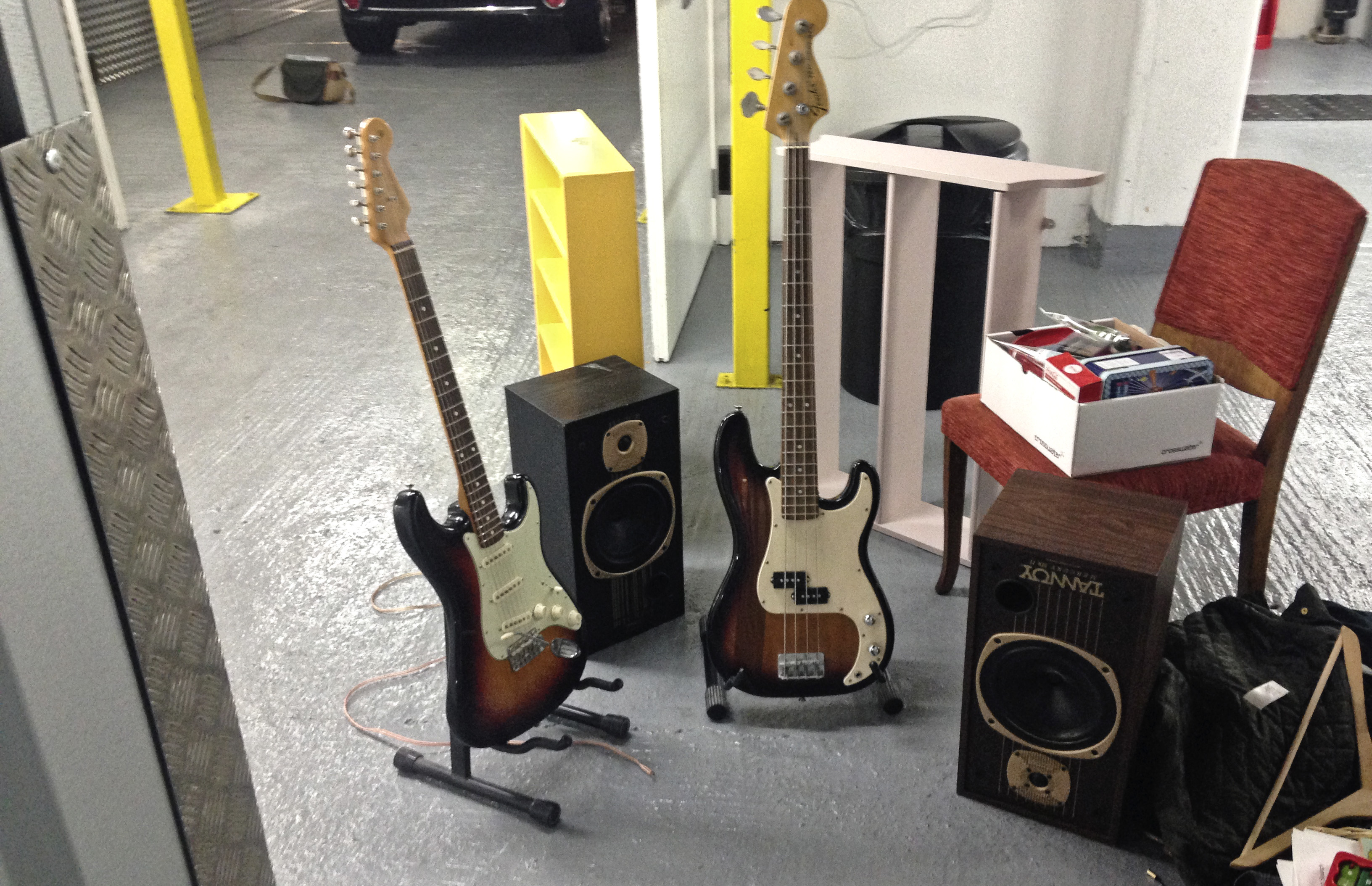
Guitars out of Storage!

guitars

VISUAL OF THE WEEK 2 (Public)
Wall of musicians of colour from an fine-looking exhibition, African Industrial Revolution (A.I.R.) by e-studio Luanda, an artist collective and studio complex founded in 2012 in the Angolan capital by Francisco Vidal, Rita GT, António Ole and Nelo Teixeira. Impressed by the range from Ellington to Martina Topley Bird, I was annoyed that I’d managed to miss it.

ex

LORD, WON’T YOU BUY ME A LONNIE HOLLEY TICKET
My habit of buying tickets to gigs I know nothing about continues. Anyone fancy coming to see Lonnie Holley and Alexis Taylor on Monday night at the RFH? Just drop me a line at martinworkbench@gmail.com if your interest is piqued, as mine was, by this paragraph on the Meltdown website:
“Lonnie builds a bridge between Gil Scott-Heron and Alice Coltrane’s Turiya Sings. He approaches both his visual art and his music by reacting to what is in front of him: his music is about the very moment in which it unfolds. Lonnie’s words, on the other hand, are based on his experiences. His endless energy and wild curiosity are capturing hearts and minds in the worlds of both music and fine art.”
I have no idea what that means, but I’m sure as hell up for it. The website also notes that “Lonnie Holley was born in Birmingham, Alabama in 1950, the seventh of 27 children, and claims he was traded for a bottle of whiskey when he was four.”

THINGS FOUND ONLINE
St Anthony: Rather wonderful tribute poem/track by Mike Garry & Joe Duddell to Tony Wilson, delivered with the kind of front that only Mancunians seem to have. How much would you love to have this done as a tribute to you after your death?

Demented Bobness: Graham sends a Weird Al Yankovitch Dylan parody, only using all-palindromic lyrics (my favourite is “Lisa Bonet ate no basil”) allied to a creditable Highway 61 pastiche.

The Beatles at Shea Stadium: Mark Myers (again) points the way to something interesting… a little-seen documentary from ’66. “As for me, I was 9 in 1965 and lived in Manhattan. While I didn’t go to see the Beatles at Shea Stadium, I probably would have gone if I had had a sister. What I do remember about that summer was the universal passion among girls and boys for all things British. Like every other preteen, I saw Mary Poppins, The Sound of Music, My Fair Lady… London, for me, was imagined as a Candyland of the mind… on the radio, British artists such as Petula Clark, Herman’s Hermits, the Rolling Stones, and Tom Jones had hits. I wanted to go downtown to meet Mrs. Brown’s lovely daughter and seek satisfaction, whatever all of that meant.” It’s full of wonderful stuff: nine minutes into the film, the Discotheque dancers take the stage after Murray the K and run through every dance step that is now regularly parodied when people think of 60s dancers. Absolutely hysterical. The voice-over interviews with the lads are terrific – street smart and eloquent in equal measure. I loved the sound guys behind the stage – the film cuts to them at around thirteen minutes, as King Curtis and the Kingpins are playing. As a portrait of the times it’s top-notch.

TITLE OF THE WEEK
News that David Rawlings has a new album, with the great title, Nashville Obsolete, prompts me to listen again to his first under the rubrik of the Dave Rawlings Machine, A Friend of a Friend, especially its most luminous song, “Bells of Harlem”. Here it is in live form – a lovely song, beautifully played. Catch the guitar outro, a fabulous circular melody spinning to a hushed conclusion. For another terrific piece of Rawlings’ guitaring, check out “Ruby” from the same KEXP session, where he plays a flatly stunning solo in the middle, not to mention an beautiful set of harmonics before the last chorus. What I love about him is the fact he’s sui generis – there are obvious bluegrass antecedents, but really he’s created a parched flamboyancy all his own.

Some things from the last couple of weeks, posted on Monday 10th August

VISUAL OF THE WEEK

bike
Funny how “For What It’s Worth” continues to exert its pull on film-makers and advertisers, for uses entirely unrelated to its subject matter, which is the Sunset Strip riots of 1966. Maybe it’s the guitar harmonic that repeats throughout… Here is a rather exquisite matching of the song to a stunning slopestyle mountain bike run (whatever that is – didn’t it used to be BMXing?) with beautifully liquid camera work in one uninterrupted shot. Bike helmets off to Brandon Semenuk on the bike, and Anthill Films for the production and filming.

MARIO WIENERROITHER HAD THE EXCELLENT IDEA…
to remove the music from pop videos, and Lionel Richie’s “Hello” with no music, just reduced to its creepiest parts, is a cracker.

THE B OF THE BANG…
Spookiest sound heard lately? The silence of the 40,000 strong crowd a moment before the 100m final at the Olympic Stadium a couple of weeks ago. Not even one throat-clearing… Usain Bolt’s start was slow but he powered through on a wet track to win in 9.87 seconds. Amused afterwards when he said that he lost focus in the middle of the race. In the middle of a race lasting under ten seconds? Extraordinary.

OR MAYBE THE S OF “SHUT UP…”
I hadn’t realised that all large athletics competitions have a stomping soundtrack throughout. Sometimes it’s groan-worthily obvious: Van Halen’s “Jump” for, well, you can guess. Most of the time it’s just irritating. It set me wondering who makes the music choices. Is there a job title that goes with that? Most of the athletes seem to have bought into the whole “hype up the audience” thing, leading the clapping in the build up to their next attempt. Most blatant offender was the half-bearded (look it up) Italian high jumper Gianmarco Tamberi, although in fairness it did give that competition a slightly hysterical edge which was thoroughly enjoyable.

The organising of the programme is extremely slick and the events run parallel in a really clever way. Our favourite: the North Korea-like synchronicity of the Hurdles prep, with small trucks dispensing assistants (and hurdles) at precise intervals. However, the big screen presentation was lacking. Too many announcements that you couldn’t hear properly over the PA, the huge screens bereft of interesting statistics, with poorly judged replays and focus – why, when Laura Weightman was being interviewed after a fine run (by one of the air-headed personality interviewers – echoes of Smashy and Nicey here) were we treated to a close up of a High Jumper wandering around. Why, when the women’s Triple Jump was happening was the entrance in tracksuits of the men’s 100m finalists deemed more interesting? Dumb.

DYLAN STUFF AND NONSENSE OF THE WEEK
50 years on, it still fascinates. Marc Myers of the Wall Street Journal wrote about the electric Newport ’65 concert on his excellent Jazz Wax blog, and received this missive from Al Kooper, the organist in the band:
“Did it not occur to anyone that the reason people were really upset was that the headliner of the entire festival, the person that most people had traveled a distance to see, the person that they sat through three days of music, only played for 17 minutes? That was the problem, Marc. Journalists turned that around into booing – I only heard people yelling, More! More! More! – and false images of Pete Seeger walking around with a fire ax to cut the sound cables. The fact is someone who shouldn’t have touched the house sound for Dylan’s set did, and did a bad job. Listen to the mono mix on the film versions, as only Bob’s voice and Mike Bloomfield’s guitar can be heard – no drums, no bass, no organ and no piano.”
As for the recording of “Like a Rolling Stone” in June 1965, Al said this:
“Bob didn’t really switch the instrumentation. He just went from 3/4 to 4/4 time. I didn’t think of it as ‘acoustic.’ Bob spent a day (June 15th) working on the 3/4 version and overnight decided to switch to 4/4. Since going electric, he’s always had his 3/4 and 6/8 compositions. “Winterlude” comes to mind. I think the lyric on “Like a Rolling Stone” was more balanced to sing in 4/4 and overnight he came to that conclusion. Some band members were switched, but the instrumentation remained the same until they moved Paul Griffin to piano and changed my life (and instrument).”
And reader Daniel Mainzer added the following…
“Interesting article about Bob Dylan at Newport. I was there. The prevailing mood of the crowd reflected much of our generation’s attitude toward social change as reflected by the music. The Beatles, the Rolling Stones, Jefferson Airplane and others lit it up in the late 1960s, and the brief flirtation with folk was over, since it was boring. We wanted to move and dance, not sway like seaweed in a gentle tide. I think Dylan felt this too and wanted to break out, to give the people what they wanted. Seeger’s music, and folk in general, was always about social injustice and a heavy message. While well done, the repetition just killed the music. Not to mention the acoustic guitar with no beat. Boring!!! Dylan knew the effect of a pounding rhythm section and let this loose on us. What a relief! Now we could enjoy Dylan instead of putting him on the back shelf.”

ES MAGAZINE QUESTIONNAIRE: LOUISE BREALEY
The Sherlock actress on the first thing she does when she arrives back in London: “I play London is the Place for Me by Lord Kitchener as I drive down the motorway. My best friend Chris put it on a mixtape for me when I was homesick doing Casualty in Bristol in 2002.” A fine choice – it’s in the Music Player to the right.

Thursday, 23rd July

VISUAL OF THE WEEK

misty

The sound of a saxophone drifts over Drapers Field in Leyton as I head to the Olympic Park. I walk into the playground and sit down nearby as I realise it’s “Misty” that he’s working things out on, looking down at his iPad for the sheet music. After congratulating him I walk off, only for him to start “Danny Boy”, which I have had on a car playlist for the last week, as essayed by the wonderful Ben Webster. Spooky…

EMINEM’S BOX OF WORDS
“I’ve got letters that look like this, and they’re all from crazy people”, says Anderson Cooper to Eminem as he contemplates his crate full of notebooks in a fascinating interview. I like it when Em reads a sheet that Cooper hands to him, and decides not to read it out, as he may “use that…”

eminem

EMERALD STREET FLAGS UP A MUSICAL MUST BUY
“It was meant as an insult. And she’s a theremin player! a friend once said, finishing her dismissal of another woman with venom. In the context of the rest of the speech this somewhat obscure swipe made sense: the theremin player was beautiful in a left-field way, frostily pretentious and given to sleeping with other people’s boyfriends. Her instrument of choice shared the first two traits. So, what is a theremin and what do they have to do with Us Conductors? A theremin is a musical instrument, where the sound is produced by moving your hands through an electric field. It sounds quavering, beautiful and faintly unearthly. Us Conductors by Sean Michaels is roughly based on the instrument’s creator, Lev Termen, a Russian engineer who, acting on the orders of Lenin’s government, took his invention to America in the 1920s. This timeline forms the first part of Us Conductors, remembered by Lev as he travels back to a gulag in his homeland. He addresses himself to Clara, a young American and his ‘one true love’. The American memories are full of starry parties with a Glenn Miller and George Gershwin soundtrack. (Michaels’ background as a music writer really comes through when describing concerts and improvisations.) They shimmer with early love and bootleg liquor, even as the Depression begins to bite. The second half of the novel is written in a simple and spare style, in keeping with its gulag setting. It’s harrowing and we are unsure if Lev’s love for Clara and for science will sustain him.”

THAT’S DOCTOR COOPER CLARKE TO YOU, SIR!
Great advert for the National Trust using a specially-commissioned poem by JCC, Nation’s Ode to the Coast. Listen to the bit where the “That’s where the sea comes in…” line repeats at the end, where he slips a wonderful drawled yeah… in the tiny crack of space between.

A big fat sky and a thousand shrieks / The tide arrives and the timber creaks
A world away from the working week / Ou est la vie nautique?
That’s where the sea comes in…

Dishevelled shells and shovelled sands, / Architecture all unplanned
A spade n bucket wonderland / A golden space, a Frisbee and
The kids and dogs can run and run / And not run in to anyone
Way out! Real gone! / That’s where the sea comes in

Impervious to human speech, idle time and tidal reach / Some memories you can’t impeach
That’s where the sea comes in / A nice cuppa splosh and a round of toast
A cursory glance at the morning post / A pointless walk along the coast
That’s what floats my boat the most / That’s where the sea comes in…
That’s where the sea comes in

ONE THING THAT SLIPPED THE NET
“She’s Got You”, by Rhiannon Giddens at Islington Assembly Hall, a couple of weeks ago. The great Patsy Cline classic, written by Hank Cochran, here stripped back to a choppy acoustic backing with added moaning cello, courtesy of Malcolm Parson. Giddens’ powerful voice is foregrounded, moving through a very straight and precise opening verse before gradually loosening it up. By the end, allowing a little vibrato and a little country sob to creep in, she turns bluesy and, tracked by the cello, brings the song home with a beautiful flourish.

SEEN IN COVENT GARDEN: SHOESIC?

shoesic

Thursday, 16th July

VISUAL OF THE WEEK
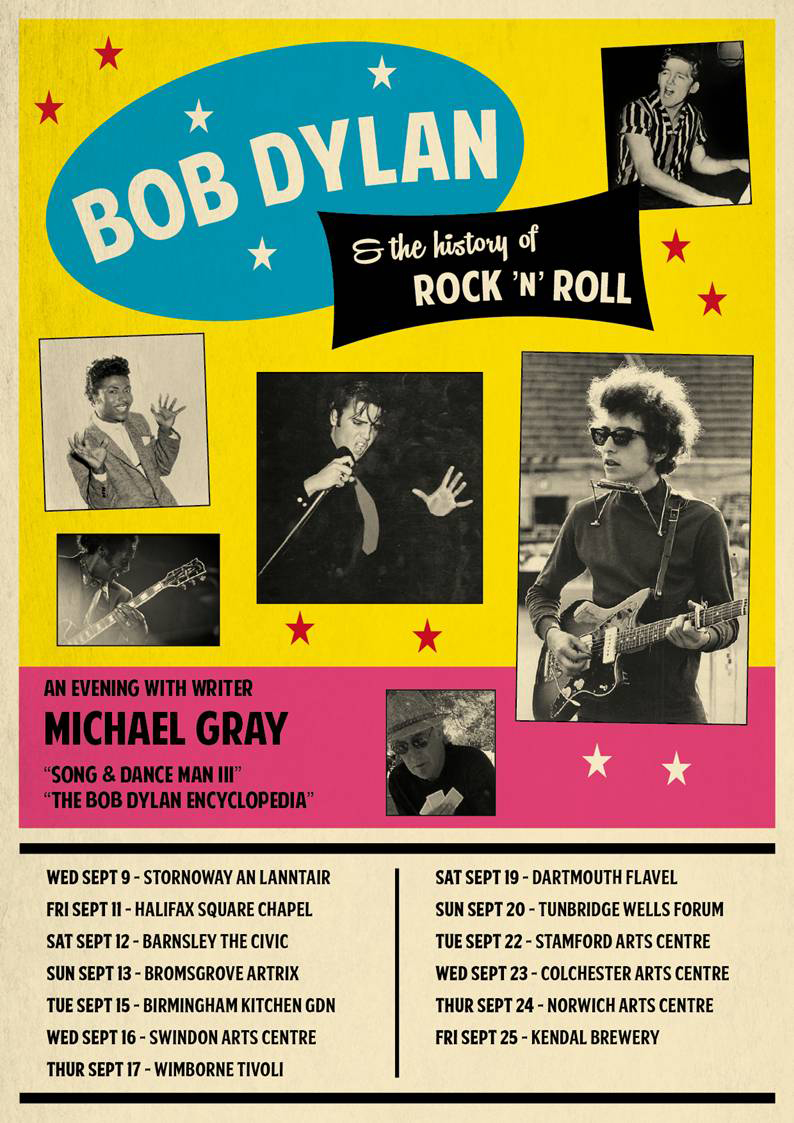
The poster for Michael Gray’s next talking tour.

MG Tour

AND THE OSCAR FOR THE BEST USE OF POOR QUALITY PHOTOGRAPHS GOES TO…
When I was at The Observer Magazine, I learned Art Director John Tennant’s great rule (which he may have picked up from Michael Rand and David King from his stint at the Sunday Times Magazine) – the worse the quality of the picture, the bigger you use it. It then becomes something graphic and powerful and always worked for family photos, or amateur snaps of news events. Watching Amy, I was really impressed by the way director Asif Kapadia used the wildly blown-up snaps – all digital jpeg artefacts and smeary colour – so surely. It’s painful to watch the images get sharper and sharper as the picture progresses, mostly created by the paparazzi who circle and hound her.

STREET MUSOS OF THE WEEK
Walking into the tube at Oxford Circus I thought I heard a James Brown track playing somewhere. It turned out to be saxophonist Carl Catron and friends, giving the teeming throngs outside Topshop some gloriously on-the-money jazz funk. I was mostly fascinated by the guitarist’s insouciant precision.

Oxford

RIP CONFREY PHILLIPS
“It was Saturday night, and Ava Gardner had a request. She wanted to hear They Wouldn’t Believe Me. Confrey Phillips knew the song – he knows every song, it seems – so he launched into the number. It wasn’t long before Gardner grabbed the proprietor and said, “Get rid of the band downstairs. They’re a crap band. Confrey should be doing this.” The year was 1952, and Gardner, Clark Gable and Grace Kelly were in London filming Mogambo. They had all come to the club known as Les Ambassadeurs because they didn’t have to work on Sunday. Kelly left early, Gable hung around for awhile, but Gardner stayed until closing time and beyond – 4:30 in the morning. Phillips figured Gardner’s enthusiasm was the champagne talking – Gardner liked her champagne – but the next morning the band was indeed gone and the Confrey Phillips Trio was entertaining in the big room at Les Ambassadeurs.” – Scott Eyman, the Palm Beach Post. More here.

ConfreyWe knew Confrey through his brother Len, father of a great friend of our daughter. Inspired by American big bands heard on Armed Forces Radio beamed into Bangalore, they moved to Clapham in the late 40s. Len had played bass in his brother’s Trio, and both were real characters – enthusiastic and charming – and Confrey really did know every song in The Great American Songbook. He also told fantastic stories of his time playing in London’s grand hotels and moving in Royal circles. My father also got to know Ava Gardner at the time of Mogambo, as she liked drinking in “real” London boozers, and became a regular (!) at a pub off Berkeley Square that Bill drank in. Those were the days, eh?

NOW THAT’S WHAT I CALL ART…
From The Guardian’s obit of Robin Page, artist who was in the British vanguard of the Fluxus movement in the 1960s: “In 1962, Page engineered his own sub-happening at the Institute of Contemporary Arts’ Festival of Misfits in London, when he kicked his electric guitar off the stage, out of the ICA’s front door and down Dover Street, his audience in gripped pursuit. Another happening, at the Destruction in Art Symposium in 1966, saw him drilling a hole in the floor of the Better Bookshop in Charing Cross Road, managed by the sound poet Bob Cobbing, intent on reaching Australia. The attempt had to be abandoned when Page hit a water main.”

EXTRA: LETTER OF THE WEEK
“Peter Bradshaw rightly refers to Omar Sharif’s appearance in Lawrence of Arabia as “one of the greatest entrances in movie history”. However, that famous scene also has the distinction of being the only one in the history of cinema which features both Blur and Oasis.” Brendan O’Brien, Waterford, Ireland, The Guardian

Oh, and Leon Bridges: Why?

Friday, 10th July

VISUAL OF THE WEEK: IN RBP’S STOCKROOM
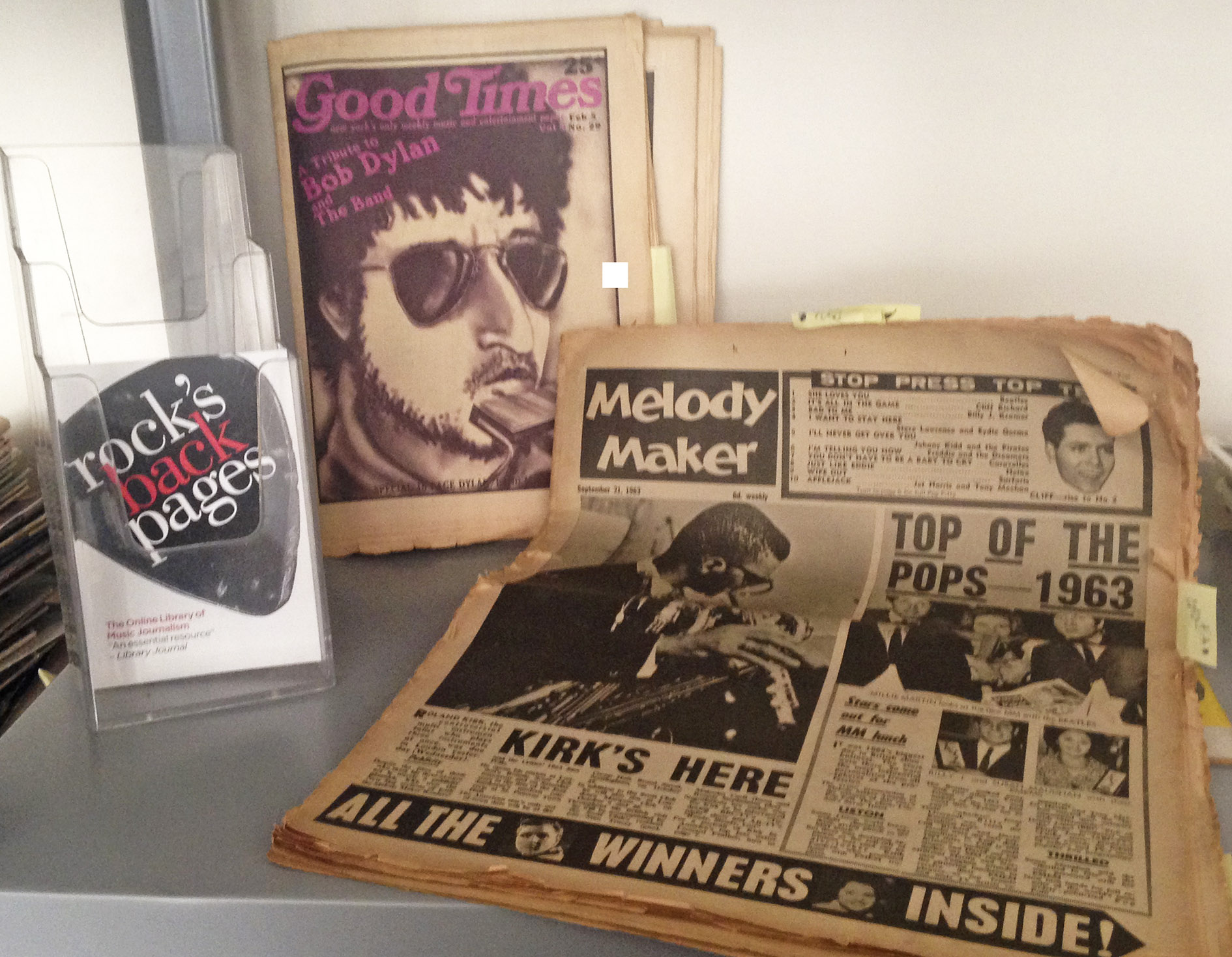
Working from the offices of Rock’s Backpages has many pluses – Mark’s espresso machine, bizarre early 80s New York  playlists (Lydia Lunch, brilliant), a fine view of West London – but none outweigh the magazine archive. Everywhere you turn, another gem: a Jim Marshall shot from the Beatles’ last gig at Candlestick Park, Tiger Beat’s Official Monkees Spectacular!, cassette tapes of interviews with Johnny Otis. This shot captures a terrible illustration of Bob, and the days when Roland Kirk was bigger news than the Beatles coming to lunch with the Melody Maker.

RBPROBERT FRANK’S THE AMERICANS
From a terrific New York Times piece by Nicholas Dawidoff, on photographer Robert Frank

“Over the years, The Americans would follow the trajectory of experimental American classics like Moby-Dick and Citizen Kane – works that grew slowly in stature until it was as if they had always been there. To Bruce Springsteen, who keeps copies of The Americans around his home for songwriting motivation, ‘the photographs are still shocking. It created an entire American identity, that single book. To me, it’s Dylan’s Highway 61, the visual equivalent of that record. It’s an 83-picture book that has 27,000 pictures in it. That’s why Highway 61 is powerful. It’s nine songs with 12,000 songs in them. We’re all in the business of catching things. Sometimes we catch something. He just caught all of it.”

CHARLIE “SATCHMO” WATTS
The Rolling Stones – Exhibitionism has been three years in the planning. Jagger said the exhibition would include some “really silly things … and really I mean silly”. Not all band members were able to contribute as much as others: “I’ve got more Louis Armstrong stuff than I have Rolling Stones,” said drummer Charlie Watts.

MITCH! NOOOOOOO!
If you complain bitterly about how you are portrayed in a sensitive, even-handed and rounded documentary, then don’t give interviews where you say things like this: There’s also talk of a full-scale biopic and Mitch already knows who he would like to star. “Lady Gaga has been mooted as Amy,” he told Heat recently. “But I’d definitely have George Clooney play me…”

RONNIE SCOTTS’ INSTRUMENT AMNESTY
A brilliant idea. Give away unplayed instruments. See and hear the results down the line. From Ronnie’s website: “Your instrument will be given a tracking number enabling us to inform you of its ultimate destination. Once the amnesty is over, we will prepare the instruments for delivery and send them to Sistema England in the UK and Music Fund based in Brussels. Sistema England, founded by Julian Lloyd Webber, seeks to transform the lives of children, young people and their communities through the power of music making. It is part of an international movement inspired by El Sistema, the Venezuelan programme that benefits children and young people through the creation of grass roots orchestras. Overseas, the collected instruments will be given a second life through Music Fund who distributes to projects in international conflict zones from their base in Brussels. Music Fund is a humanitarian project that supports musicians and music schools in conflict areas and developing countries operating in Africa, the Middle East and Central America.” So there goes my black semi-Fender Strat.

Five Things Extra, Monday 6th July: Attack Of The 50 Foot Jazzman!

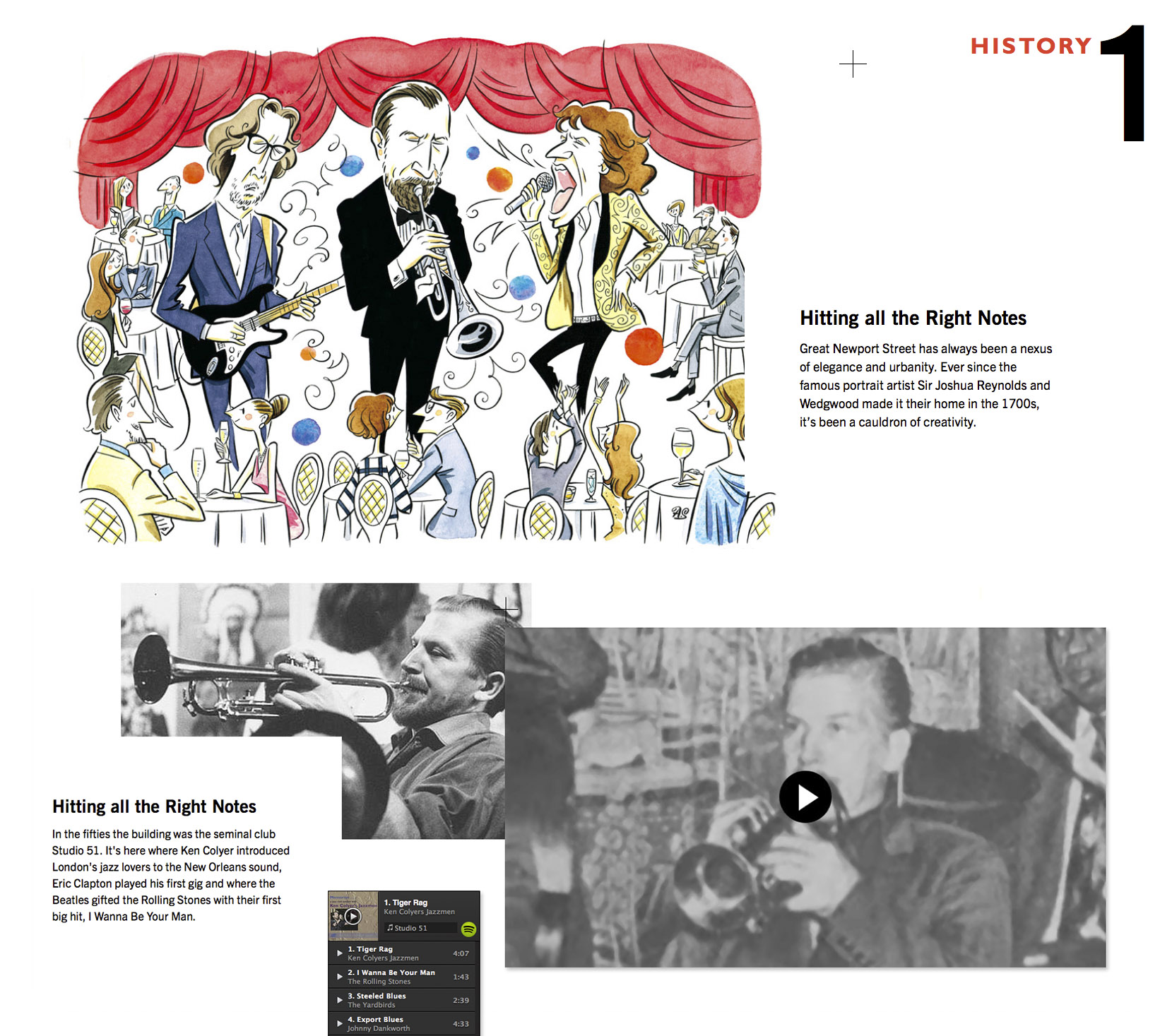
As we went walking that ribbon of highway that links Covent Garden to Soho, en route to see Amy at the Curzon, most of Great Newport Street was covered in scaffolding. Not such a rare sight in the centre of town these days, with properties being developed at a giddy rate. However, the covering of the scaffolding was – frankly – gob-smacking. A huge 60s-style caricature covered the top half of the four-story high structure, with my uncle Ken flanked by Eric Clapton and Mick Jagger.

thecolyer2

The site of Ken’s old club, the Studio 51, is now a development of 14 luxury apartments and has been branded (drum roll…) The Colyer. No, really. Words fail. The logo has a cornet rather than a trumpet (very good) and the illustration is cute. I knew about The Stones’ residency during 1963, but I hadn’t realised that Clapton had played his first gig there – at least, according to London60sweek.com he did. The developers seem to have the notion that it was like an uptown cabaret club with round tables and crisp white linen and glasses of champagne, but my memories are of a much less salubrious room, with a decided lack of chairs and no alcohol license. Quite what lifelong socialist Ken would make of all this is up for discussion…

Kengrab

Thursday, 2nd July

Still moving, so this week is mainly things that I read and found fascinating…

HUNCH V. DATA: IN THE RED CORNER, JOHN HAMMOND
Kevin drops in a great article from intelligent life, by Ian Leslie: “One February night in 1933, Hammond rapped on an anonymous door on 133rd St. One of his singer friends, Monette Moore, ran a new speakeasy, and he had come to see her perform. As it turned out, she couldn’t make it. Her replacement was a girl called Billie Holiday. Hammond hadn’t heard of her—which meant nobody had—but she took his breath away. Just 17, Holiday was tall, unconventionally beautiful, with an imperious bearing. Her artistry gave Hammond shivers. She sang just behind the beat, her voice wafting languidly over the accompaniment like smoke from a cigarette. She didn’t just sing the songs, she played them with her voice. “I was overwhelmed,” Hammond said.

Nobody had told Hammond to go and see Billie Holiday that night in Harlem. She had no fan base, no manager pressing her claims. Nobody would record her. But the moment he saw Holiday, John Hammond knew she was going to be a star. He just had a feeling about this girl. A hunch.

John Hammond understood jazz through society and vice versa, and he knew that the future of neither was written down (jazz, said the critic Whitney Balliet, is “the sound of surprise”). At the time that he came across Billie Holiday, a vocalist who did not also play an instrument or front a band was not even considered a jazz singer, but Hammond sensed that the world was ready for one. Later, Holiday became one of the first singers to perform regularly in mixed-race jazz clubs, and her popularity cut across the rigid ethnic lines of the day. In Monette Moore’s bar that night, Hammond saw the future of jazz and the future of America at the same time.”

KANYE BELIEVE IT! (© The Sun)
I wanted to write about Kanye West’s performance at Glastonbury, but read this and it caught what I felt so well that I’ll just quote a little: it’s by David Bennun and was on The Economist Magazine’s website.
“The first 45 minutes or so were an act of quite astonishing bravado. One man, apparently dressed as the world’s most fashionable plasterer, all alone in a blazing box of light and smoke, with only that infamous ego and a microphone to satisfy a crowd over 100,000 strong, and millions more watching on live television. Has any Glastonbury headliner ever flown solo and by the seat of his expensively spattered pants for so long? It took extraordinary cojones, especially when you consider that, although he is a brilliant rapper in the studio, he is not a great live MC. His voice doesn’t have the heft and authority to carry all before it like, say, Eminem’s or Chuck D’s… Kanye West is the star who’s never a bore even when he’s boring. The people who profess to hate him can’t tear their eyes away. The joke is emphatically on them, and on their apoplectic, blimpish indignation.”

THIS. IS. INSANE.

AbbeyAs I called the Albert Hall Box Office 15 minutes after the tickets went on sale and found it almost sold out, I realised that it was probably not an April Fools’ Day joke. Yes, on April 1st, 2016 there will be a re-creation, in a huge glass box containing a replica Studio Two, of every note played by The Beatles at Abbey Road – every false start, every incomplete take, every bit of jokey banter between the studio floor and the control room. Overseen by Geoff Emerick, the engineer on many of the sessions, it promises much for the tape-heads, but what it’ll sound like as a concert is beyond guessing. We’re promised that it won’t be a lookalike or tribute show, just… “each song, from the first recording of “Love Me Do” up to “The End” – played exactly as it was recorded – all instrumentation, arrangements and vocals identical to the original recordings. It will be the closest thing to actually being in the studio with John, Paul, George and Ringo.”

QUOTES OF THE WEEK

CastlesSkateboardersUndercroft, South Bank; The Lukin pub, Fitzrovia

SOMETHING I LEARNED
I’d not heard of Bob Bain, legendary session guitarist, but I’d sure enough heard his work – The Peter Gunn theme, M*A*S*H, Nat King Cole’s “Unforgettable”. Marc Myers’ excellent blog, JazzWax pointed me towards this, from Fretboard Journal – Bain’s description of the Breakfast at Tiffany’s sessions, along with a lovely video of him now, playing a beautiful small-bodied Martin.

“We did three sessions. Monday, Tuesday and Wednesday. We were packing up and Henry Mancini asked me to stick around. He said, “Go next door to Nickodell’s, get a drink and come back.” He said, “You can pack up everything, but I want a nice, small acoustic guitar sound…” I was thinking, “What is he doing?”

So I had a nice small guitar, a Martin. I just left that guitar out and came back. The studio was empty, kind of dark. There were three guys in the booth: Henry, Blake Edwards the director, and one stagehand. And all of a sudden Audrey Hepburn walked in. Hank [Mancini] introduced me and she was very nice. He said, “We want to record Audrey without the orchestra, because she doesn’t want to sing in front of a big band.” We ran it down — just the two of us. And I said to Henry, “Turn off the mics so you don’t hear us.” She was real nice; a good singer.

“She knew the tune. And I said, “Why don’t we make a take?” I waved at Hank and he turned the mic on. We ran it through once and I said, “What do you think?” She said, “Well, I don’t know.” I said, “Why don’t we do one more and then we’ll go in and listen?” So we did one more take, just guitar and voice. We went in. Henry said, “I loved it.” Blake said, “I loved it.” And they took the second take and that was it!”

…and I really want to thank Steve Hurrell for the Wham-O Super Pro frisbee. Steve worked on a video shoot that we did back in the 80s, but before that was a semi-pro frisbee player. How excellent to have that on your CV.

Friday, 19th June

Necessarily brief this week due to house move! See On The Playlist…

VISUAL OF THE WEEK: MILTON GLASER

Bob NYHaving recently bought the Milton Glaser Dylan poster I was surprised to find this copy of the NYTimes Book Review in a box of old stuff in storage. Excellent punning title, great pieces from Jonathan Lethem and Lucinda Williams and Glaser revisiting his poster for the cover.

VISUAL OF THE WEEK 2: EDWYN COLLINS

EdwynWatching the rather beautiful and uplifting documentary on Edwyn Collins, The Possibilities Are Endless I was struck by a couple of things. One is that I didn’t appreciate how good “A Girl Like You” was – especially the Ernie Isley-like guitar solo. And secondly, a rostrum shot of his post-stroke notebooks, where this intriguing list could be found, namechecking two of James Brown’s worthy constituents, and a Northern Soul star: “…yesterday, Maceo Macks, Tommy Hunt, Fancy a beer this weekend?, Bobby Byrd, Well today, Thank you.”

WHATEVER ONE’S TAKE ON M.I.A.…
… you have to admit that she makes very cool videos. From cars doing wheelies in Persia to the 36,000 students of the world’s largest Martial Arts school (Gener8ion + MIA) you just have to think… what and where next?

FAVOURITE REMINISCENCE OF THE WEEK
The as-told-to-Mick Brown Flashback by Michael Des Barres in the Sunday Telegraph: “It was that cliché of the English rocker falling in love with an American groupie. I am not proselytising for the golden age of rock’n’roll. But it will never be that way again. The streets were paved with velvet in those days; there were polka dots in the air; it was hashish and the Romantic poets, Oscar Wilde playing a Les Paul. I wasn’t thinking about how many sit-ups I could do.” I remember Des Barres’ band, Silverhead, must have seen them three or four or more times at The Marquee. They were unbelievably thin and wasted-looking (“a band that weighed collectively 150lb – the most decadent bunch ever” in Des Barres’ words) and played a kind of sludgy rock & roll that promised more than it delivered – but was always extremely entertaining.

ON THE PLAYLIST THIS WEEK

betterdays

This week, we leave the bright lights of the West End for the big skies of the East End, accompanied by Better Days’ updating of Robert Johnson’s classic “Walking Blues”. It features Paul Butterfield on vocals, electric piano & harp, Ronnie Barron on organ, Geoff Muldaur on slide guitar & vocals, Amos Garrett on guitar, Billy Rich on bass and Christopher Parker on drums. Album cover [one of my Hall of Famers] by Milton Glaser at Push Pin Studios.